A dumpster can suit your cleanup and still be a poor fit for your driveway. For residential dumpster rental in Bridge City, choose based on both the amount of debris and whether the container and delivery truck can fit and maneuver on your property.
Think about driveway space before choosing a size. A narrow entrance, parked vehicles, low branches, or limited turning room can affect placement. Measure the proposed spot and the delivery path, not just the area where the container will sit.
This guide explains how to compare dumpster sizes, understand rental costs, and prepare for delivery and pickup if you can’t be there. It also covers differences between residential and commercial projects, so you can match the container to the job and prepare the placement area.
Key Takeaways
- Measure the driveway and delivery route, not just the spot where you plan to place the dumpster.
- Match container size to the debris and project scope so you can plan loading without crowding the site.
- Know what to expect at booking, delivery, loading, and pickup, including how to prepare if you can’t be there in person.
- Rental pricing depends on the project; understand the details that shape a quote before planning your budget.
- Compare residential and commercial project needs, then consider whether a 20-, 30-, or 40-yard dumpster best suits the work.
Do I need to be present for dumpster delivery or pick-up?
You don’t always need to be beside the driveway during delivery or pickup. For a Bridge City rental, make the drop-off location, access route, and pickup plan clear before the truck arrives.
Booking and Delivery Coordination
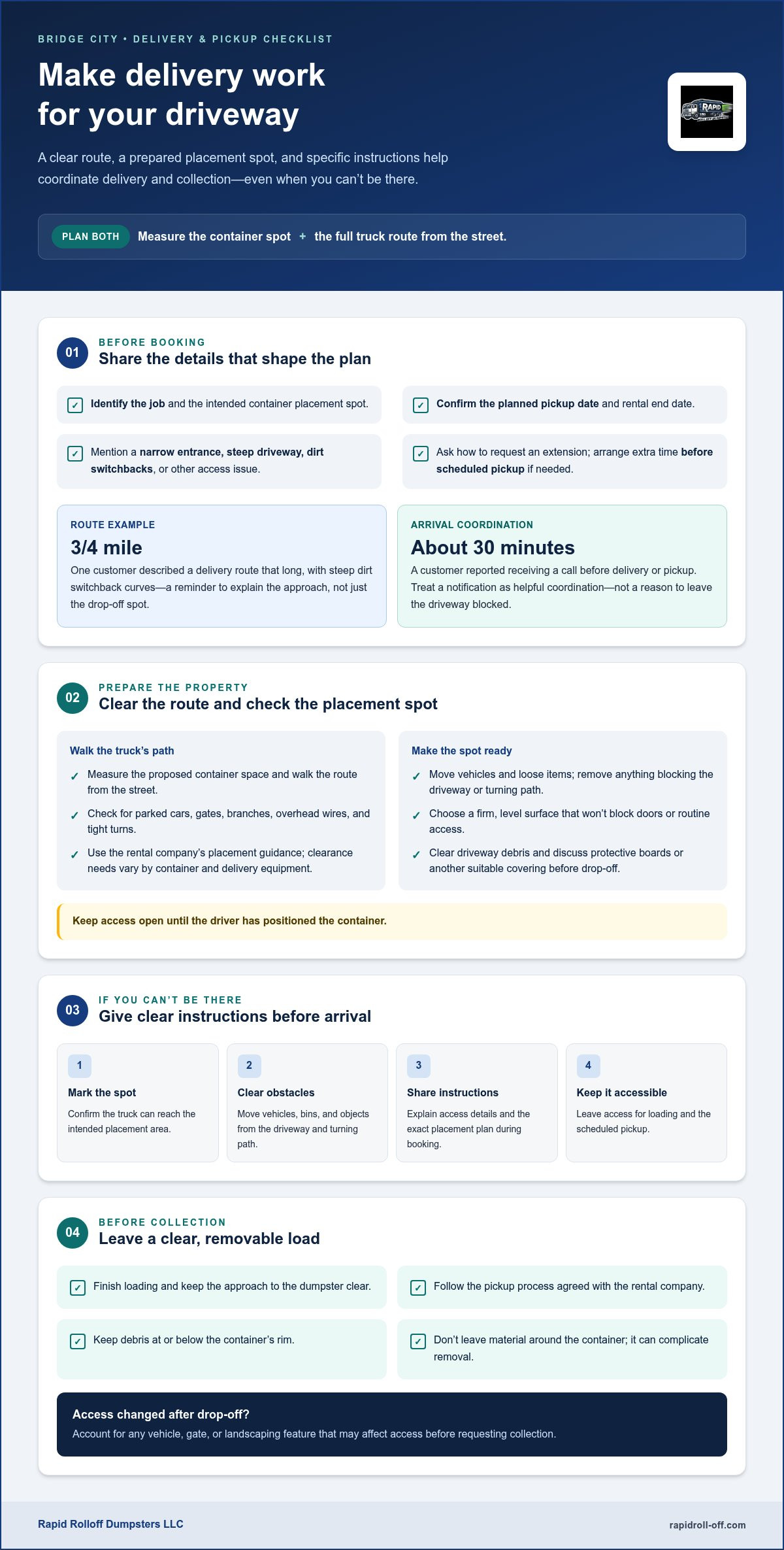
At booking, identify the project, the container placement spot, and the planned pickup date. Tell the rental company about a narrow entrance, a steep driveway, or dirt switchbacks. One customer reported a delivery route that ran 3/4 of a mile and included steep dirt switchback curves. That example shows why route details matter as much as the placement area.
A customer also reported receiving a call about 30 minutes before delivery or pickup. Treat arrival notifications as useful coordination, not a reason to leave the driveway blocked. If you can’t be there, give clear placement instructions and make sure the intended drop-off area is accessible.
Site Preparation and Delivery Clearance
Before delivery, measure the proposed container space and walk the truck’s route from the street. Check for parked cars, gates, branches, overhead wires, and tight turns. Clearance needs vary with the container and delivery equipment, so use the rental company’s placement guidance rather than relying on a generic measurement.
Move vehicles and loose items, then choose a firm, level surface where the container won’t block doors or routine access. Clear debris from the driveway, and discuss protective boards or another suitable covering before drop-off. Keep the route open until the driver has positioned the container.
Use this sequence to prepare:
- Mark the intended placement area and confirm the truck can reach it.
- Remove vehicles, bins, and objects that block the driveway or turning path.
- Share access details and placement instructions during booking.
- Keep the container accessible for loading and the scheduled pickup.
Plan the rental period around your project schedule. Confirm the rental end date and how to request an extension when booking, and arrange any extra time before the scheduled pickup if the work takes longer.
To schedule pickup in Bridge City, finish loading, keep the approach clear, and follow the agreed pickup process. You can be present to give placement guidance, but the essentials are a clear route and specific instructions. Don’t load debris above the container’s rim or leave material around it, as either can complicate removal. If a vehicle, gate, or landscaping feature changes access after drop-off, account for that before requesting collection.
Home remodeling, cleanouts, and landscaping debris
Sort debris by project type before choosing a container. Kitchen remodeling, garage cleanouts, yard work, and storm restoration produce different materials and loading needs.
For remodeling, gather construction debris such as cabinets, drywall, flooring, trim, and packaging in a planned staging area. Set reusable items aside from material for removal. Break down bulky pieces when practical, and spread dense debris evenly instead of concentrating it at one end. This helps you use the container space efficiently and estimate the renovation’s debris volume.
For a home cleanout, work room by room. Separate furniture, boxes, household clutter, and belongings you plan to keep before loading. A garage cleanout may produce bulky shelving and mixed household debris, while an attic cleanout may contain lighter boxes with awkward shapes. These examples show why volume alone doesn’t describe a load. Estimate the pile and identify the heaviest items before choosing a container.
Landscaping produces a different mix. Branches, shrubs, sod, soil, and stones vary in shape and weight, so group materials as you plan removal. Long branches can take up space quickly, while dense soil or masonry can add substantial weight without filling much room. Don’t assume the container’s visible capacity means it suits every heavy material. Describe the debris mix when arranging the rental.
Construction debris also varies in weight. Wood scraps and packaging take up space differently from concrete, brick, or tile. If demolition includes heavy material, estimate its quantity separately from lighter remodeling waste. Keep different piles separate while loading so you can track what’s inside and how much space each type needs. For a renovation with bulky cabinets and dense masonry, plan around weight as well as volume.
Flood and fire restoration can produce water-damaged drywall, flooring, insulation, charred wood, and damaged furnishings. Separate restoration debris from belongings to salvage. Keep unusual materials apart and describe them when arranging service instead of burying them under general construction debris. This gives you a clearer removal plan and helps prevent last-minute sorting in the driveway.
Use a simple staging process before loading:
- Group materials by type, such as wood, flooring, or yard debris.
- Set aside items you intend to keep or reuse.
- Estimate bulky and heavy piles separately.
- Load evenly, keeping the container accessible as the project continues.
For mixed renovation or cleanup debris, compare the project’s volume and weight with the available dumpster rental options before scheduling removal.
What dumpster sizes are available?
Roll-off containers are commonly compared by capacity in cubic yards, but the right size depends on debris volume, weight, and placement space. Estimate the pile, then consider how the container’s dimensions will fit your property.
Roll-Off Sizes and Capacities
A dumpster’s stated capacity describes its volume, not the weight it can carry. Bulky furniture uses space differently from dense construction debris. Compare your materials and pile size, and factor in the container’s weight limit. Check the outside dimensions, too: capacity alone won’t tell you whether a container fits your driveway.
There isn’t one standard set of outside dimensions for every roll-off size. Length, width, and height vary by container design, so measure the intended placement area and access route. A long, narrow driveway may suit a different shape than a broad parking area. Leave room for the delivery truck to approach and position the container safely.
Choosing a Size for Your Project
Match capacity to the work. A small room cleanout may produce boxes and furniture, while a remodel can add cabinets, flooring, and construction debris. Landscaping adds branches, sod, or soil, which vary in shape and weight. List each material and estimate its pile size before selecting a container.
For a larger renovation or construction project, compare estimated debris volume with the container’s capacity. If the pile includes dense material, account for weight as well. Don’t judge the load by how full it looks: heavy debris can reach the weight limit before filling the container, while bulky, lightweight items can take up space quickly.
For a smaller cleanout, other options may be practical. You can arrange junk removal for selected bulky items, donate usable belongings, or sort household waste for regular collection. These alternatives work best when the project produces manageable loads rather than a steady stream of mixed debris.
Before booking, use this practical checklist:
- Separate bulky items from dense materials, such as furniture and masonry.
- Estimate the pile’s length, width, and height to compare its volume.
- Measure the driveway and placement area against the container dimensions.
- Review what materials the rental accepts and how weight affects loading.
Ask for a clear explanation of included rental terms and possible charges. This helps you understand the quote and avoid hidden fees tied to factors such as debris type, weight, or rental duration. Share the project details and expected material mix so the size recommendation reflects the actual job, not just a rough visual guess.
Affordable dumpster rental pricing
For a home project, rental pricing depends on the container, debris, and rental terms. Compare the full quote, not capacity alone.
Rental Pricing
For a residential dumpster rental in Bridge City, price depends on the case and is given after a quote request. Cost factors include container size, rental duration, debris type, and the weight of the loaded material. A cleanout with light household items differs from a renovation with dense construction debris or yard waste.
Before you schedule, review what the quote includes and what could add charges. Ask how rental time is counted, when pickup must be arranged, and whether disposal costs depend on debris type or weight. Clear terms make it easier to budget and reduce the risk of hidden costs.
Capacity affects value. A container that’s too small may require another haul, while an oversized one can leave space unused. Estimate the debris pile and describe its contents when requesting a quote. Mention bulky furniture separately from soil, shingles, or other heavy materials.
Weight Limits and Overage Fees
Rental agreements may set a weight allowance for the loaded container. If the debris exceeds that allowance, an overage fee may apply. Dense materials can reach the weight threshold before the container looks full, so account for material type as well as volume.
Ask how weight is calculated and what happens if the load exceeds its allowance. Clarify whether the quote includes disposal, how excess weight is billed, and whether certain debris requires separate handling. These details matter for projects involving concrete, roofing material, soil, or mixed construction waste.
To manage the load, sort materials before loading. Keep heavy debris separate from lighter household items, and don’t fill the container based only on its visible capacity. If the project changes and adds more debris, revise your plan before pickup rather than assuming the original quote covers it.
Use these steps to compare quotes:
- Describe the project and list the materials the container must accept.
- Estimate the load’s volume and identify dense or bulky debris.
- Compare rental duration, included disposal, weight terms, and pickup arrangements.
- Keep the quote details available while loading and arranging collection.
A clear quote helps you plan the rental around the work schedule. Confirm the expected drop-off and pickup timing, and keep the placement area accessible when the container is due to arrive. For a renovation that may produce extra debris, consider how changes could affect capacity, weight, and rental duration before work begins.
Residential and commercial dumpster rentals
Home cleanouts and business renovations both create disposal needs, but the site, debris, and work schedule can differ. Plan the rental around where the container will go and what the project will discard.
Street Placement and Permit Needs
A container on a Bridge City driveway sits on private property; one placed on a street or public right-of-way involves public space. Treat street placement as a local-permit question and obtain the necessary authorization before delivery. For driveway placement, keep the container and delivery access within your property boundary.
Before scheduling, identify the exact placement area and whether any part extends onto a sidewalk or street. This helps clarify which local rules apply and avoids relying on an unapproved public-space location.
Companies Serving Residential Customers
Residential customers in Bridge City can rent roll-off dumpsters for household projects such as cleanouts, remodeling, and yard work. The right service depends on the debris, container size, placement, and pickup plan. Commercial rentals serve business and construction projects, where site access and ongoing cleanup may shape the schedule.
Describe the job clearly when arranging a rental: a garage cleanout differs from a business renovation producing regular construction debris. Share the materials, placement details, and expected rental period to help match the container and service plan to the work.
Residential and commercial rentals follow the same basic sequence: plan placement, arrange delivery, load the container, then request pickup. Details vary by site. A homeowner clearing a garage may need convenient access for household items, while a contractor may need a container near an active renovation area. In either case, keep the delivery path open and make the intended placement clear.
List materials before booking. Household furniture, renovation scraps, and landscaping waste can have different disposal requirements. Set aside items that need special handling, and describe potentially hazardous materials rather than loading them without guidance. Sorting also helps prevent unsuitable materials from being mixed with ordinary debris.
For a business site, consider employee access, customer entrances, and deliveries. A container beside a loading area can support cleanup, but shouldn’t block normal operations. At home, choose a spot that leaves the garage, walkway, and driveway usable. Thoughtful placement makes rentals easier to manage across different property types.
Before you schedule, prepare these details:
- Project type, such as home cleaning, remodeling, or commercial construction.
- Debris categories and any materials needing separate disposal.
- Placement location, access route, and whether public space is involved.
- Expected loading period and pickup timing.
For a residential project, choose a rental plan that fits the debris and property layout. For commercial work, account for site access and ongoing cleanup. Clear project details help align the rental with the job instead of treating every property or load the same.
Rapid Rolloff Dumpsters: 20 Yard Hook Lift Dumpster Rental
Rapid Rolloff Dumpsters LLC offers a 20 Yard Hook Lift Dumpster Rental for projects that need a container for debris removal. For larger loads, its options also include a 30 Yard Dumpster Rental and a 40 Yard Hook Lift Dumpster Rental. Match the size to your debris mix, estimated volume, and placement area before arranging your rental.
Share the project type, materials, and preferred placement when planning a residential or commercial cleanup. This helps match the container to the work, whether you’re clearing household items or managing renovation debris. Consider weight as well as volume, especially for dense materials.
For help choosing a rental for your project, visit Rapid Rolloff Dumpsters LLC online.
Set Your Cleanup Up for a Smooth Start
Planning residential dumpster rental in Bridge City makes cleanup part of your project plan, not an afterthought. Before work begins, choose a debris staging area and decide how you’ll keep household access clear as the project changes. A simple plan helps everyone know where materials belong and when the area needs to be ready.
Think ahead about the project’s pace. A remodel may produce debris in stages, while a cleanout may happen all at once. Organize the work so loading doesn’t interfere with daily routines, deliveries, or contractors. If the scope changes, update your disposal plan before debris piles up or blocks the work area.
Rapid Rolloff Dumpsters LLC can help connect your project with a suitable rental option. Contact Rapid Rolloff Dumpsters LLC today to discuss your cleanup needs and take the next step with a clear plan.
Frequently Asked Questions
Will the dumpster fit in my driveway?
A residential dumpster rental in Bridge City can fit when the container and delivery route suit your available space. Check the container dimensions with the rental provider before choosing a placement area. The 40-yard model measures 20 feet long, 7.5 feet wide, and 8 feet high. Measure the placement area and access path, including turns and overhead clearance, before choosing.
How does the dumpster rental process work?
Start by choosing a container and arranging your rental online or by phone. Share the project type, debris, and planned placement to coordinate delivery. Load the container while keeping access clear, then request pickup when cleanup is finished. For a home project, plan the loading area so tools, vehicles, and entryways remain accessible.
What can I put in my roll off container?
Roll-off containers can support home cleanouts, DIY work, outdoor projects, bathroom renovations, and garage cleanouts. Since each job produces different debris, describe the project and materials when arranging a rental. Keep unusual or potentially hazardous items separate from ordinary cleanup debris and follow applicable disposal instructions. Sorting before loading helps avoid mixing items that may need different handling.
What dumpster sizes are available for residential rentals in Bridge City?
Residential options include a 20-yard hook lift dumpster and a 40-yard hook lift dumpster. The 20-yard model measures 12 feet by 7.5 feet by 4 feet and has a 2-ton weight limit. The 40-yard model measures 20 feet by 7.5 feet by 8 feet and also has a 2-ton limit. Compare both the dimensions and the planned debris weight before selecting.
How much does residential dumpster rental cost in Bridge City, including delivery and disposal fees?
Rapid Rolloff Dumpsters LLC offers affordable, competitive rental rates, with delivery and pickup charges included. Share your project details and chosen container size to receive a quote suited to the job. Review the quote before scheduling so you understand the rental terms. Costs vary between home cleanups and renovations.
What items can and cannot go in a residential dumpster in Bridge City?
Suitable project types include household cleanouts, DIY projects, outdoor work, bathroom renovations, and garage cleanouts. Don’t assume every item from these jobs belongs in the same load. Set aside hazardous or unusual materials and follow relevant disposal instructions. For example, sort a garage’s contents before loading instead of mixing unidentified containers with furniture or general debris.
How quickly can a dumpster be delivered to a Bridge City home?
Delivery is arranged as part of scheduling, and you can book online instantly or call Rapid Rolloff Dumpsters LLC. Have the container size, access route, and placement location ready when booking. Service is available in Bridge City and nearby communities, including Groves, Orange, Port Neches, Nederland, Beaumont, and Port Arthur.
What should homeowners consider when choosing a dumpster size for a cleanup or renovation?
Start with the project’s debris volume, then account for material weight and available placement space. A garage cleanout with bulky items uses capacity differently from a renovation with dense debris. Compare the load with the selected container’s dimensions and weight limit, then check whether the driveway can fit it. A written list of materials can make choosing the right dumpster easier.