What if the right warehouse cleanup container depends as much on loading access and daily workflow as on the debris pile? Choosing a warehouse cleanup container Port Neches businesses can use effectively means weighing both. Mixed debris can be difficult to size, and a poorly placed container can interfere with parking, loading, or routine operations.
You don’t have to choose by debris volume alone. Match the container to the project’s scale, the space available to stage debris, and the routes staff and vehicles need to use. Rapid Rolloff Dumpsters LLC offers 20-yard and 40-yard hook lift containers and 30-yard dumpsters for commercial cleanup, with delivery and pickup included in the rental service.
This guide explains how to compare those sizes, plan placement around warehouse access, and decide whether a rental container or a junk removal approach better suits the work. You’ll also find practical points to consider when planning delivery and pickup around daily operations. With a clear plan, you can arrange a local rental that fits the project and site.
Key Takeaways
- Start by mapping the cleanup scope, debris staging area, and work zones that need to stay accessible.
- Compare 20-yard, 30-yard, and 40-yard options against the cleanup’s volume and phases, not debris alone.
- A warehouse cleanup container Port Neches businesses rent can support a staged cleanup when staff plan to load debris over time.
- Separate the space needed for delivery from the container’s ongoing placement, then plan delivery and pickup around warehouse activity.
Planning a Warehouse Cleanup in Port Neches: Start With the Work
Before choosing a container, define the cleanup: which areas are being cleared, what materials will come out, and how the work could affect daily operations. A warehouse cleanup might involve one storage bay or an active building where staff, equipment, and shipments still need to move. That difference affects where you can stage debris and whether a temporary container will fit the plan.
A rental container gives your team a central place to put debris as the cleanup progresses. Rather than letting removed items accumulate in several work zones, staff can move them to one planned staging point. This can make a phased project easier to organize, especially when the warehouse must remain partly operational. Rapid Rolloff Dumpsters LLC serves Port Neches from nearby Groves, with delivery and pickup included in its commercial rental service.
A project container serves a different purpose from routine waste collection. Regular collection handles waste generated through normal business activity, while a temporary rental is intended for a defined cleanup or work period. A container can support a warehouse cleanout, but the right disposal approach still depends on the materials and how the work is organized.
Which warehouse cleanup projects can benefit from a rental container?
Consider a business clearing an overfilled storage area, removing debris from a renovation, or preparing part of the building for turnover. In each case, a temporary container can give the crew a shared destination for debris as work moves from one area to another. A container does not determine which materials can go in it or replace a disposal plan. Identify the materials and intended disposal route as part of project planning.
Think about the work sequence, too. If teams are clearing one bay at a time, a central staging point may help keep work areas orderly. If removed materials need to stay separate, include that requirement in the plan before selecting a container. General descriptions of warehouse operations also illustrate how storage, movement, and building use can vary. Base the cleanup plan on the actual site rather than assuming every warehouse works the same way.
What should a business define before choosing a container?
Start with a practical estimate, not a guess based only on floor area. Identify the expected amount of debris, the material types, and whether removal will happen all at once or in phases. Next, decide whether work will take place in an active warehouse or a temporarily cleared building. That distinction helps determine how much space must remain open and where a staging area can fit.
Walk the route between the cleanup zone and the planned container location. Note loading access, equipment movement, and staff travel paths. A location that seems convenient on a site plan may create a bottleneck once forklifts, deliveries, or regular shifts are underway. Mark the areas that must stay clear, then use those constraints to guide your container choice. This preparation helps you choose a warehouse cleanup container Port Neches projects need without treating size as the only planning question.
Choose a Warehouse Cleanup Container by Project Scale
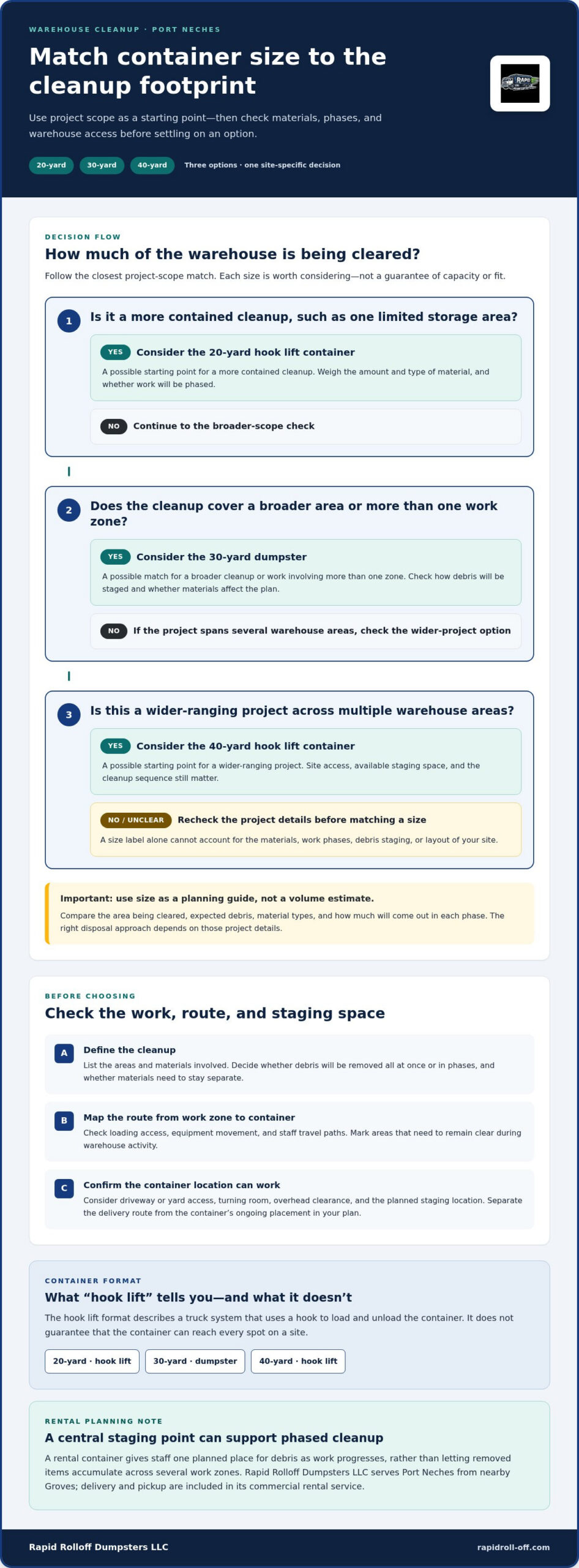
Container size is a planning guide, not a guarantee that one option will suit every warehouse. Compare the area being cleared, the expected debris, and how the cleanup will be staged. Rapid Rolloff Dumpsters LLC offers 20-yard and 40-yard hook lift containers and a 30-yard dumpster. The comparison below can help you think about relative project scale without assuming a specific amount of debris will fit.
| Option | May be worth considering for | What to weigh |
|---|---|---|
| 20-yard hook lift container | A more contained cleanup, such as clearing a limited storage area | How much material is actually being removed and whether work is phased |
| 30-yard dumpster | A cleanup covering a broader area or more than one work zone | How debris will be staged and whether different materials affect the plan |
| 40-yard hook lift container | A wider-ranging project that may span multiple warehouse areas | Site access, available staging space, and the overall cleanup sequence |
Use the comparison as a starting point, not a volume estimate. A small-area cleanout may need a different approach from clearing several storage zones across a building. If work happens in phases, consider how debris will accumulate between stages and how much staging space you can set aside. The size label alone cannot account for your materials, workflow, or site layout.
How do project materials and phases affect size?
Renovation or demolition debris can affect the decision. Different materials may take up space or require different handling, so don’t base your choice on the footprint of the work area alone. List the expected materials, note whether they’ll be separated, and estimate how much will be removed during each phase. The appropriate disposal approach depends on those details and the project plan.
How do hook lift options fit into the size decision?
A hook lift container is designed for a truck system that uses a hook to load and unload the container. Rapid Rolloff offers this style in 20-yard and 40-yard options; its 30-yard option is a dumpster rental. The hook lift format describes the loading system, not a guarantee that a container can reach every spot. Driveway or yard access, turning room, overhead clearance, and the planned staging location all matter.
Before selecting an option, compare the projected debris and cleanup stages with the space available for the container. If your warehouse cleanup container Port Neches project covers several areas, map the work sequence and access route together. That makes the size decision more practical than choosing by debris volume alone. Review commercial dumpster rental options as you narrow down the fit for your warehouse plan.
Rental Container or Junk Removal for a Port Neches Warehouse?
The main difference is who loads the debris and how the cleanup is paced. With a rental container, your staff or contractors place debris in a designated on-site container as work proceeds. A crew-based junk removal approach generally has a removal team load items and take them away as part of a scheduled service. Neither method suits every project. Consider your labor plan, how long debris needs to remain on-site, and whether the cleanup will happen in one sweep or across several stages.
| Project preference | Rental container | Crew-based removal |
|---|---|---|
| Who loads the debris? | Warehouse staff or contractors load it. | A removal crew generally handles loading. |
| How is the work paced? | Debris can be added as the cleanup progresses. | Removal is organized around a scheduled cleanout. |
| Where does debris wait? | In a designated container on-site during the project. | Items are gathered for removal by the crew. |
When does renting a container make operational sense?
A rental can suit a project where staff or contractors are already responsible for clearing storage, sorting materials, or completing work in stages. It gives the team a shared debris collection point instead of requiring every work area to be cleared in one visit. This can help organize a phased cleanup, provided the site has a workable container location and the materials fit the intended disposal plan.
For example, a warehouse team clearing one section at a time may prefer to load debris as each area is finished. The container becomes part of the on-site workflow while the cleanup continues. Plan who will load it, how the team will reach it, and how materials will be handled. These details matter as much as having a collection point nearby.
When might a crew-based removal approach be a better fit?
A business may prefer a removal crew when it wants loading and hauling handled as a service rather than assigning that work to employees or contractors. This approach can suit a defined cleanout organized around a scheduled visit. A rental container, by contrast, supports a project where debris is added over time and remains on-site while work advances. The right choice depends on the available labor and cleanup schedule.
Use this quick decision guide:
- Choose a rental workflow if your team will load debris over multiple stages and needs a central collection point on-site.
- Consider crew-based removal if you want loading handled as part of a scheduled cleanout instead of assigning that task internally.
- Reassess either approach if access is limited or the project includes materials that affect how debris should be handled.
Rapid Rolloff Dumpsters LLC offers commercial dumpster rentals in Port Neches, with delivery and pickup included. A warehouse cleanup container Port Neches project can follow the rental approach when your business plans to load debris as work progresses. Full-service removal is a different workflow, not a service included with a container rental.
Plan Container Placement Around Warehouse Access and Workflow
A workable container location must serve two needs: the truck has to reach the delivery point, and the container has to remain useful during the cleanup. Those needs do not always point to the same spot. A location that’s easy to reach may block a loading area or staff route once work begins. Map both the delivery path and the space needed for ongoing staging before arranging a rental.
Walk the site with someone who understands daily warehouse traffic. Note entrances, gates, turning space, overhead obstructions, loading areas, vehicle movement, and the proposed container area. Include pedestrian routes and active work zones. For a warehouse cleanup container Port Neches project, also verify current city placement rules and any permit requirements that may apply to the intended location before delivery.
What site details should the cleanup plan account for?
Sketch a simple site plan showing the route a delivery vehicle needs to use and the space where the container will stay. Mark tight turns, doors, overhead obstacles, and areas used for loading or routine vehicle movement. Then compare that plan with the cleanup team’s route from each work area. This can reveal conflicts early, before you treat the delivery point as a suitable long-term staging area.
Pre-delivery placement checklist
Use this checklist to review access and day-to-day use before setting the delivery plan:
- Trace the delivery route. Identify the entrance, gate, turns, and approach to the intended drop-off area.
- Check overhead and ground-level obstacles. Note obstructions and site features that could limit access or interfere with placement.
- Choose a staging location. Allow space for the container to remain usable during the cleanup, not just for the truck to reach it.
- Map warehouse movement. Mark staff routes, vehicle lanes, loading areas, and work zones that need to remain accessible.
- Review local requirements. Verify current Port Neches placement rules and permit requirements for the planned location.
How can a business stage cleanup work efficiently?
Divide the cleanup by work area and plan the order in which each section will be cleared. Teams can gather debris from one zone at a time and move it toward the designated collection point, while keeping active warehouse routes in view. Keep staging clear of pedestrian paths, vehicle lanes, and loading operations. If the container’s location would obstruct essential activity, revise the layout before the cleanup starts.
Keep materials that may require special handling separate from ordinary cleanup debris until you have proper disposal guidance. Don’t assume every item belongs in the same container. A clear separation plan helps staff avoid mixing materials while the right disposal approach is determined. Revisit the site map if the cleanup sequence changes or work expands into another area.
Once access and staging are mapped, arrange your rental around the site plan. Rapid Rolloff Dumpsters LLC serves Port Neches with container delivery and pickup included in its rental service. Arrange a dumpster rental that fits your cleanup plan and warehouse access needs.
Arrange a Warehouse Cleanup Container Rental in Port Neches
Once the cleanup scope and placement plan are clear, arranging a rental becomes a straightforward sequence. Prepare a few project details before choosing a container so the size and delivery plan reflect the work, not just a rough impression of the warehouse. This connects the cleanup schedule, debris staging, and site access in one practical plan.
- Define the cleanup scope. Identify the areas being cleared, the type of work involved, and whether the warehouse will stay active during the project.
- Estimate the debris. Describe the expected material categories and approximate amount. Keep materials that may require special handling distinct, and don’t assume they can go in the same container.
- Select a size. Compare the project scale and cleanup phases with the available 20-yard and 40-yard hook lift containers and 30-yard dumpster option.
- Plan access and staging. Note the delivery route, preferred container location, and constraints involving gates, turning space, loading areas, or warehouse traffic.
- Arrange the rental service. Share the project and access details to organize container delivery and pickup around the cleanup plan.
What information helps organize a warehouse rental?
Have the project address, cleanup type, approximate debris volume, and preferred staging area ready. Include the anticipated sequence, such as clearing one area before moving to another, and describe known access constraints. Give a clear account of material categories instead of assuming all waste is handled the same way. These details help align the container choice and placement plan with the work happening on-site.
For example, a phased warehouse cleanout may have debris accumulating over time, while a turnover project may focus on clearing a defined space. Explain which areas are involved and how staff or contractors expect to move materials to the staging point. A clear project description makes it easier to plan the rental around the warehouse workflow.
How does Rapid Rolloff support local cleanup projects?
Rapid Rolloff Dumpsters LLC is based in Groves and serves Port Neches and nearby communities. Its commercial rental options include 20-yard and 40-yard hook lift containers and a 30-yard dumpster. Delivery and pickup are included in the rental service, giving local businesses a straightforward way to arrange an on-site container for a planned cleanup.
Before arranging a warehouse cleanup container Port Neches project, bring together the scope, estimated debris, staging location, and access notes. That preparation supports an informed size choice and helps fit delivery and pickup into the work plan. Explore dumpster rental options for your cleanup and plan the next steps for your Port Neches warehouse.
Put Your Warehouse Cleanup Plan in Motion
A cleanup is easier to manage when the next step is clear. Turn your site notes into a simple working plan: identify the areas to clear, decide how debris will be gathered, and choose a staging point that supports your team’s routine. That gives you a practical starting point for arranging a warehouse cleanup container Port Neches businesses can use as the project moves forward.
Rapid Rolloff serves Port Neches and nearby communities from Groves, Texas. Rental service includes delivery and pickup, with 20-yard and 40-yard hook lift containers and a 30-yard dumpster available for cleanup projects. Use those options as a starting point, then match the rental to the work and warehouse layout.
Ready to take the next step? Explore dumpster rental options for your Port Neches warehouse cleanup and start planning a smoother cleanup for your site.
Frequently Asked Questions
Can a warehouse cleanup container be delivered to a Port Neches business?
Yes. Rapid Rolloff serves Port Neches and nearby communities, including Beaumont, Groves, Nederland, Port Arthur, Orange, and Bridge City. For a warehouse cleanup container Port Neches business, note the site address, delivery route, and intended staging area when arranging the rental. For example, mention a locked gate or a route shared with incoming shipments so the delivery plan reflects the facility’s actual access conditions.
What size container is best for a warehouse cleanup?
There isn’t one best size for every warehouse. Rapid Rolloff offers 20-yard and 40-yard hook lift containers and a 30-yard dumpster. To narrow the options, list the areas being cleared and estimate the debris from each, rather than relying on a building-wide guess. Note whether bulky items, renovation debris, or separate cleanup phases affect how materials will be gathered and staged.
Can a business keep a rental container on-site while cleanup work continues?
A rental container can support a cleanup where staff or contractors add debris as work progresses. Before arranging the rental, outline the expected project duration and how often the team will load materials. Choose a staging point that remains usable during the work and does not conflict with essential activity. Share the anticipated timeline when organizing the rental so it can be planned around the project.
Is a dumpster rental different from junk removal for a warehouse?
Yes. With a dumpster rental, the business organizes and loads the debris; junk removal generally involves a crew handling removal as a service. A container may suit a phased cleanup where employees or contractors can load items over time. A crew-based approach may suit a planned cleanout where the business prefers not to handle loading. Consider who will do the work and how the cleanup will be scheduled.
Can a warehouse cleanup container take hazardous or regulated materials?
Don’t assume a rental container is suitable for hazardous, regulated, or restricted materials. Identify uncertain items separately from ordinary cleanup debris and establish their proper handling and disposal requirements before placing them in a container. For example, keep an item with unclear contents or labeling apart while its category is determined. Material rules can vary, so avoid treating all warehouse waste as one stream.
How can a warehouse prepare for container delivery?
Map the delivery route and proposed staging spot before scheduling. Include entrance and gate access, turning space, overhead obstructions, loading activity, and employee routes. A quick walk-through with the person responsible for deliveries can reveal conflicts that aren’t obvious on a floor plan. Keep the planned area accessible and verify current Port Neches placement requirements that apply to the specific site before arranging delivery.
Can a warehouse use a rental container during renovation or demolition cleanup?
A rental container may work for renovation or demolition cleanup when the business plans to collect and load debris on-site. Separate the expected material categories in your project notes, especially if different handling may be needed. For instance, a renovation can produce several types of debris, so don’t assume they all belong together. Let the work sequence, staging space, and disposal guidance inform the rental plan.