
What if the hardest part of getting rid of old furniture isn’t finding a place for it, but choosing a container that fits the whole project? Bulky items are awkward to move, and it can be difficult to judge how much space they’ll take up. A dumpster rental for furniture disposal can be a practical option when you’re clearing several rooms, downsizing, or handling a broader cleanout.
Before loading, plan for the furniture’s volume, safe handling, and clear access for delivery and pickup. Disposal rules and accepted materials can vary, so review the relevant guidance before loading unfamiliar items. This guide explains how to prepare furniture, estimate the container size your project may need, and plan a local rental.
Rapid Rolloff Dumpsters LLC serves Groves and nearby Southeast Texas communities with 20-yard and 40-yard hook lift rentals and 30-yard dumpster rentals, including delivery and pickup. Use the steps below to match a container to your cleanout, load it thoughtfully, and plan the logistics.
Key Takeaways
- Learn when a dumpster rental for furniture disposal makes sense for a room cleanout, move, or property refresh.
- Sort reusable furniture from items for disposal, then prepare the remaining pieces for safe, efficient loading.
- Estimate container needs by the project’s overall volume, since furniture shapes and sizes take up space differently.
- Compare the 20-yard, 30-yard, and 40-yard options to match the container to your cleanout scope.
- Plan delivery and pickup around placement, overhead clearance, gates, vehicles, and clear walking routes.
When Is Dumpster Rental for Furniture Disposal the Right Fit?
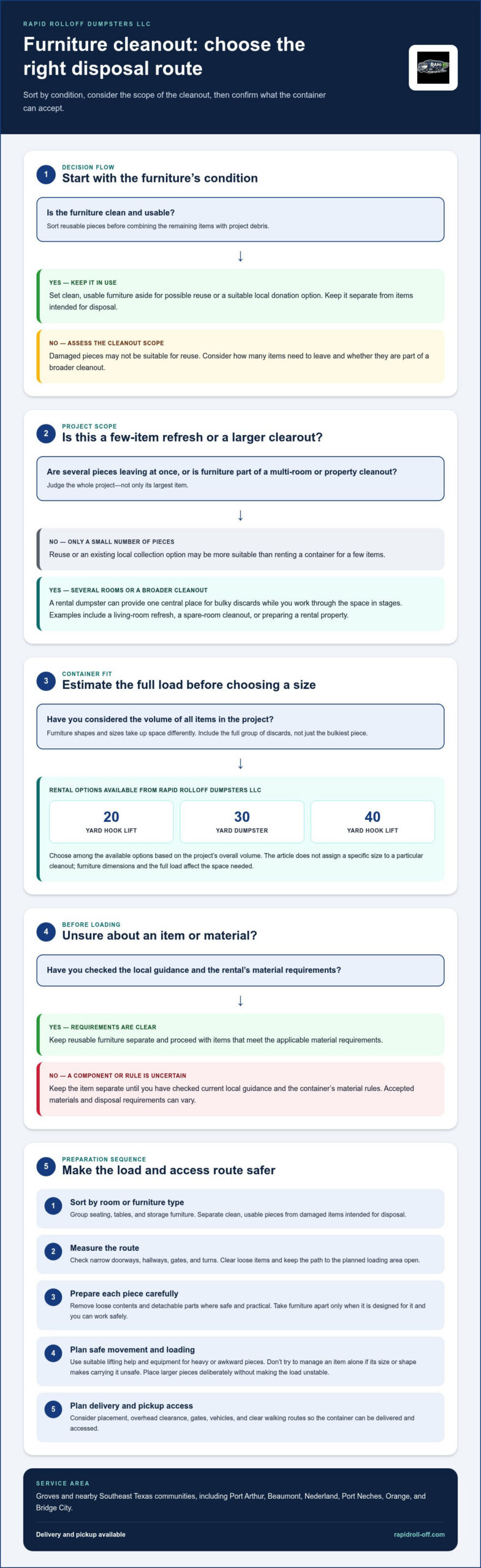
A rental dumpster gives you one place to gather bulky discards during a defined cleanup. It can be useful when several pieces need to leave at once and carrying them out individually would interrupt the work. The right approach depends on the furniture’s condition, the space it takes up, and the scope of the cleanup.
Consider the entire project, not just its largest item. One chair or small table may be manageable through another disposal route. Clearing several rooms, preparing a property for new occupants, or combining furniture removal with a broader cleanout may make a container more practical. You can work through the space in stages instead of arranging separate removal for each item.
Which furniture projects can benefit from a rental container?
A living-room refresh might include a sofa, side tables, and other bulky pieces. A spare-room cleanout could add a bed frame, desk, and storage furniture. Preparing a rental property may involve items from several rooms, creating a larger, concentrated load. Estimate the volume of the full group before choosing a container.
A few-item refresh is different from a whole-home or multi-room cleanout. For just a small number of pieces, reuse or an existing local collection option may be more suitable. If furniture is part of a larger clearout, a dumpster rental for furniture disposal can provide a central place for discards as you work. Rapid Rolloff Dumpsters LLC serves Groves and nearby Southeast Texas communities, including Port Arthur, Beaumont, Nederland, Port Neches, Orange, and Bridge City.
Consider what happens after items leave the home, too. Waste management practices include collection, transport, treatment, and disposal, so the route for unwanted furniture is part of a wider process. Separate pieces that may be reusable before combining the rest with other project debris.
When might another disposal route make more sense?
Clean, usable furniture may be better suited to reuse or donation than disposal. Set those pieces aside before the cleanout and look for a suitable local reuse option. This keeps serviceable items in use and reduces the amount you need to remove.
Damaged furniture may not be suitable for reuse. A dumpster can be a practical option for bulky discards, but don’t assume every item or material is accepted. Disposal rules and accepted materials can vary. Review current local guidance and the container’s material requirements before loading, especially if you’re unsure about a piece’s components.
For a straightforward decision, group furniture by condition, estimate the space the whole project requires, and consider whether the work spans one room or several. This gives you a clearer basis for choosing a disposal route instead of treating every piece as identical.
How to Prepare Furniture for Dumpster Disposal
A little preparation makes a furniture cleanout easier to manage. Sort first, clear the route from each room to the container, and decide how you’ll handle bulky pieces before moving them. This clarifies the project’s scope and helps you avoid struggling with an awkward item at the last minute.
Sort and prepare bulky items before delivery
Group furniture by room or type, such as seating, tables, or storage. Keep clean, usable items separate for possible reuse, and identify damaged pieces intended for disposal. This gives you a clearer picture of the load and helps keep reusable furniture from being mixed in by mistake.
Before moving anything, measure narrow doorways, hallways, gates, and turns along the route to the container. Look for obstacles and decide whether each bulky piece can pass through intact. Where it’s safe and practical, remove loose contents and detachable parts. Disassemble furniture only if you can do so without creating hazards or damaging parts intended for reuse.
- Clear the route. Move loose items out of hallways and doorways. Keep the path to the planned loading area open.
- Prepare each piece. Empty drawers and shelves, and set aside small removable parts so they don’t become loose debris.
- Decide what can be taken apart. Remove legs or detachable sections only when the piece is designed for it and you can work safely.
- Check material guidance. Disposal requirements and accepted materials can differ. Review current local guidance and the rental’s material rules before loading unfamiliar components.
Plan safe furniture loading
Heavy or awkward furniture can be difficult to control. Use suitable lifting help and equipment for the item, and don’t try to manage it alone if its size or shape makes it unsafe to carry. Take your time at doorways and turns. If you can’t move a piece safely along the route, pause and reconsider the plan before lifting.
When loading, place larger pieces deliberately and use available space thoughtfully. Positioning items according to their shape can reduce large gaps, but don’t force furniture into a position that makes the load unstable or difficult to access. Keep the container entrance and loading area clear so you can carry items without tripping over furniture or loose parts.
Rules for bulky discards can depend on location and material. The Federal regulations on bulky waste offer broader context, but use current local guidance for disposal decisions. Keep items you’re unsure about separate until you’ve established the appropriate route.
For a furniture cleanout in Groves or nearby Southeast Texas communities, plan the load and access route before arranging delivery. Explore local dumpster rental options as you organize the project.
How to Choose a Dumpster Size for Furniture Disposal
Choose a container based on the full cleanout, not just the largest piece or a guessed number of sofas. A 20-yard rental can be a starting point for a smaller project, while a 30-yard or 40-yard option may suit a broader cleanout. These are relative guides, not guarantees about how many items will fit. The right dumpster rental for furniture disposal depends on the dimensions, shapes, and mix of everything you plan to load.
| Project scope | Likely container range | Planning caveat |
|---|---|---|
| A limited furniture refresh or smaller cleanout | 20-yard option | Large or irregular pieces can use space quickly, even in a focused project. |
| A more involved cleanout spanning several areas | 30-yard option | Consider the complete item list and whether other debris will share the container. |
| A broad, whole-property or multi-room clearout | 40-yard option | A large project still needs careful volume planning. Don’t rely on room count alone. |
Match container capacity to the project, not one piece of furniture
Start with an inventory. List the furniture you intend to discard by room, then describe the overall scope: one small refresh, a multi-room cleanout, or a wider property project. A 20-yard container may suit a smaller project, while the 30-yard and 40-yard options provide larger choices for broader scopes. Use this comparison to narrow the range, not to assume a fixed number of items will fit.
What can change how much furniture fits?
Furniture varies in shape as much as size. A long couch, a mattress, a table with projecting legs, and a deep cabinet each occupy space differently. Measure bulky pieces where practical and note anything that may be difficult to position. Disassembly can make some items easier to arrange, but only take pieces apart when it’s safe and practical. Smaller parts and hardware still take up room.
Loading method matters, too. Carefully arranging pieces can use container space more effectively than dropping items in at random. But furniture may leave gaps that can’t be filled safely or efficiently, so don’t estimate capacity by adding item dimensions alone.
Other debris changes the estimate. If furniture will share the container with boxes, renovation debris, or other discards, include those materials in your inventory because they take up space that would otherwise be available for furniture. Keep volume planning separate from weight limits. A load may take up little space and still have weight considerations. The applicable limit depends on the rental details, so don’t assume container size tells you how heavy a load can be.
For a more reliable estimate, combine a room-by-room item list, measurements of awkward pieces, and a note of any mixed debris. Compare that full scope against the 20-yard, 30-yard, and 40-yard options. Actual fit depends on item dimensions, the mix of materials, and how everything is loaded.
How to Plan Delivery, Placement, and Pickup in Southeast Texas
A good placement plan makes furniture loading easier from the first trip out of the house to the last. Before arranging a dumpster rental for furniture disposal, picture the full route: where the container could sit, how it can be approached, and how people will carry furniture to it. A spot that looks open may still be awkward if a gate, parked vehicle, low branch, or narrow walkway blocks access.
Prepare the property for container placement
Walk the likely delivery route and measure the available space at the intended placement area. Note gates, overhead clearance, tight turns, parked cars, and other potential obstacles. Then check the path between the house and container. A clear route helps you decide where to stage furniture and avoid carrying bulky items around obstacles.
Placement requirements can vary by property and local rules. Consider whether the area is on private property or near a shared or public space, and review the guidance that applies to your location. Don’t assume that a spot suitable at one home will work at another. Keep the approach and loading area accessible throughout the project, not just on delivery day.
- Check the route: Look for narrow gates, low overhead obstacles, sharp turns, and soft or cluttered areas.
- Clear parked vehicles: Leave the planned approach and loading zone open.
- Plan the walking path: Keep furniture staging, loose parts, and other project items out of the route.
Coordinate the rental around the cleanout
Think through the project sequence before setting delivery and pickup plans. Estimate when sorting and furniture preparation will be complete, and decide where items can wait without blocking doors or walkways. If preparation will happen in stages, organize the work so the container can be loaded efficiently once bulky items are ready. This reduces last-minute rearranging and helps keep the area usable.
Before pickup, allow time to finish loading and check the space around the container. Keep access clear, and don’t leave furniture or loose parts where they could obstruct the route. Plan for the whole job, including other cleanup tasks that may share the same area.
Rapid Rolloff Dumpsters LLC provides delivery and pickup in Groves and nearby Southeast Texas communities, including Port Arthur, Beaumont, Nederland, Port Neches, Orange, and Bridge City. Local planning starts with the property layout and cleanout schedule. Explore local dumpster rental options as you organize placement and pickup for your project.
Arrange Furniture Disposal with Rapid Rolloff Dumpsters
A well-planned furniture cleanout comes down to matching the container to the project, preparing the items, and making delivery and pickup workable at your property. Start with an inventory of the furniture and any other debris you expect to include. Consider how much space the full load may use, whether pieces will be disassembled, and how you’ll move them to the container. These details help you choose a suitable option without relying on a fixed furniture count.
Choose a rental option that fits the furniture project
Rapid Rolloff Dumpsters LLC offers 20-yard and 40-yard hook lift rentals, along with a 30-yard dumpster option. For a smaller cleanout, consider the 20-yard option. A broader or multi-room project may call for comparing the 30-yard and 40-yard choices. Treat these as starting points, not promises about how many items will fit. A large couch, several cabinets, or a mix of furniture and other debris can change the space available.
Before choosing a container size, review your item list and loading plan. Furniture dimensions, irregular shapes, and whether parts can be safely removed all affect how the load fits. Keep volume and weight considerations distinct, and use the rental details for your project rather than estimating weight from container size alone. If the cleanout includes materials besides furniture, include them in your plan so the choice reflects the full job.
Take the next step with a local rental
Rapid Rolloff Dumpsters LLC is based in Groves and serves nearby Southeast Texas communities, including Port Arthur, Beaumont, Nederland, Port Neches, Orange, and Bridge City. Container delivery and pickup support residential and commercial cleanup projects, helping homeowners, landlords, and businesses coordinate a rental around their cleanout.
Before arranging your dumpster rental for furniture disposal, outline the project and intended placement area. Account for the route from the furniture to the container, along with access for delivery and pickup. For a larger property refresh or a multi-room cleanout, group the expected items together so your container choice reflects the full project rather than a single piece.
- Estimate the load: List the furniture and other debris planned for disposal.
- Choose a range: Compare the 20-yard, 30-yard, and 40-yard options against the full project.
- Prepare the site: Plan the placement area and keep the access route clear.
With those details in hand, you’re ready to plan a local rental. Plan your furniture disposal rental with Rapid Rolloff Dumpsters LLC.
Make Your Furniture Cleanout Easier to Start
Before you begin, turn your plans into a short project note. Write down what’s leaving, what you’re keeping, and any questions about materials or placement. If family members, tenants, or a work crew are helping, choose one person to keep the plan organized. A shared list makes it easier to coordinate the cleanout and reduces last-minute uncertainty.
A dumpster rental for furniture disposal can give a larger clearout a defined next step. Once you’ve outlined the project, arrange a rental that fits the work ahead. Keep the note nearby as you prepare, and update it if the item mix or access plan changes.
Explore dumpster rental options with Rapid Rolloff and take the next step toward a more manageable cleanout.
With a clear plan in hand, you’re ready to make progress. Start at your own pace and make room for what comes next.
Frequently Asked Questions
Can I put a couch and other furniture in a dumpster?
Whether a couch or another piece can go in a dumpster depends on the rental’s accepted-material rules and current local requirements. Don’t assume a common household item is automatically allowed. Set aside clean, usable pieces, then review accepted-material guidance before loading. If an item has unusual components or attached materials, keep it separate until you know the applicable instructions.
Do I need to take furniture apart before putting it in a dumpster?
No, disassembly isn’t automatically required. Removing detachable legs or separating sections may make an awkward piece easier to move and arrange, but only do so when it’s practical and safe. Remove loose contents first, use suitable tools, and keep hardware together so it doesn’t scatter. Get help with heavy or cumbersome pieces rather than trying to lift or dismantle them alone.
Can I donate furniture instead of putting it in a dumpster?
Yes, clean, usable furniture may be suitable for reuse or donation, depending on its condition and the recipient’s requirements. Before starting a cleanout, inspect each piece and separate items that could still serve someone from damaged furniture intended for disposal. Keep reusable pieces protected and out of the loading area so they aren’t mixed into the disposal load by mistake.
How do I estimate how much furniture will fit in a dumpster?
Estimate the overall load rather than counting pieces alone. A wide couch, a tall cabinet, and a table with protruding legs use space differently. Make a list, note the dimensions of unusually bulky pieces, and consider whether safe disassembly will change how they can be arranged. Loading affects usable volume, too. Weight compliance is separate from how full the container looks.
Can furniture be placed in a dumpster with other household debris?
It may be possible, but mixed loads must follow the rental’s accepted-material rules and local requirements. Before combining items, separate anything that could have different disposal restrictions, including materials you’re unsure about or items with attached components. Review current instructions for the full mix, not just the furniture. Don’t assume that because one item is allowed, every household discard can go in the same container.
Where should a dumpster be placed for a furniture cleanout?
Choose a proposed spot with a clear delivery route and convenient access for carrying furniture. Consider the available space, gates, overhead obstacles, parked vehicles, and the walking path from the home. Keep that route clear while loading. Property conditions and local requirements can affect placement, so assess the site before arranging the rental. A location that looks open may still have obstacles along the approach.
How far in advance should I arrange a dumpster for furniture disposal?
Plan the rental before the cleanout begins, leaving time to sort furniture and prepare the placement area. Decide what needs to be removed, identify items that need separate material guidance, and clear the delivery and loading routes. Rapid Rolloff Dumpsters LLC is based in Groves and serves Groves, Port Arthur, Beaumont, Nederland, Port Neches, Orange, and Bridge City. Organize these details as you plan your project.