The biggest dumpster isn’t always the best fit for a Beaumont construction cleanup. Choosing a construction debris dumpster rental Beaumont crews can use smoothly means weighing debris volume, jobsite access, and how quickly work is moving. A container that’s too small can interrupt the cleanup, while poor placement can get in the way of the job.
It’s reasonable to want clear answers before scheduling a rental. You need to know which size may suit the project, how to plan for delivery and pickup, and how to load debris responsibly. Rapid Rolloff Dumpsters LLC serves Beaumont from nearby Groves, with 20- and 40-yard hook lift containers and 30-yard dumpsters for residential and commercial projects.
This guide explains how to compare those sizes with your cleanup scope, think through placement and site access, and keep loading organized as work progresses. You’ll also get a clearer picture of the rental process, so you can plan container delivery and pickup around the pace of your construction project.
Key Takeaways
- For construction debris dumpster rental Beaumont projects, match container size to the cleanup scope and the space available at the jobsite.
- Compare Rapid Rolloff’s 20-, 30-, and 40-yard options to find a practical fit for the debris volume you expect.
- Plan a clear delivery approach and placement area before the container arrives to help keep work moving.
- Organize loading by material where appropriate, and keep debris distributed without overfilling the container or blocking access.
- Estimate the debris, consider the materials, and assess site access before arranging delivery and pickup with Rapid Rolloff.
Construction Debris Dumpster Rental in Beaumont: Plan the Cleanup
Construction debris can build up quickly. If scraps and other material don’t have a planned collection point, cleanup can interrupt work, take up useful space, and complicate movement around an active jobsite. A roll-off dumpster gives crews a designated place to load debris as the project progresses, rather than leaving cleanup until the end.
A roll-off dumpster is a temporary open-top container delivered to a project site and picked up later. It’s suited to planned project cleanup, not routine household trash collection or a one-time pickup for a single item. Construction debris cleanup is the planned collection, loading, and removal of jobsite material so work areas can stay more organized.
Construction and demolition waste can vary in composition and handling needs. The overview of Construction and demolition waste explains common management approaches, including recycling and disposal. For a rental, consider the debris your project will generate and follow the container’s accepted-material rules.
Which construction projects commonly need a dumpster?
Renovations, framing, roofing, remodeling, and broader construction-site cleanups can all produce debris that needs a planned destination. The right container depends on the project’s scope, the amount of material, and its type. Think through the work phases before choosing a size.
- Small cleanup: A limited room update or a brief phase of work may create a more contained pile.
- Substantial cleanup: A multi-room remodel or an extended roofing project may generate debris across several work areas.
- Large-scale cleanup: A broader construction project can produce material steadily over multiple phases.
These examples help frame the volume, but they don’t determine what can go in a container. Material rules matter, too. Include the expected debris types when planning your construction debris dumpster rental Beaumont project, then use the rental guidance to match the cleanup to a suitable option.
Why plan a Beaumont jobsite cleanup before work begins?
Choosing a likely container location before debris starts accumulating helps crews keep loading near the work without taking over important routes. Identify where debris is expected to gather, then consider how a delivery vehicle can approach and where the container can sit without disrupting the site.
This advance planning is useful for jobs in Beaumont and nearby service communities such as Port Arthur and Nederland. A site layout that works for a quiet driveway may not suit an active work zone with equipment, materials, and workers moving through it.
Before arranging a rental, walk the site and note the main debris areas, the intended placement space, and the clear approach to that space. Share those details as part of the rental planning. A little preparation helps connect the container to the project’s workflow, so cleanup can happen as work moves forward instead of becoming a last-minute obstacle.
Choose a Beaumont Construction Dumpster Size by Project Scope
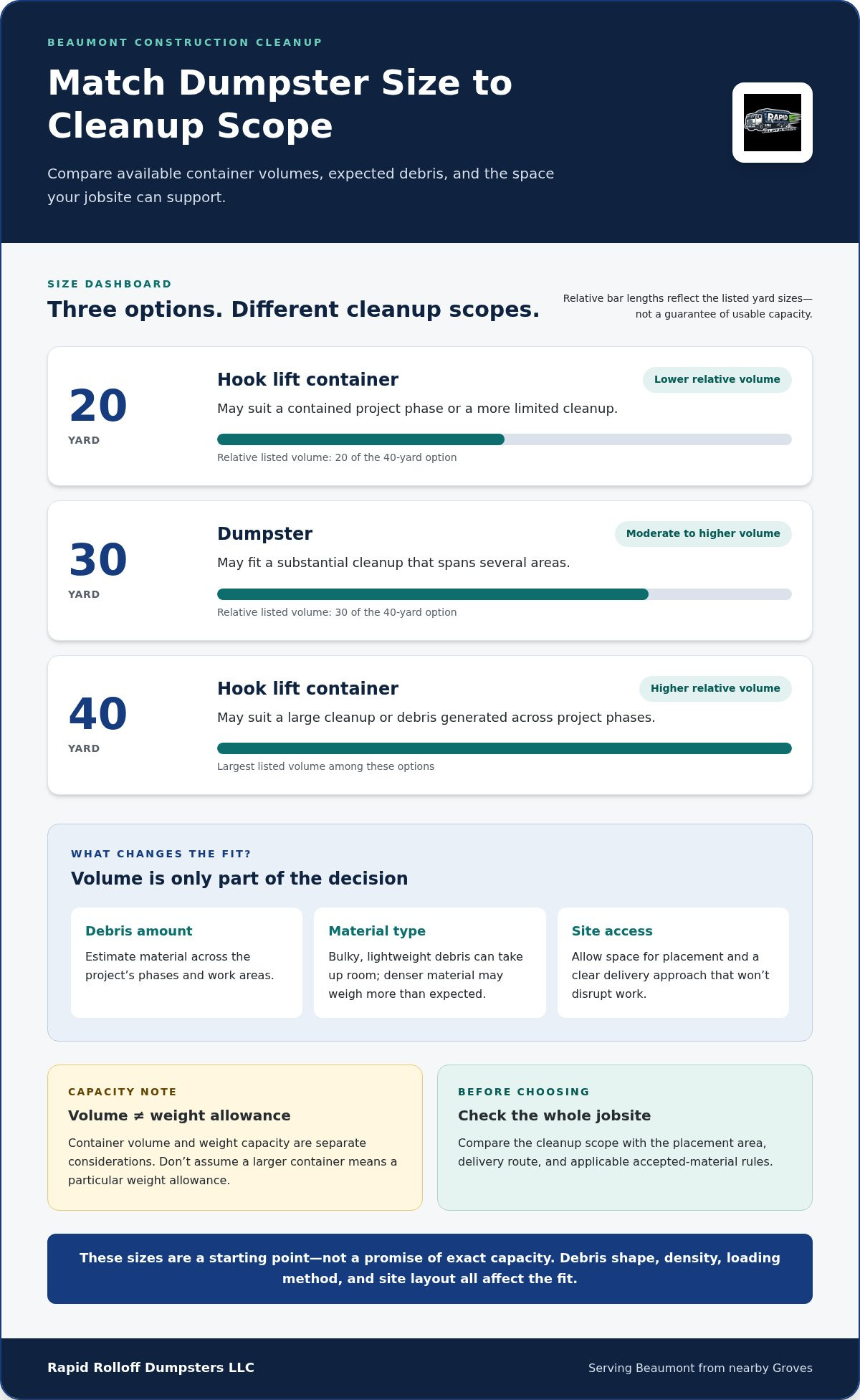
A container should fit the amount of debris your project will produce and the space available for delivery and placement. Rapid Rolloff offers 20- and 40-yard hook lift containers and a 30-yard dumpster. Use the comparison below as a starting point, not a promise of exact capacity. Debris shape, density, loading method, and site layout all affect which option makes sense.
The best container size depends on debris volume, material, and site access. A pile of bulky, lightweight debris can take up substantial room, while a smaller amount of dense material may weigh more than expected. Container volume and weight capacity are separate considerations. Don’t assume a larger container automatically means a particular weight allowance.
| Option | Broad project scope | Anticipated debris volume | Jobsite space to consider |
|---|---|---|---|
| 20-yard hook lift container | A contained project phase or more limited cleanup | Lower relative volume among the three options | A defined placement area with room for delivery and access |
| 30-yard dumpster | A substantial cleanup that may span several areas | Moderate to higher relative volume | Placement room suited to a larger project scope |
| 40-yard hook lift container | A large cleanup or debris produced across project phases | Higher relative volume among the three options | Space for the container and a clear approach that won’t disrupt work |
When might a 20-, 30-, or 40-yard dumpster fit?
A 20-yard option may suit a focused cleanup with a limited scope. A 30-yard dumpster may be appropriate when a remodel or another project is expected to generate a more substantial volume. A 40-yard option provides the most volume of these choices for a larger cleanup. Treat these as broad comparisons, then factor in material and site limits before selecting a size.
How do debris type and site space affect size selection?
Sort your estimate into broad planning categories, such as bulky, lightweight debris and denser material. These categories help you think through space and loading, but they don’t determine whether an item is accepted. Follow the applicable rental terms for material guidance, and don’t use a volume estimate as a substitute for weight information.
Consider the container’s footprint as well as its volume. The intended placement area and approach need to work with the jobsite layout. Estimate how much debris each phase will produce and when it will be ready for loading. A phased project may add debris gradually, while a concentrated cleanup can create a large pile in a shorter stretch of work. For construction debris dumpster rental Beaumont planning, compare the project estimate with Rapid Rolloff’s dumpster rental options to identify a suitable starting point.
Coordinate Dumpster Delivery and Placement at Your Beaumont Jobsite
A container can support a construction cleanup only if the delivery route and placement area work with the jobsite. Plan where it will sit before the scheduled delivery, then consider how workers, equipment, and materials will move around it. A clear plan helps keep the loading area useful without turning it into a bottleneck.
Use this sequence to organize a construction debris dumpster rental Beaumont project:
- Identify the placement area. Choose a spot that suits the work layout and is accessible for loading. Consider where debris will collect and how workers will reach the container without crossing busy work zones.
- Assess the approach. Look for a clear route from the site entrance to the intended spot. Check for overhead clearance, tight turns, gates, parked vehicles, and equipment that could obstruct access.
- Coordinate delivery. Share the planned placement area and access details when arranging the rental. Clear the approach and remove movable obstacles before the scheduled delivery.
- Plan for pickup. Keep the container and its approach accessible as the project progresses. Include pickup in the site schedule so stored materials or equipment don’t block the area when the container needs to be removed.
Prepare the site for container placement
Walk the route as if you were guiding a delivery vehicle. Check that the intended spot is firm, reasonably level, and reachable, then consider overhead obstacles and nearby work zones. For example, placing a container close to a debris-producing area may reduce carrying distance, but not if it blocks equipment movement or access to active work. If you’re considering public property, check applicable local requirements before planning placement there.
Mark the proposed area for your crew and keep it clear of supplies, vehicles, and temporary obstructions. A known placement point helps workers understand where debris should go and reduces confusion as the job moves between phases.
Fit delivery and pickup into the construction schedule
Think about when debris will begin to accumulate, not just the project’s start date. If a particular phase generates most of the cleanup material, coordinate delivery around that part of the work. This can help avoid occupying valuable site space before the container is useful, while giving the crew a planned loading point once debris starts building up.
Keep the loading area accessible throughout the work. Assign a clear route for moving debris, and avoid staging materials where they could obstruct the container or the approach. Before pickup, make sure the route remains open and the container is accessible. Rapid Rolloff’s dumpster rental service includes container delivery and pickup for residential and commercial projects, helping Beaumont-area customers plan those steps as part of the cleanup.
These details matter on active sites in Beaumont and nearby communities. A considered location, clear approach, and schedule that follows the project’s pace can help keep container logistics from competing with the work itself.
Load Construction Debris Carefully and Keep the Worksite Organized
A well-chosen container still needs a thoughtful loading plan. As debris builds, keep the area around the dumpster orderly and follow the rental’s material and weight limits. Sorting material by type can make it easier to manage what goes into the container and support appropriate handling later, but separation does not mean every material is accepted. Use the rental terms as your guide.
Container volume alone does not determine whether a debris load is suitable. A container may have room left while the load is already too dense for its applicable weight limit. For a construction debris dumpster rental Beaumont project, plan for both how much space debris occupies and how heavy the combined load may be. Don’t guess based only on how full the container looks.
Organize debris as the project progresses
Set up collection areas near the designated loading zone, but keep them out of workers’ paths and equipment routes. If the project produces different categories of debris, keep them separate where practical. This can make loading more orderly and help you identify material that needs specific handling guidance before it goes into the dumpster.
Bulky, lightweight debris can take up substantial space without weighing as much as a smaller quantity of dense material. Plan how each category will be loaded rather than treating all debris alike. Distribute material thoughtfully across the container, avoid unstable piles, and don’t place debris where it could shift or interfere with access. Keep the rental’s current material rules in view as work moves between phases.
Avoid overfilling and unverified disposal assumptions
Keep debris within the container’s safe fill level. Material extending above the top or obstructing access can create problems during transport. Don’t assume that an item is acceptable just because it comes from a construction project, and don’t rely on container size as a substitute for weight guidance.
Before loading, review the applicable rental terms for material restrictions and weight limits. Pay particular attention to regulated, unusual, or mixed materials. These may require specific disposal guidance, so don’t place them in the container based on assumption. If your project involves material you’re unsure about, get the relevant instructions before loading it. That simple step can help prevent a sorting problem from becoming a pickup complication.
- Sort thoughtfully: Keep different debris categories organized where practical and follow the container’s material rules.
- Load with care: Distribute material instead of building a concentrated or unstable pile.
- Watch the fill level: Keep debris contained and avoid blocking access or extending material above the safe fill line.
- Check limits: Use the rental terms for weight and material guidance rather than estimating from volume alone.
Keep the loading area clear enough for workers to move debris safely and for the container to remain accessible. Before adding an uncertain material, review the rental guidance. To plan your project around suitable container options, explore Rapid Rolloff dumpster rentals.
Arrange Construction Debris Dumpster Rental with Rapid Rolloff
With your cleanup scope and jobsite plan in mind, arranging a rental becomes more straightforward. Estimate how much debris the project will produce, consider its material and density, assess the delivery route and placement area, then choose a container size that fits the work. These details help connect the rental to the project rather than choosing by volume alone.
Rapid Rolloff Dumpsters LLC serves Beaumont from its base in Groves, Texas. Rental options include 20- and 40-yard hook lift containers and a 30-yard dumpster. Container delivery and pickup are part of the rental service for local residential and commercial projects.
What details help organize a rental?
Share a clear picture of the work and the conditions at the site. A concise description can help organize the discussion around container size, placement, and timing in relation to the project. Gather these details before arranging service:
- Project type and scope: Describe whether the cleanup is for renovation, remodeling, roofing, framing, or another construction phase, and estimate the debris volume.
- Material information: Identify the expected debris categories, including any unusual or regulated materials that may need specific disposal guidance.
- Placement and access: Note where you’d like the container placed, how a delivery vehicle can reach that area, and any tight turns, overhead obstacles, gates, or active work zones.
- Project sequence: Explain when debris is expected to start accumulating and how the loading area fits into the work schedule.
It’s better to describe uncertainty than to make assumptions. If the debris estimate is approximate, say so. If you’re unsure how a particular material should be handled, flag it before loading. Clear information supports a rental plan that accounts for both the cleanup and the site.
Get a local container rental for your construction cleanup
Rapid Rolloff serves Beaumont, Port Arthur, Nederland, Port Neches, Groves, Orange, and Bridge City. For a local construction cleanup, the choice comes down to matching the debris estimate and material considerations with the available placement space and access route. The 20-yard and 40-yard hook lift containers and 30-yard dumpster offer options for different project scopes, with delivery and pickup included in the rental service.
Before you arrange a rental, have your project description, debris estimate, intended container location, and access notes ready. That gives you a practical starting point for selecting an option and coordinating the container with the work. For construction debris dumpster rental Beaumont projects, Arrange a dumpster rental for your Beaumont project.
Put Your Beaumont Cleanup Plan Into Action
A smoother cleanup starts with a clear picture of what the job will generate and how debris removal fits into the work. Before arranging a rental, turn your project notes into a practical plan: describe the scope, identify any material questions, and outline how the container will fit into the site. This gives your cleanup a defined next step instead of leaving decisions until debris starts to collect.
For construction debris dumpster rental Beaumont planning, keep the process straightforward. Focus on the details that affect your project, and share them when arranging your rental. If the work changes, revisit your estimate and loading plan so the cleanup stays aligned with the job’s needs.
Rapid Rolloff Dumpsters LLC is ready to help you plan a local container rental for your construction project. Arrange a dumpster rental for your Beaumont construction project, then move into the next phase with a clear plan and a more organized worksite.
Frequently Asked Questions
What size dumpster is best for construction debris?
The best size depends on the cleanup scope, material, and site conditions. For construction debris dumpster rental Beaumont projects, Rapid Rolloff offers 20-, 30-, and 40-yard options. A contained work phase may suit the 20-yard option, a more substantial cleanup may call for the 30-yard dumpster, and a large project may need the 40-yard container. Treat these as starting points, not capacity guarantees, and account for material weight and placement space.
Can construction debris go in a roll-off dumpster?
Yes, roll-off dumpsters are used for construction cleanup, but that doesn’t mean every construction-related material is accepted. Acceptance depends on the rental’s material and disposal terms. Before loading, separate ordinary project debris from unusual or regulated material, and check the guidance for each category. This is particularly useful during renovations, where different work phases can create mixed loads. Keep uncertain items aside until you know how they should be handled.
How do I estimate the amount of construction debris for a dumpster rental?
Estimate debris by work area and project phase, rather than relying only on the project’s overall label. For a rough pile estimate, measure its length, width, and average height, then multiply those figures to estimate its volume. Add separate estimates for debris that will accumulate in other areas. Also consider whether material is bulky or dense, since space occupied doesn’t tell you the load’s weight.
What happens if construction debris is too heavy for the dumpster?
A load that exceeds the rental’s weight limit may not be suitable for pickup as loaded. Don’t add more debris if you think the limit may have been reached. Review the rental terms for the applicable weight guidance and follow the instructions for resolving an overweight load. Avoid trying to judge weight by fill level alone, since dense material can make a container heavy even when it isn’t full.
Do I need a permit to place a dumpster at a Beaumont construction site?
Permit requirements can depend on where the container will be placed and current local rules. Don’t assume the requirements for a private driveway are the same as those for public property. Before arranging placement, determine whether the proposed spot is private or public and check applicable Beaumont requirements for that location. Sorting this out in advance can help you avoid having to change the placement plan after arranging your rental.
Can a dumpster be placed on the street at a construction site?
Don’t assume a dumpster can be placed on a Beaumont street without permission. Street placement involves public property, and local requirements may apply. Check current city rules before choosing the street as your placement area, and plan a private-property location if street placement isn’t workable. In either case, consider vehicle access and whether the container’s location would interfere with the site’s normal movement.