The biggest dumpster isn’t always the best fit for a commercial job. A container that suits the debris but blocks a work area or complicates access can slow the cleanup. The right commercial dumpster rental starts with three practical questions: what will you discard, where can the container sit, and when should it be picked up?
Planning before delivery helps keep a project moving, especially when space is limited or a business needs to stay open. This guide explains how to compare container options, prepare a site, and coordinate delivery and pickup with the work schedule. Rapid Rolloff Dumpsters offers 20-yard and 40-yard hook lift dumpsters and 30-yard dumpsters for commercial projects.
Start by matching the container to the debris, then consider access, placement, and the project timeline. Rapid Rolloff Dumpsters is based in Groves and serves nearby Southeast Texas communities, including Port Arthur, Beaumont, Nederland, Port Neches, Orange, and Bridge City.
Key Takeaways
- A commercial dumpster rental handles waste from a temporary project, unlike routine scheduled business waste collection.
- Compare the 20-yard and 40-yard hook lift containers with the 30-yard dumpster, considering debris type, volume, and cleanup pace.
- Review placement space, the truck’s approach, and loading access with the site lead before delivery.
- Plan delivery, loading, and pickup around the work schedule to coordinate cleanup and site access.
- Rapid Rolloff provides commercial dumpster delivery and pickup in Southeast Texas, including near Groves, Beaumont, and Port Arthur.
What commercial dumpster rental handles, and how it differs from routine waste service
A commercial dumpster rental provides a temporary container for waste from a defined business project. The container is delivered for a cleanup or work phase, loaded as the project progresses, and picked up when the job is ready for that step to end. It suits a concentrated flow of debris, rather than the steady waste a business generates day after day.
That distinction matters when a business has both routine waste and project debris. A shop may need regular collection for everyday packaging and office waste, then produce a separate burst of debris during a renovation. A project rental gives that cleanup its own container and schedule, helping keep work-related material separate from day-to-day operations.
The phrase commercial waste definition covers waste from commercial activity broadly. For a temporary container, focus on what the project will produce, how much may accumulate, and when the container needs to be removed. Those details help shape a practical rental plan without assuming every material belongs in the same container.
Which commercial projects commonly need a temporary dumpster?
Renovations can generate old fixtures, packaging, and construction debris. New construction and demolition produce waste at different stages, while a business or property cleanout may involve furniture, shelving, and accumulated items. Site work can also generate debris as an area is cleared or prepared. These examples help with planning, but material handling should follow the rental’s instructions.
Match the plan to the work: estimate the amount and general type of debris, then consider how quickly crews will generate it. A short, intensive demolition phase may fill a container differently from a gradual office cleanout. Sorting out these factors before work begins helps you compare container options and organize loading before debris starts to pile up.
Commercial roll-off rental versus routine dumpster service
A temporary roll-off rental fits a project with a defined cleanup need. Delivery and pickup are coordinated with the work, so the container supports a renovation, construction phase, or cleanout instead of recurring waste removal. Rapid Rolloff Dumpsters provides dumpster rental, delivery, and pickup for commercial projects.
Routine collection serves a different pattern: a business produces ongoing waste and needs it collected on a repeating schedule. Use a project rental when debris is tied to a finite job or work phase. If the need is part of normal business operations, it is routine collection. Identify which pattern applies, then consider the project scope and debris when planning a temporary rental.
How to choose a commercial dumpster size and container for your project
Choosing a container starts with estimating the debris, but volume alone isn’t enough. Material type, work pace, placement space, and loading access also affect which option makes sense. Rapid Rolloff offers 20-yard and 40-yard hook lift dumpsters and a 30-yard dumpster. Use those options as a starting point, then consider how the job will unfold on site.
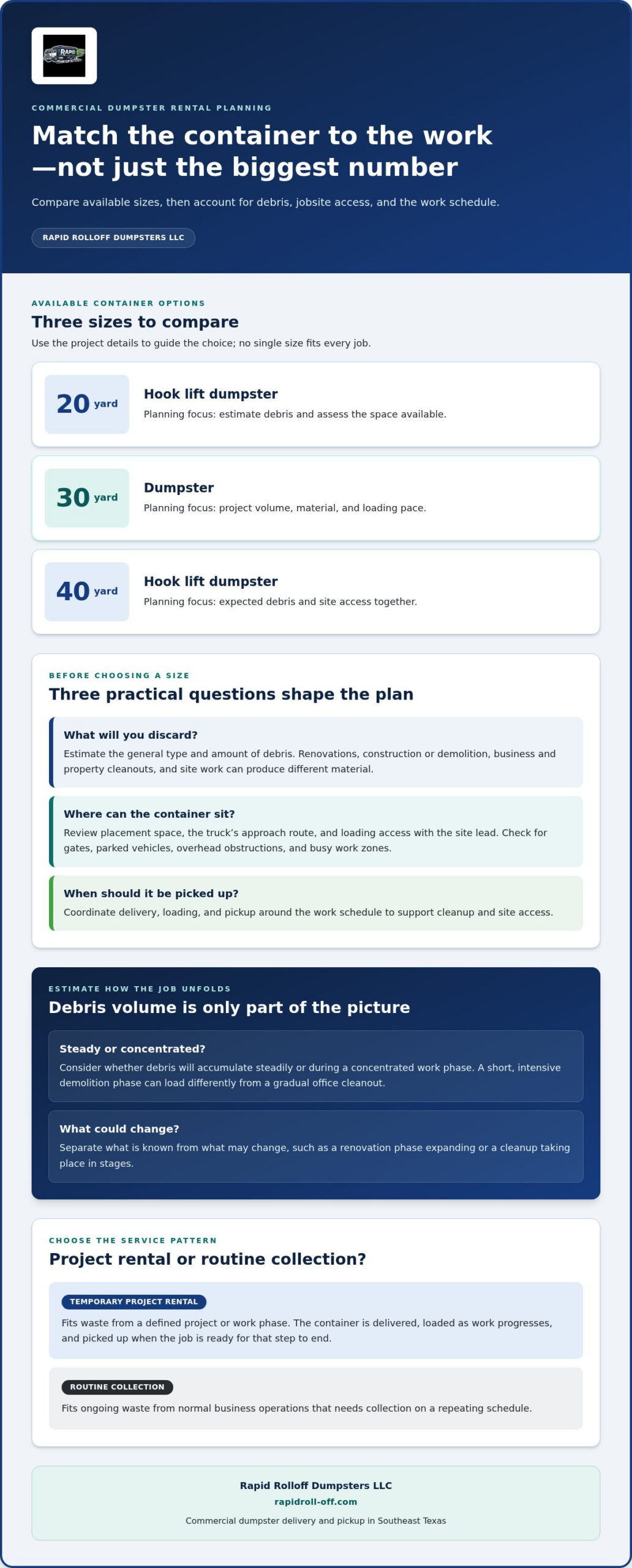
Match project scope to the available 20-, 30-, and 40-yard options
Begin with a simple inventory: what debris will the project produce, how much might accumulate, and will it arrive steadily or during a concentrated work phase? The available sizes give you three options to compare without requiring an exact load estimate. A clear account of the expected debris also helps you plan where the container will sit and how crews will load it.
| Option | Container type | Planning focus |
|---|---|---|
| 20-yard | Hook lift dumpster | Estimate debris and assess the space available |
| 30-yard | Dumpster | Consider project volume, material, and loading pace |
| 40-yard | Hook lift dumpster | Review the expected debris and site access together |
Use the table to organize your decision, not as a guarantee that one size will suit every job. Two projects with similar debris volume may differ in material mix, loading pace, or available space. Note those differences before choosing. The federal regulations for commercial solid waste collection address collection standards, while the container choice should reflect the project and the site.
When the hook lift container option may suit a site
The 20-yard and 40-yard options are hook lift containers. Consider the container style alongside the available space, the truck’s approach route, and how workers will reach the loading area. Look for pinch points such as gates, parked vehicles, overhead obstructions, and busy work zones. Identifying these constraints early helps you account for them when planning the rental.
Before choosing a commercial dumpster rental, have the site lead describe the debris, loading pace, and placement conditions. The estimate doesn’t need to be exact. Separate what you know from what may change, such as a renovation phase expanding or a cleanup taking place in stages. That gives you a more grounded basis for comparing the 20-yard, 30-yard, and 40-yard options.
For a Southeast Texas project, review Rapid Rolloff’s dumpster rental options with the site and debris details in mind. Preparing those details helps connect container choice to the actual work, rather than selecting by size alone.
Will a commercial dumpster fit your Southeast Texas jobsite?
A suitable container also needs a workable place to sit. Before arranging a commercial dumpster rental, walk the delivery route and proposed placement area with the property manager or site lead. They can identify where work is happening, which areas must stay open, and what may change during the project. Spotting constraints early helps prevent placement from disrupting daily operations.
Before delivery, assess the placement area, truck approach, overhead clearance, loading path, nearby traffic, and access that must remain open. Use this checklist to describe the site clearly and identify obstacles during planning.
Prepare the delivery and placement area
Choose a location that can be reached and used for loading without interfering with the work zone. Walk the route from the site entrance to the proposed spot. Look for tight turns, gates, parked equipment, overhead branches or lines, and areas that may be in active use. Don’t assume an open space is accessible just because it looks large enough from a distance.
- Identify the intended placement spot and any alternate location.
- Note overhead obstructions and turning or entry constraints along the approach.
- Map the path workers will use to carry or move debris to the container.
- Consider how nearby traffic, deliveries, and active work could affect access.
Include these observations in the site plan. Keep vehicles and equipment out of the delivery path, and make sure the loading area remains usable as the project progresses.
Account for business access and local placement rules
A container shouldn’t create an avoidable barrier for customers, employees, contractors, or emergency access. Consider entrances, walkways, loading bays, drive lanes, and routes crews need to keep clear. If the preferred placement is on public property, local requirements may apply. Identify the proposed placement early and include the applicable local process in your plans.
Site conditions vary across Rapid Rolloff’s service area. A business in Groves may have different access needs from a project in Port Arthur, Beaumont, Nederland, Port Neches, Orange, or Bridge City. The same questions help in each community: where can the container sit, how will it be reached, and what needs to stay accessible?
- Property manager: Identify site restrictions, shared access areas, and placement concerns.
- Site lead: Coordinate the delivery route and keep the loading zone clear as work changes.
- Business team: Plan around customer entrances, employee movement, and scheduled deliveries.
Set the placement plan before the work area becomes crowded. A clear description of the location, access route, and site constraints gives delivery planning a useful starting point and helps the team keep the site organized during cleanup.
Plan commercial dumpster delivery, loading, and pickup around the work
A rental works best when container arrival and removal fit the job’s actual schedule. Build a simple plan that connects project details, site access, crew responsibilities, and cleanup timing. Leave room for the work to shift, and make sure the person coordinating the container can keep the site team informed.
Coordinate delivery with the project schedule
Before arranging delivery, identify the expected project start, site contact, placement area, and loading plan. Make sure crews know where the container will sit before debris begins to accumulate. This helps avoid last-minute confusion and keeps the access route clear. Plan around the work sequence, without assuming a specific delivery window or pickup turnaround.
Use this sequence to keep the rental organized:
- Describe the work. Outline the project phases, general debris types, and when cleanup is expected to begin.
- Set the site plan. Name the placement area, delivery approach, loading route, and site contact responsible for coordination.
- Align delivery with active work. Plan around the phase that will generate debris, while keeping access clear for delivery and the crew.
- Agree on loading responsibilities. Tell workers where debris goes and who will keep the container area orderly.
- Plan for pickup. Estimate when cleanup will be complete and make sure the approach and placement area can be accessed.
Use a realistic timeline. If a project has several stages, account for pauses between them and the time needed to collect and load debris. A container placed too early may sit while the site changes; one planned too late may leave crews without a clear place for project waste. Keep the site contact informed when work or access conditions shift.
Keep loading and pickup plans clear
Assign someone to oversee the loading area and keep debris from spreading around the container. Organized loading can make better use of available space and keep the work zone easier to manage. Follow the rental’s material and loading instructions rather than assuming all project waste belongs in the container. Rental duration, disposal, and weight terms depend on the rental arrangement, so include those terms in the project plan.
Before pickup, check that the cleanup phase is complete, the container is ready according to its instructions, and the access route is clear. Coordinate removal with the site lead so parked vehicles, equipment, or ongoing work don’t block the planned approach. If the project is still generating debris, account for that before setting the pickup plan.
For a commercial dumpster rental coordinated with your project, plan delivery and pickup with Rapid Rolloff. Clear details about the work and site help keep the rental process straightforward.
Rent a commercial dumpster from Rapid Rolloff in Southeast Texas
For project cleanup, keep the rental plan connected to the work itself. Rapid Rolloff Dumpsters LLC provides commercial dumpster rentals with container delivery and pickup. Options include 20-yard and 40-yard hook lift dumpsters and a 30-yard dumpster. Describe the job and where the container needs to go, then use those details to plan the rental around the site.
Based in Groves, Rapid Rolloff serves nearby Southeast Texas communities, including Port Arthur, Beaumont, Nederland, Port Neches, Orange, and Bridge City. Local projects vary, but the planning basics remain the same: describe the debris, consider the placement area, and map out the work and cleanup schedule. That gives the rental plan a practical starting point without relying on assumptions about container fit or delivery timing.
Choose a local container rental for the project
Compare the 20-yard and 40-yard hook lift options with the 30-yard dumpster in light of the project’s debris and work pace. A renovation, construction phase, or business cleanout may create a different cleanup pattern, so share the project scope rather than choosing by size alone. Delivery and pickup are part of Rapid Rolloff’s commercial rental service, connecting the container to the project’s needs.
Site details matter, too. Note the proposed placement area and how workers will load the container. Include any changes to access or the work schedule in the plan. Clear information helps align container choice and delivery planning with the job, while keeping the rental discussion focused on the actual site and cleanup.
Get the information ready to arrange a rental
Before arranging a commercial dumpster rental, gather a few details to describe the project clearly:
- Project location: Provide the jobsite address or community.
- Debris type: Describe the general material the project will generate.
- Estimated volume: Share your best estimate and note whether cleanup will happen in stages.
- Placement area: Identify the intended location and any access considerations.
- Timing: Explain when the work is expected to begin and when pickup may be needed.
These details help connect project scope with the available container options and coordinate delivery and pickup with the work. You don’t need to overcomplicate the estimate. A clear outline of the job, site, and schedule is a useful first step.
Share your project scope, site location, and timing with Rapid Rolloff to get your rental plan started. Plan your commercial dumpster rental for a project in Groves or a nearby Southeast Texas community.
Set your project up for a smoother cleanup
Before debris starts to build, assign one person to keep the rental plan aligned with the job. A short project brief can make that handoff easier. Include the work area, expected debris, possible access changes, and the person coordinating the container. Share updates as milestones shift so delivery and pickup planning stay connected to the site’s needs.
A well-planned commercial dumpster rental is one part of a larger workflow. Pair it with a clear crew plan: where debris goes, who keeps the area orderly, and how the team will know when cleanup is complete. These decisions can reduce confusion while the project is underway.
Rapid Rolloff Dumpsters LLC is based in Groves, Texas, and offers commercial container delivery and pickup with 20-yard, 30-yard, and 40-yard rental options. When you’re ready to put your project details into motion, plan your commercial dumpster rental. Start with a clear plan for the work, site, and schedule.
Frequently Asked Questions
How much does commercial dumpster rental cost?
The cost depends on the project and rental terms, so one price won’t fit every job. Container size, project location, and rental details can affect the total. For a useful estimate, have the jobsite address, debris description, and likely cleanup schedule ready. Review the rental arrangement and any project-specific terms before setting a budget.
What size dumpster is best for a commercial project?
The right size depends on how much debris the work will generate, what kind of material it is, and how quickly it will accumulate. Rapid Rolloff offers 20-yard and 40-yard hook lift dumpsters and a 30-yard dumpster. To compare them, outline the work phases and likely debris volume. A project completed in stages may need a different plan from a single concentrated cleanup.
Do I need a permit for a commercial dumpster?
Permit needs depend on where the container will be placed and local requirements. A container on private property may be treated differently from one occupying a public street, sidewalk, or other public area. Identify who controls the proposed space and which local rules apply before planning placement. Requirements can differ across Southeast Texas communities and jobsite types.
What materials can go in a commercial dumpster?
Accepted materials depend on the rental’s instructions, so don’t assume every kind of project debris belongs in the same container. Describe the waste and follow the material guidance for the rental before loading. If a job produces different categories of debris, keep them identifiable during cleanup until you know how they should be handled. This helps crews avoid mixing materials based on guesswork.
How long can a business keep a rented dumpster?
The rental arrangement determines how long the business can keep the container. Estimate the cleanup period based on the work schedule, including time for final sorting and loading after active work ends. If the project has several phases, don’t treat the first completion date as the only possible end point. Build a realistic schedule around the rental terms and planned pickup.
Can a commercial dumpster be placed in a tight jobsite?
The site layout and delivery approach determine whether a location is workable. Before choosing a placement spot, check entrances, turning areas, overhead obstructions, nearby equipment, and the route workers will use to load debris. A narrow driveway or crowded work zone may limit practical locations. Include those constraints in the plan and consider whether another accessible spot on the property would keep work and traffic moving.
Can a business rent a dumpster for a one-time cleanup?
Yes. A temporary rental can suit a one-time business cleanup, such as clearing an unused work area or removing debris during a defined project. Decide what will be discarded, organize the cleanup crew, and identify a placement area before work begins. A clear start and finish plan helps match the container arrangement to the cleanup rather than ongoing waste collection.