The wrong item can turn an otherwise routine dumpster load into a rejected pickup. If you’re asking “what can you not put in a dumpster Texas,” the answer depends on the material, applicable rules, rental terms, and the facility receiving the waste.
Most cleanup debris may be suitable for a dumpster, but hazardous products and unusual waste often need a separate disposal route. Liquid paint, batteries, electronics, tires, and appliances containing refrigerants are common examples to sort out before loading. Restricted items can cause handling or disposal problems when mixed with ordinary debris.
This guide explains which materials are commonly prohibited or restricted, why rules can differ across Texas, and how to separate eligible debris from waste that needs special handling. You’ll also find practical steps to take before loading. For residential and commercial projects in Groves and nearby Southeast Texas communities, Rapid Rolloff Dumpsters offers 20-, 30-, and 40-yard rentals for eligible debris.
Key Takeaways
- To determine what can you not put in a dumpster Texas, consider the material, applicable requirements, rental terms, and destination facility.
- State requirements, hauler terms, and facility policies can differ. A general list may not apply to every cleanup.
- Sort questionable items away from ordinary household or renovation debris before loading.
- Use an appropriate separate route for restricted waste and plan a dumpster rental for eligible project debris.
Prohibited Items in Texas Dumpsters: The Rules
Whether an item is allowed depends on what it is, which rules apply, and where the load will go. A law may regulate how certain waste is handled, while a dumpster company or disposal facility may set additional acceptance limits. General online lists can help flag items for review, but they don’t replace current local requirements for your cleanup.
If you’re asking what can you not put in a dumpster Texas, separate the restrictions into three categories. State or federal law governs certain waste and disposal practices. The hauler’s terms define what it will collect in its container. The receiving facility sets its own acceptance rules. An item may have a lawful disposal route but still be refused in a standard dumpster load.
Why dumpster rules can differ across Texas
The Texas Commission on Environmental Quality (TCEQ) regulates waste matters in Texas, and federal hazardous-waste requirements may also apply under the Resource Conservation and Recovery Act, administered by the U.S. Environmental Protection Agency (EPA). The rules depend on the waste and its classification. Local requirements and facility procedures can add another layer, including in Southeast Texas. Don’t assume a rule reported for one city or landfill applies statewide.
Some restrictions are legal requirements; others are company policies or facility conditions. Treat claims about a statewide ban carefully unless they identify the specific rule and material. For broad background on how waste systems work, see Waste management in the United States, then rely on current government guidance and applicable local requirements for a Texas disposal decision.
How to read a prohibited-items list
Use examples as screening prompts, not a guarantee that an item will be accepted or rejected in every dumpster. Before sorting an item, identify what it contains, its condition, and the type of container you plan to use. A sealed product, an empty container, and a leaking container can raise different handling questions, even when their labels look similar.
Acceptance rules vary because the material, applicable requirements, hauler terms, and receiving facility all shape what can go in a dumpster.
When a list labels something “prohibited,” look for the reason. Is it regulated by law, excluded by the rental terms, or refused by the destination facility? That distinction helps you avoid mistaking a common precaution for Texas law, or assuming a material is acceptable just because no statewide ban is obvious. If the contents or classification aren’t clear, keep the item apart from ordinary debris while you identify the appropriate disposal route.
This approach works for household cleanouts and commercial projects alike. Set aside uncertain materials before loading eligible renovation or cleanup debris. Separating them early makes it easier to see what belongs in the dumpster and what needs separate handling.
Common Items You Cannot Put in a Texas Dumpster
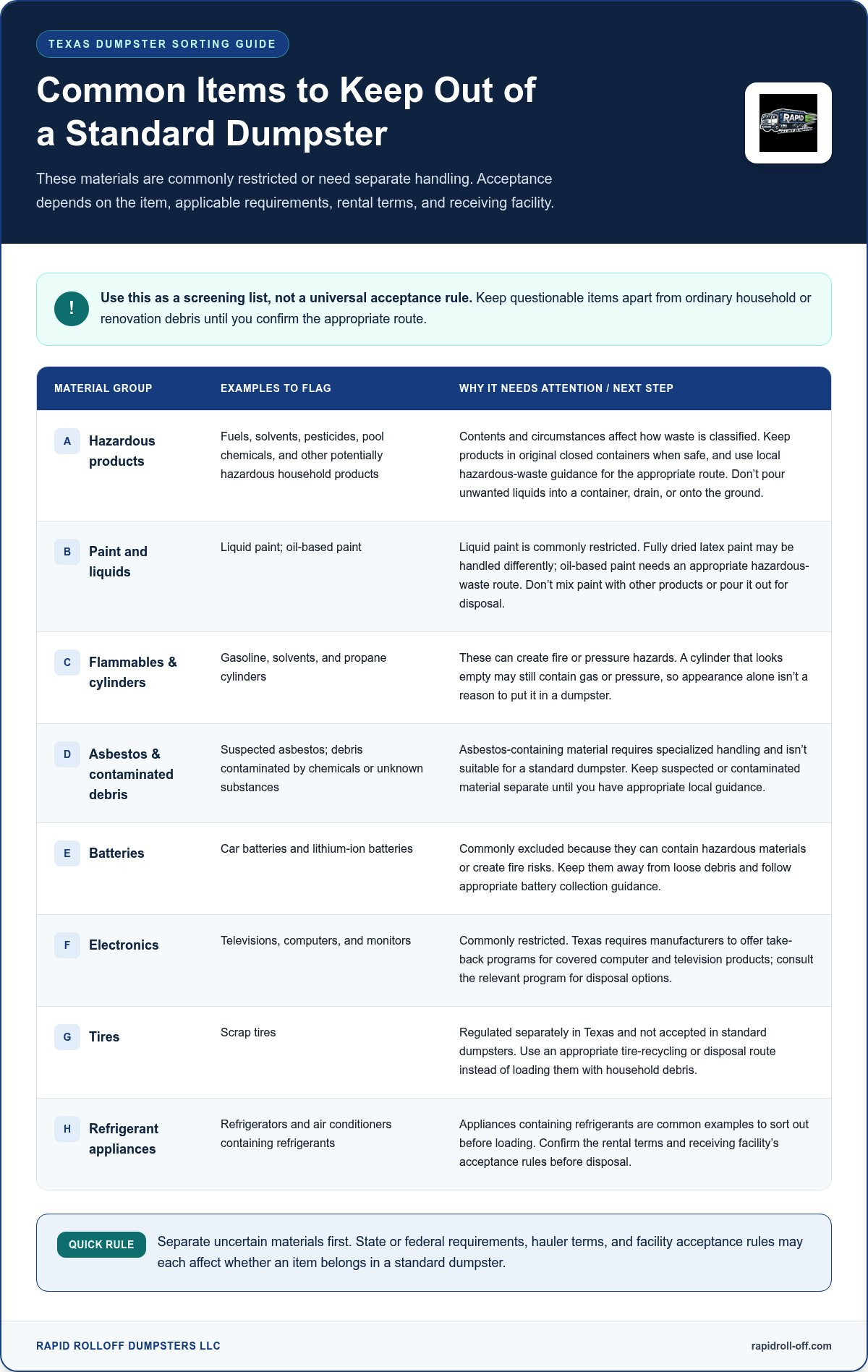
Many restrictions involve materials that can leak, ignite, release harmful substances, or need a separate recycling or disposal process. The examples below are commonly restricted in standard dumpsters, but acceptance depends on the item’s condition, rental terms, and receiving facility. Use this list to flag items for separate handling, not as a guarantee that a destination will accept them.
Hazardous, flammable, and pressurized materials
Keep fuels, solvents, pesticides, pool chemicals, and other potentially hazardous household products out of ordinary dumpster loads. Texas regulates hazardous-waste disposal, but whether a particular product is regulated depends on its contents and circumstances. Don’t pour unwanted liquids into a container, down a drain, or onto the ground. When it’s safe to do so, keep products in their original closed containers and use local hazardous-waste guidance to find the right route.
- Paint and liquids: Liquid paint is commonly restricted. Texas guidance distinguishes paint types: fully dried latex paint may be handled differently from liquid paint, while oil-based paint needs an appropriate hazardous-waste route. Don’t mix paint with other products or pour it out for disposal.
- Flammables and cylinders: Gasoline, solvents, and propane cylinders can create fire or pressure hazards. A cylinder that looks empty may still contain gas or pressure, so don’t put it in a dumpster based on appearance alone.
- Asbestos and contaminated debris: Asbestos-containing material requires specialized handling and isn’t suitable for a standard dumpster. Keep suspected asbestos and debris contaminated by chemicals or unknown substances separate until you have appropriate local guidance.
Electronics, appliances, batteries, and medical waste
These common household items deserve a closer look when deciding what can you not put in a dumpster Texas. Some have state-specific disposal requirements; others may be refused under a hauler’s or facility’s rules. Identify the item and its condition before adding it to renovation or cleanout debris.
- Batteries: Car batteries and lithium-ion batteries are commonly excluded because they can contain hazardous materials or create fire risks. Keep them away from loose debris and follow appropriate battery collection guidance.
- Electronics: Televisions, computers, and monitors are commonly restricted. Texas requires manufacturers to offer take-back programs for covered computer and television products, so consult the relevant program for disposal options.
- Tires: Scrap tires are regulated separately in Texas and aren’t accepted in standard dumpsters. Use an appropriate tire-recycling or disposal route rather than loading them with household debris.
- Refrigerators and air conditioners: Appliances containing refrigerants need facility-specific handling. Refrigerant removal may be required before disposal. Don’t assume an appliance is ready for a dumpster just because it no longer works.
- Sharps and medical waste: Needles and other sharps belong in designated sharps containers and need an appropriate medical-waste disposal route. Follow local collection guidance, and never leave loose sharps in a dumpster.
Once restricted materials are set aside, plan a dumpster for eligible cleanup debris. Rapid Rolloff Dumpsters LLC offers dumpster rentals for project debris in Groves and nearby Southeast Texas communities.
Texas Dumpster Rules: Law vs. Facility Policy
Dumpster restrictions come from different sources, and each answers a different question. State or federal law may regulate how a waste type must be managed. A hauler sets terms for its containers and service. The receiving facility decides what it can accept. So, “not allowed in a dumpster” doesn’t always mean a statewide law bans the material from every disposal route.
Legal permission doesn’t guarantee dumpster acceptance; the hauler’s terms and receiving facility’s rules still apply. Keep that distinction in mind when researching what can you not put in a dumpster Texas. A material may have a lawful disposal route but still be refused in a particular load.
| Source of restriction | What it governs | What to verify |
|---|---|---|
| Applicable law | Requirements for regulated waste under relevant state or federal rules. | Check current Texas Commission on Environmental Quality (TCEQ) guidance and, for federal hazardous-waste context, U.S. Environmental Protection Agency (EPA) information. Confirm that the specific rule applies to the material and situation. |
| Hauler terms | What the dumpster company accepts under its rental and collection terms. | Review the terms for the container and service you’re using. A hauler may restrict materials beyond legal minimums. |
| Receiving-facility rules | What the destination facility can process or accept. | Check current facility guidance where available. A facility may refuse material because of its handling or processing limits. |
Which Texas requirements should readers verify?
Start with the TCEQ for Texas waste guidance. The EPA provides federal context, including information related to the Resource Conservation and Recovery Act, but don’t assume every federal requirement applies to every household cleanup in the same way. Identify the material and circumstances before relying on a general summary.
Local details need the same care. For a project in Groves, Beaumont, Port Arthur, or a nearby community, verify current city or county information relevant to the material and your dumpster placement. A rule for one municipality isn’t automatically a statewide Texas requirement or a rule for a neighboring city.
Why the receiving facility can affect acceptance
Disposal and processing facilities don’t all handle the same materials or use the same acceptance criteria. Facility rules can be stricter than the law and may affect what a hauler can collect in a standard container. That’s a destination-specific limit, not necessarily a legal ban across Texas.
As you plan a cleanup, check the rule that applies to the material, the dumpster rental terms, and the receiving facility’s current requirements. This helps distinguish a facility restriction from state law, while avoiding the assumption that legal disposal automatically means acceptance in a rental container.
Before Loading a Dumpster in Southeast Texas: Use This Sorting Checklist
A short sorting step can make a residential or commercial cleanup easier to manage. Before loading, separate ordinary debris from recyclable items and materials that may need special handling. A search for “what can you not put in a dumpster Texas” can offer clues, but use current local guidance and the terms for your rental to make the final decision.
Sort debris before it reaches the container
Set up separate staging areas before debris starts piling up. Keep potentially restricted materials away from routine household or renovation waste. If you don’t recognize a product, don’t guess based on its container. If you need help identifying it, photograph the label from a safe distance. Keep questionable liquids, chemicals, cylinders, and damaged batteries isolated.
- Identify the material. Note what each item is made of and what it may contain. Check labels, warning symbols, and product names. If the contents are unknown, set the item aside for follow-up instead of treating it as ordinary debris.
- Separate by likely route. Group eligible cleanup debris together. Set aside recyclable items, such as electronics or tires, and keep chemicals, liquids, cylinders, batteries, and other questionable materials separate. Don’t open, pour out, burn, or mix products to make them easier to dispose of.
- Check current requirements. Review applicable local guidance, rental terms, and receiving-facility rules for uncertain categories. Requirements can vary by material and destination, so avoid relying on a list that doesn’t explain where or when it applies.
- Load only eligible debris. Put accepted material in the dumpster. Keep restricted or unidentified items outside the load until you’ve found the appropriate handling route.
Plan for storms and mixed cleanup loads
Storm cleanup in Southeast Texas can create mixed piles: branches and other vegetation may sit beside damaged household goods, batteries, chemical containers, or debris affected by floodwater. Don’t assume every item becomes routine waste because it was damaged in the same storm. Keep suspect or chemically affected materials separate, avoid disturbing unknown substances, and follow current local instructions for storm-related disposal.
If cleanup includes both straightforward debris and items that need separate handling, keep those streams distinct from the start. This makes it easier to load eligible material without accidentally adding questionable waste, and helps you describe the materials accurately when following local disposal guidance.
Once the eligible debris is sorted, match the container to the cleanup. Rapid Rolloff Dumpsters serves Groves and nearby Southeast Texas communities with 20- and 40-yard hook lift dumpsters and 30-yard dumpster rentals for residential and commercial projects. Explore dumpster rental options for your cleanup and keep restricted materials out of the load.
Managing Restricted Waste and Texas Dumpster Rentals
After separating restricted materials from ordinary cleanup debris, plan a disposal route for each group. The right option depends on what an item contains and current local guidance. Don’t put an uncertain item in a rental container simply to clear the work area. Keeping it separate gives you time to find the appropriate route without mixing it into an otherwise eligible load.
Choose a separate disposal route for restricted materials
Start with current municipal or county household hazardous-waste information for designated collection options. Collection events, facility hours, and accepted materials can change, so use current instructions rather than an old notice or general online list. For needles and other medical sharps, follow local health or waste authority guidance on safe handling and disposal.
Match the route to the item. Electronics, tires, batteries, chemicals, and refrigerant-containing appliances may each have different handling or collection requirements. Read current acceptance instructions before transporting anything, and keep materials contained and separated as directed. If an item’s contents are unclear, identify it before choosing a route. Never pour, burn, or combine unwanted products to make disposal easier.
Keep your dumpster rental simple and well sorted
Estimate eligible project debris separately from materials that need special handling. For example, make a rough list of renovation debris or household items for the dumpster, then keep restricted waste in a separate, clearly identified area. This helps you plan container needs and reduces the chance that a questionable item will be mixed into the load.
Rapid Rolloff provides delivery and pickup for residential and commercial projects in Groves and nearby Southeast Texas communities. Rental options include 20- and 40-yard hook lift dumpsters and 30-yard dumpsters. Choose a size based on the eligible debris you expect to load, not the total volume of every item from the cleanup. Restricted materials still need their own appropriate route.
Before loading, take one final look at your separated piles. Confirm that the debris intended for the dumpster fits the applicable rental and disposal requirements, and keep anything uncertain out until you have current guidance. If you’re still asking what can you not put in a dumpster Texas, remember that local instructions and destination acceptance can affect the answer. A well-sorted load makes cleanup planning clearer.
For eligible debris from a home cleanout, renovation, or commercial project, explore Rapid Rolloff dumpster rental options and choose a container that fits the work ahead.
Start Your Cleanup With a Clear Plan
Before work begins, decide where eligible debris will go and set aside anything that needs a different disposal route. That small planning step can keep sorting manageable as the project moves along. If you’re wondering what can you not put in a dumpster Texas, use current local guidance for uncertain items and keep them out of the load until you know the right next step.
Rapid Rolloff Dumpsters is locally based in Groves and serves nearby Southeast Texas communities. Choose from 20-, 30-, and 40-yard dumpsters with delivery and pickup for residential or commercial cleanup projects. Planning the load in advance helps keep eligible debris separate from materials that need special handling.
Ready to plan your cleanup? Explore dumpster rental options for your cleanup and take the next step with confidence.
Frequently Asked Questions
Can you put paint in a dumpster in Texas?
Liquid paint is commonly restricted from standard dumpsters. The type and condition matter: fully dried latex paint may have a different disposal route from liquid or oil-based paint. Keep cans closed and separate while you look up current local instructions. Don’t pour paint into a dumpster, onto the ground, or down a drain. For a cleanup in Southeast Texas, use municipal or county guidance to find the appropriate option for your paint.
Can propane tanks go in a dumpster if they are empty?
No. Don’t put a propane tank in a dumpster just because it seems empty. A cylinder can retain pressure or gas even when it no longer powers an appliance, and it may need specialized handling. Keep it upright and separate from debris without trying to puncture, burn, or modify it. Use current local guidance or the appropriate cylinder return or collection instructions to determine the next step.
Are tires allowed in a Texas dumpster?
Scrap tires generally aren’t accepted in standard dumpsters and are regulated separately in Texas. Keep them apart from cleanup debris and look for a licensed tire processor or a retailer participating in the state recycling program. A permitted landfill may accept tires that have been processed in specified ways, but don’t assume that applies to your load. Check current requirements for the tire and disposal route before transporting it.
Can I throw away a refrigerator or air conditioner in a dumpster?
Not if it still contains refrigerant. Refrigerators and air conditioners may need refrigerant professionally removed by a certified technician before disposal, and the destination may have its own acceptance steps. Don’t cut lines or attempt to release refrigerant yourself. Before moving an appliance, identify whether it contains refrigerant and follow current local collection or facility instructions for preparing it for disposal.
What should I do with household batteries during a cleanup?
Set household batteries aside instead of mixing them with renovation debris. Battery chemistry and condition matter, especially for lithium-ion batteries that are damaged, swollen, or leaking. Keep damaged batteries away from combustible materials and avoid crushing or puncturing them. Check current local waste guidance or battery collection instructions for the right route. Keep car batteries separate as well, since lead-acid batteries have their own handling and recycling options.
Can storm-damaged or flood-contaminated debris go in a dumpster?
Some ordinary storm debris may be eligible, but flood damage alone doesn’t establish that every item can go in a dumpster. Separate vegetation and routine debris from items affected by chemicals, fuel, sewage, or unknown substances. Don’t handle or load material that may be contaminated until you’ve checked current local instructions. After a storm in Southeast Texas, look for guidance from the relevant local government or health authority for the specific debris involved.
Does Texas have one statewide list of items banned from dumpsters?
There isn’t one simple statewide checklist that determines what every dumpster accepts. Texas rules address regulated materials, while local requirements, rental terms, and receiving-facility policies can also affect acceptance. To find out “what can you not put in a dumpster Texas,” identify the waste and check current guidance for its disposal route. Residents in Port Arthur, Beaumont, Nederland, Port Neches, Groves, Orange, and Bridge City should use the relevant local information for their project.