What if the biggest challenge in an estate cleanout isn’t the volume of belongings, but keeping the work organized while family decisions are still being made? An estate cleanout dumpster rental gives you a central place for approved disposal items while you set aside documents, keepsakes, and belongings to donate or sell. A clear sorting plan helps protect what matters and keeps the cleanup moving.
It’s understandable to feel unsure about container size, placement, and how long the cleanout will take. Start by sorting belongings into clear groups, then estimate the debris and choose a practical disposal approach. Rapid Rolloff Dumpsters LLC offers 20-yard and 40-yard hook lift containers and standard 30-yard dumpsters, with delivery and pickup for local projects in and around Groves, Texas.
This guide will help you plan the cleanout, compare container sizes, and coordinate delivery and pickup across Southeast Texas. You’ll also find ways to keep sentimental and reusable items out of the disposal load, so your family can make decisions with less confusion and logistical stress.
Key Takeaways
- An estate cleanout dumpster rental provides one on-site place for unwanted belongings and project debris while family members sort through the home.
- Compare 20-yard, 30-yard, and 40-yard options by considering the cleanout’s volume, the items being removed, and property access.
- Compare a project dumpster with municipal pickup and repeated trips based on your cleanup pace, item types, and sorting needs.
- Set a clear process for family decisions, sorting, placement, and loading before the container arrives.
- Plan delivery and pickup with a local provider serving Groves and nearby communities, including Port Arthur, Beaumont, Nederland, Port Neches, Orange, and Bridge City.
Why an Estate Cleanout Dumpster Rental Can Simplify a Major Cleanup
An estate cleanout can bring family decisions, time pressure, and a mix of household contents into the same project. Furniture, kitchen goods, clothing, paperwork, packing materials, and accumulated debris may all need different next steps. A shared plan helps prevent the rush to clear a room from becoming a rush to discard something important.
An estate cleanout dumpster rental is a temporary container for unwanted belongings and debris generated during a property cleanout. Regular household trash collection handles routine waste through recurring pickup, while a rental container gives a larger project a designated disposal point. It can help organize removal as rooms are cleared, but it doesn’t determine what should be discarded.
What makes an estate cleanout different from routine decluttering?
Routine decluttering usually focuses on a smaller set of belongings. An estate cleanout may involve several rooms and a mix of furniture, everyday household goods, unopened packages, and years of accumulated items. Family members may also need time to identify photographs, important papers, heirlooms, or belongings with personal or resale value. Treat these decisions as a separate step from disposal.
Work in stages. First, set aside items that need review. Then identify belongings to keep, pass to family, sell, donate, or discard. An estate sale may be one way to handle selected items for sale, but it’s separate from deciding what belongs in the disposal load. A clear sorting process gives relatives time to make decisions before unwanted debris is moved to the container.
When can a rental dumpster be a practical option?
A project container can be useful when a cleanout produces substantial unwanted household contents or debris and the work will happen in stages. Rather than relying on repeated household-bin disposal, family members can bring appropriate discard items to one central point as they clear each area. This can make disposal easier to coordinate, especially when several people are working through different rooms.
A container won’t suit every estate or every material. The best disposal approach depends on the volume and types of items, how quickly the property needs to be cleared, site access, and how much sorting remains. Separate items that require another handling method instead of assuming everything belongs in the container.
To keep disposal decisions clear, agree on simple categories before loading:
- Keep or pass along: Set aside family belongings and personal records for review.
- Sell or donate: Identify usable items that may have a next home.
- Discard: Place approved unwanted items and cleanup debris in the project container.
With those categories established, the container becomes a practical part of the plan, not a substitute for family decisions. For a substantial cleanout, an estate cleanout dumpster rental gives disposal work a defined place while the household sorts belongings at a manageable pace.
Choose an Estate Cleanout Dumpster Size That Fits the Project
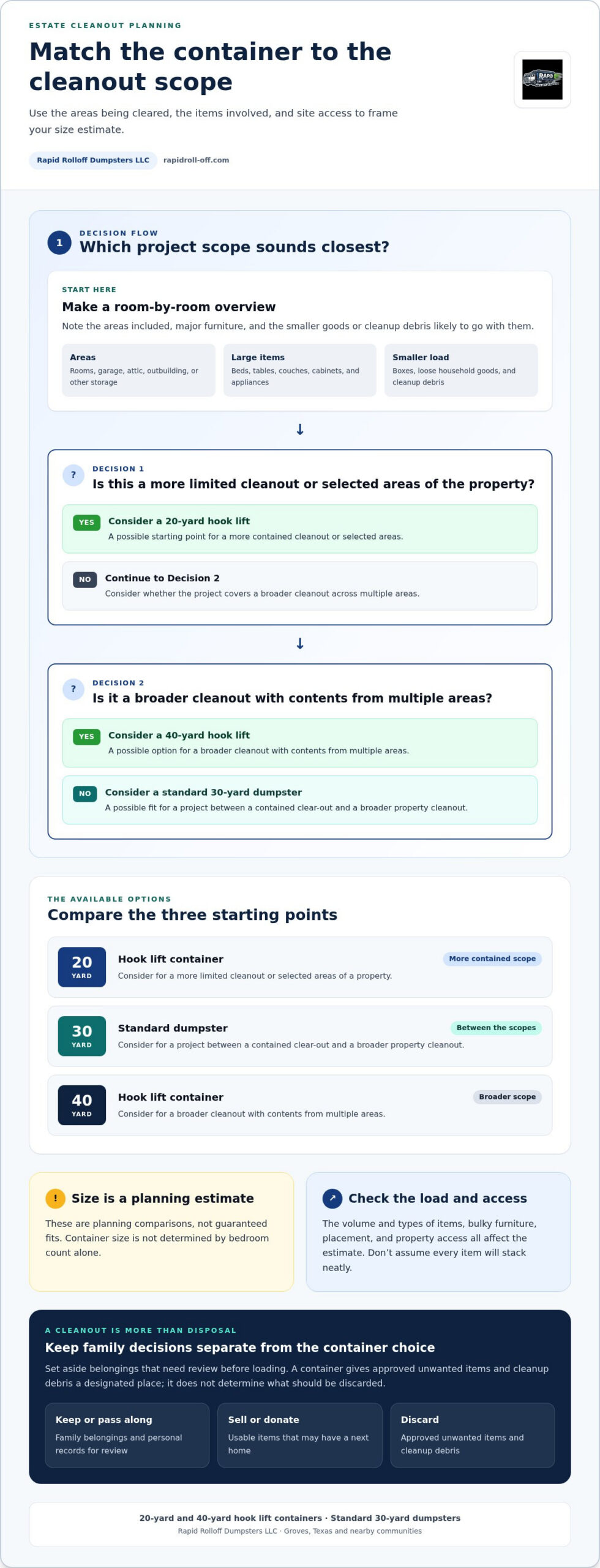
Container size is a planning decision, not a bedroom-count formula. The right option depends on how much you expect to discard, the kinds of items involved, where the container can be placed, and how easily the cleanup area can be accessed. Rapid Rolloff Dumpsters LLC offers 20-yard and 40-yard hook lift containers and a standard 30-yard dumpster. These options give families different starting points for matching a container to the project, without assuming one size will fit every estate.
When might a 20-yard, 30-yard, or 40-yard option fit?
Think in relative terms. A 20-yard option may be a starting point for a more contained cleanout, a 30-yard option may suit a moderate scope, and a 40-yard option may be worth considering for a larger project. These are planning comparisons, not guaranteed fits. Bulky furniture can take up space differently from smaller household goods, so the amount of material alone doesn’t tell the whole story.
| Option | Project considerations |
|---|---|
| 20-yard hook lift | Consider for a more limited cleanout or selected areas of a property. |
| Standard 30-yard dumpster | Consider for a project between a contained clear-out and a broader property cleanout. |
| 40-yard hook lift | Consider for a broader cleanout with contents from multiple areas. |
Use the table to frame your estimate, then account for access and the shape of the load. Furniture may leave gaps that smaller items can fill, but don’t assume every item will stack neatly. The 20-yard and 40-yard choices are hook lift containers; the 30-yard option is a standard dumpster.
What details help estimate the container you need?
Before arranging an estate cleanout dumpster rental, make a quick inventory. You don’t need a precise count of every object. A room-by-room overview gives you a clearer basis for estimating the project and planning delivery and pickup.
- List the areas: Note which rooms are included, plus any garage, attic, outbuilding, or other storage space.
- Identify major furniture: Record large items such as beds, tables, couches, cabinets, and appliances.
- Estimate smaller debris: Consider the boxes, loose household goods, and cleanup debris likely to accompany the larger items.
- Flag special considerations: Note dense materials, unusual waste, narrow access, or limited placement space for project planning.
Use that overview to plan delivery and pickup. It keeps the estimate focused on the actual scope rather than an assumed household size. For a local project, Rapid Rolloff Dumpsters LLC dumpster rental options include 20-yard, 30-yard, and 40-yard choices to compare with your inventory and site access. A practical estimate starts with what you’ll remove and where the container can go.
Dumpster Rental vs. Other Estate Cleanout Disposal Options
The right disposal method depends on more than the amount of clutter. Consider how much material needs to go, what kinds of items are involved, how quickly the property must be cleared, and whether you have room for a container. A project dumpster can serve as a central place for appropriate discard items, while municipal pickup, repeated trips, or separate removal arrangements may suit other parts of the cleanout. No single method fits every estate.
| Option | Useful considerations |
|---|---|
| Project dumpster | Consider the volume of debris, placement access, cleanup pace, and which items are suitable for the container. |
| Municipal pickup | Consider which items are collected, pickup timing, and whether the amount fits the service’s requirements. |
| Repeated trips | Consider travel, available vehicles, loading effort, and whether disposal can happen in smaller batches. |
| Separate removal arrangements | Consider whether selected belongings need a distinct route, such as donation, resale, or special handling. |
When does a dumpster rental make more sense than repeated trips?
A rental container may be practical when unwanted debris builds up across several rooms or cleanup days. Instead of loading and transporting every discard pile individually, family members can bring suitable items to one designated point as work progresses. That can help when the cleanout is staged, though access, material types, and the amount to discard still matter. For a small, selective clear-out, a project container may be more capacity than the job requires.
Repeated trips or municipal pickup may be reasonable for a limited number of items, especially when the cleanup is gradual and household disposal options can accommodate them. Separate removal arrangements can make sense for items that should be donated, sold, or handled apart from general debris. Compare approaches using the project’s practical constraints:
- Volume: Is the discard pile modest, or will it grow as multiple areas are cleared?
- Item types: Are the belongings suitable for one disposal route, or do they need separate handling?
- Pace and access: Will cleanup happen over several work periods, and is there space for a container or transport vehicle?
- Sorting needs: Do family members need time to review belongings before anything is discarded?
Which belongings should stay out of the disposal pile?
Before loading begins, set aside documents, photographs, keepsakes, and anything family members have selected to keep or share. Use separate areas for belongings to keep, pass to relatives, donate, sell, and discard. Label boxes or mark zones so each person can follow the same system, particularly if several family members are sorting at once.
Complete a final review of the discard area before items go into the container. This can catch a mis-sorted photo album, paper file, or personal item without delaying the rest of the planning. An estate cleanout dumpster rental supports the disposal part of the project; family members still decide what belongs there. Match the method to the volume, materials, pace, access, and care the cleanout requires.
Plan the Estate Cleanout Before Your Dumpster Arrives
A short plan can keep family decisions and disposal logistics from getting tangled. Before an estate cleanout dumpster rental is delivered, agree on who can make decisions, identify belongings that need review, estimate what will be discarded, and choose a placement area. Then prepare the property and begin loading. This sequence won’t remove every complication, but it can reduce last-minute confusion and help everyone understand what happens next.
- Identify decision-makers. Agree on who will make or communicate decisions about belongings, especially items that need family review.
- Sort the contents. Mark separate areas for belongings to keep, share with family, donate, sell, or discard.
- Estimate the debris. Make a room-by-room list of expected discard items and note anything that may need separate handling.
- Plan container placement. Select a site with suitable access and enough clearance, and consider activity around the delivery area.
- Prepare, then load. Clear obstacles from the planned access route, review local requirements, and keep sorted belongings separate as disposal begins.
How should families sort belongings before loading?
Use clear labels on boxes or designated areas so everyone can tell what is ready for disposal and what still needs a decision. Keep important documents, medication, valuables, photographs, and personal records away from debris. A written checklist organized by room can track completed areas, flag items for family discussion, and reduce the chance that a quick cleanout sweep sends something important into the discard pile.
Set a practical review process. For example, note who needs to weigh in on a disputed item and where it will stay until there’s a decision. This keeps the cleanup moving without treating uncertainty as permission to discard. Once a room has been reviewed, record its status on the checklist so family members can see what remains.
How can you prepare the property for delivery and pickup?
Choose a placement area that allows delivery access and leaves overhead clearance. Consider vehicles, gates, landscaping, and activity around the route and placement area. Move cars and other movable obstacles before delivery. Also consider how people will continue to enter and move around the property while the cleanout is underway.
Placement permissions and site conditions can vary by property and location. Check applicable local requirements and get any needed property permission before delivery rather than assuming the same rules apply everywhere. Before loading, review current local disposal requirements for restricted materials. Don’t assume every household item or cleanup material belongs in the container.
With decisions, sorting areas, a debris estimate, placement, and requirements addressed in advance, family members can start with a shared plan. Arrange an estate cleanout dumpster rental with Rapid Rolloff Dumpsters LLC for container delivery and pickup as part of your Southeast Texas cleanup plan.
Arrange Estate Cleanout Dumpster Rental in Groves and Nearby Communities
Local coordination is part of a well-planned cleanout. Rapid Rolloff Dumpsters LLC is based in Groves and serves nearby Southeast Texas communities, including Port Arthur, Beaumont, Nederland, Port Neches, Orange, and Bridge City. The rental service includes container delivery and pickup. Share the project details up front so the container choice and placement can be considered in context, rather than treating every property cleanout as the same job.
What information should you have ready when arranging a rental?
Gather a few practical details before arranging your estate cleanout dumpster rental. Start with the property location and the areas involved. Describe the expected debris, note bulky belongings, and identify a preferred placement area. Mention whether the work covers multiple rooms or will take place over several workdays. This overview connects the container choice to the actual cleanout.
Use this checklist to organize the information:
- Property: Provide the cleanout location and any access details that may affect delivery or pickup.
- Project scope: Describe the rooms or other areas being cleared and the approximate debris involved.
- Bulky contents: Note large furniture or other oversized items that may affect how the container is filled.
- Placement: Identify the preferred container location and any nearby obstacles or activity.
- Work plan: Explain whether the cleanout is concentrated into one period or spread over several workdays.
How does Rapid Rolloff Dumpsters support local cleanouts?
Rapid Rolloff offers 20-yard and 40-yard hook lift containers, along with standard 30-yard dumpsters, for project planning. Compare these options against the amount and type of debris, site access, and available placement area, rather than assuming a container size based on the home alone. Container delivery and pickup are part of the rental service, connecting the on-site disposal plan with the start and finish of the cleanout.
Before delivery, review your room-by-room estimate and clear the planned placement area. Keep belongings set aside for family, donation, or sale separate from the discard load. For a cleanout in Groves or a nearby community, having these details ready makes planning easier and helps everyone work from the same plan.
Plan your project with the location, debris estimate, bulky items, preferred placement, and cleanup schedule in hand. Plan your estate cleanout dumpster rental with Rapid Rolloff Dumpsters and arrange container delivery and pickup for your Southeast Texas cleanout.
Take the Next Step Toward a More Organized Cleanout
An estate cleanout can feel easier to approach once the family agrees on what happens next. Choose one person to keep the room-by-room checklist current, note any belongings still awaiting a decision, and make sure everyone understands what is ready for disposal. That simple handoff can prevent confusion as the work moves from planning to clearing the property.
Use your debris estimate and placement plan to make the estate cleanout dumpster rental a defined part of the project, not another open question. A little coordination can help family members focus on the decisions that matter while the cleanup progresses at a manageable pace.
When you’re ready to plan the rental, plan your estate cleanout dumpster rental with Rapid Rolloff Dumpsters. Take the process one step at a time and give your family room to move forward with care.
Frequently Asked Questions
Can I put furniture in an estate cleanout dumpster?
Furniture can go in a project dumpster when it’s accepted under the applicable disposal requirements. A couch, dining table, or dresser may take up space differently, so account for bulky pieces when planning what else can be loaded. Remove personal items from drawers and check furniture carefully before disposal. If an item is still usable, set it aside for family, donation, or sale instead of treating it as debris.
What items should be kept out of a dumpster during an estate cleanout?
Keep hazardous or restricted materials out until you’ve checked current disposal requirements. Examples that commonly need separate handling include paint, automotive fluids, batteries, tires, propane tanks, refrigerant-containing appliances, asbestos, pesticides, and solvents. Don’t assume an item is acceptable just because it came from the home. Set questionable materials aside in a clearly marked area, separate from furniture and ordinary cleanout debris, while you determine the right disposal route.
How do I estimate how much debris an estate cleanout will create?
Start with a simple inventory, then refine it after the family has sorted items for keeping, donating, selling, or discarding. Take photos of rooms and storage areas, and note large objects separately from boxes or loose debris. For example, a garage with shelving, tools, and stored boxes may add more material than a quick walk through the living areas suggests. This estimate can guide planning for an estate cleanout dumpster rental.
Can a dumpster be placed in a driveway during an estate cleanout?
A driveway can be a suitable placement area if there’s room for delivery access and the container won’t block essential access to the home. Consider garage doors, parked vehicles, overhead clearance, and the path people will use during the cleanout. The property’s layout and surface conditions matter, so choose a spot with the delivery route in mind. A driveway on private property is different from placing a container on a public street or sidewalk.
Do I need permission to place a dumpster at an estate property?
Get permission from the property owner or the person authorized to manage the estate before arranging placement. If the proposed location is shared property or a public street, additional approval or local requirements may apply. Rules can vary by location, so don’t assume permission for a private driveway also covers a curb or sidewalk. For a Groves-area property, check the requirements that apply to the exact placement location before delivery.
Can family members sort belongings while the dumpster is on site?
Yes. Family members can continue sorting while the container is on site, provided they keep undecided belongings away from the disposal area. Use a marked “family review” zone for items relatives haven’t discussed, and designate one person to resolve questions or record decisions. This can prevent mixed messages as different people work in different rooms. Keep the loading area clear so sorting activity doesn’t interfere with access to the container.
What should I do with documents and personal records found during a cleanout?
Remove documents and personal records from the disposal stream, then store them in a labeled folder or box in a secure place. Look through drawers, file cabinets, desk organizers, and boxes before clearing those areas. Separate records that need review from papers clearly marked for later shredding or disposal. If no one is sure whether a record matters, hold it for the estate’s decision-maker rather than putting it in the dumpster.