What if the right dumpster choice depends as much on where it will be placed as on how much debris you have? Choosing a local dumpster rental company means considering both the cleanup and the practical details of delivery. You may be clearing out a home, handling renovation debris, or managing a commercial project, and the wrong container or an unclear drop-off plan can slow the work down.
Rapid Rolloff Dumpsters LLC serves Southeast Texas communities from Groves, with delivery and pickup for residential and commercial projects. Its options include 20-yard and 40-yard hook lift containers and a 30-yard dumpster. This guide will help you match a container to your project’s scope, understand what to plan for at the drop-off location, and coordinate delivery and pickup. You’ll also learn how local service-area knowledge can help make placement and access planning clearer, so cleanup can keep moving from the first load to the final pickup.
Key Takeaways
- Choose a local dumpster rental company by considering its service area and how delivery and pickup fit your project.
- Compare the 20-yard hook lift, 30-yard, and 40-yard hook lift options against your cleanup’s scale, then factor in site access and placement.
- Before booking, note your project type, approximate debris volume, delivery address, and the space available for the container.
- Plan delivery and pickup as part of the cleanup schedule to help prevent access or placement issues from interrupting the work.
- Rapid Rolloff Dumpsters LLC serves Groves and nearby Southeast Texas communities with residential and commercial dumpster delivery and pickup.
Why choose a local dumpster rental company for a Southeast Texas cleanup?
Coordinating a container, a cleanup, and a workable drop-off location can feel like three projects at once. A dumpster needs to be delivered where it can be accessed, the cleanup needs to keep moving, and pickup needs to fit the work plan. Choosing a local dumpster rental company can make those logistics easier to organize when the delivery address is within its service area.
Rapid Rolloff Dumpsters LLC is based in Groves and serves Groves, Port Arthur, Beaumont, Nederland, Port Neches, Orange, and Bridge City. Confirming that your address falls within the service area is a practical first step. It gives you a clear starting point for planning delivery and helps you consider the site, project sequence, and pickup as one coordinated process rather than separate tasks.
A local dumpster rental is a container delivered to a customer’s project location and picked up after the customer has loaded it. That straightforward arrangement is one part of the wider field of waste management practices, which includes how waste is handled and directed after collection.
What does a local dumpster rental company handle?
The rental cycle starts with describing the project and planning the container and drop-off location. The company delivers the container, the customer loads it during the cleanup, and the company arranges pickup. This differs from a service that removes individual household items for you: with a dumpster rental, you plan and do the loading. Prepare the placement area and keep access in mind before delivery.
Which Southeast Texas projects can use a rental dumpster?
A dumpster can support a residential cleanout, remodeling work, or a commercial or construction project. Each job calls for its own planning. A home cleanout may need a convenient placement near the work area; remodeling can involve an active worksite where access matters; and commercial cleanup may require coordinating container placement with people and ongoing operations. Think about project scale and where loading can happen. These examples describe project types, not a blanket acceptance of every material.
Local planning matters before you settle on a cleanup schedule. Consider where a delivery vehicle can reach the intended drop-off spot and how the container’s placement may affect the work area. Keep the access route clear, and account for the space your crew or household needs to move debris to the container. These practical details help shape a workable plan without assuming every driveway or site has the same layout.
For residential and commercial projects in its service area, Rapid Rolloff provides dumpster delivery and pickup. Share the project location and general scope as you plan the rental. With the service area, placement, and loading plan in view, you can approach the cleanup with clearer expectations from drop-off through pickup.
How local delivery and pickup shape a smooth dumpster rental
A smooth rental depends on more than choosing a container. The delivery route, drop-off spot, loading plan, and pickup all affect how easily the cleanup moves forward. Share the project type, address, and intended placement area as you arrange the rental. That gives the delivery plan a useful starting point and helps surface access concerns before the container arrives.
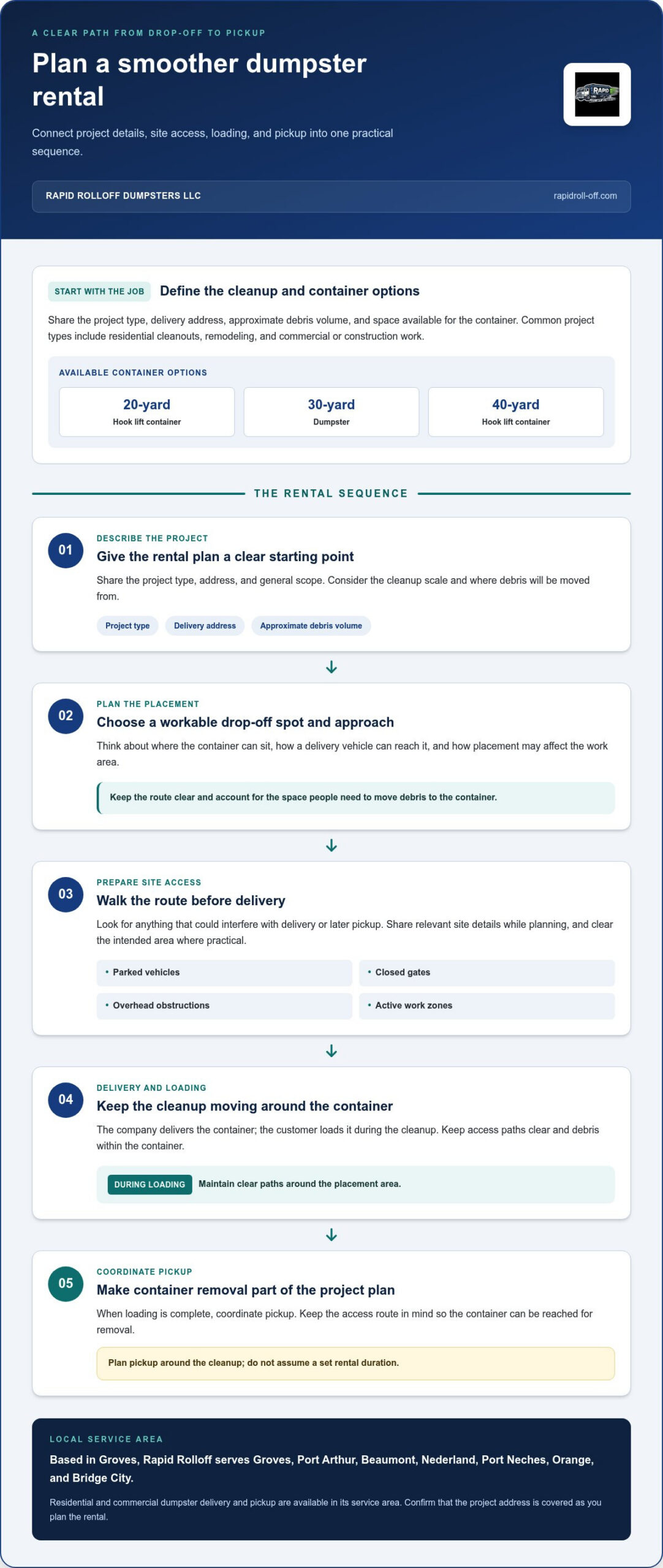
Rapid Rolloff Dumpsters includes delivery and pickup in its rental service. Think through the full sequence before work begins: describe the project, plan where the container can be placed, prepare the site, load it during the cleanup, and coordinate pickup when loading is complete. Each step connects to the next. A clear placement plan, for example, can help keep the container accessible without blocking the area where work is underway.
Describe the project, prepare an accessible drop-off area, load the container, and coordinate pickup when the cleanup is ready.
What should customers prepare before dumpster delivery?
Choose a placement area that suits the work and consider the full approach to it. Parked vehicles, closed gates, overhead obstructions, and active work zones can affect access. Walk the route and identify anything that could interfere with delivery or later pickup. Share relevant site details while planning, and clear the intended area where practical. Don’t assume every driveway or worksite has the same access needs.
How do delivery, loading, and pickup fit together?
Delivery starts the on-site part of the rental. Once the container is in place, organize the cleanup so debris can be loaded safely and kept within the container. Keep paths to it clear and avoid creating obstacles around the placement area. When loading is complete, pickup is the final coordination step. Plan for it as part of the project, without assuming a set rental duration.
For a home project, that might mean keeping the driveway approach clear while household members move items toward the container. At a worksite, it can mean considering how container placement affects the flow of people and ongoing work. In either case, a clear route and an accessible placement area make the handoff between delivery, loading, and pickup easier to manage.
- Before delivery: Identify the placement area and note access concerns.
- During loading: Keep access paths clear and debris contained.
- For pickup: Include container removal in the project plan.
These simple preparations help reduce avoidable interruptions and make the rental process easier to coordinate. If you’re planning a cleanup in the service area, explore Rapid Rolloff’s dumpster rental service as you map out the project from delivery through pickup.
Which local dumpster rental container fits your project?
Choosing a container starts with two questions: how much debris the project may produce, and where a container can be placed. A local dumpster rental company can help frame the available options around the project’s scope and site details. Treat size as a planning decision, not a guarantee based on the project name alone. A home cleanout, renovation, or construction job can vary widely in how much debris it creates.
Rapid Rolloff offers a 20-yard hook lift dumpster, a 30-yard dumpster, and a 40-yard hook lift dumpster. The comparison below is a starting point for thinking through project scale. It doesn’t promise that a particular container will fit every job in a category.
| Container option | A starting point for | Consider alongside |
|---|---|---|
| 20-yard hook lift | Moderate project needs | Expected debris and placement space |
| 30-yard dumpster | Larger cleanouts or construction work | Project scope and site access |
| 40-yard hook lift | Large-scale debris removal | Debris volume and available placement area |
When might a 20-yard or 30-yard dumpster suit the work?
For a contained cleanup with moderate needs, consider the 20-yard hook lift option as a starting point. A larger home cleanout, remodeling project, or construction job may lead you to compare it with the 30-yard dumpster. The project label alone won’t determine the right choice. Think through the amount of debris you expect, how the work will progress, and whether the planned drop-off area can accommodate the container.
An undersized choice may interrupt the workflow if the container fills before the cleanup is finished. A much larger option may be harder to place or work around at a tight site. These are planning considerations, not predictions about project cost or a specific container’s fit.
When might a 40-yard hook lift be worth considering?
For large-scale debris removal, the 40-yard hook lift is an option to evaluate alongside the project’s scope. Estimate the debris your work is likely to generate, then compare that need with the space available at the site. The placement area and access route matter as much as the project category. Share those details during planning so the container choice reflects both the cleanup and the location.
Before deciding, separate the volume question from the space question. A project may generate substantial debris, yet have limited room for a container or for moving material to it. Conversely, an open placement area doesn’t mean the largest option is necessary. Compare the three available choices against the cleanup plan, access, and workable placement, then use those details to guide the selection.
What to plan before booking a local dumpster rental
A little preparation helps connect the container choice to the actual worksite. Before arranging delivery, gather the project details, estimate the debris, and decide where the container could go. Share the delivery address so it’s clear whether the location is within Rapid Rolloff’s Southeast Texas service area, which includes Groves, Port Arthur, Beaumont, Nederland, Port Neches, Orange, and Bridge City. A local dumpster rental company can use these details to plan around the job and its setting.
Use this checklist to get organized:
- Project type: Note whether the cleanup is residential, commercial, or construction-related.
- Approximate debris volume: Estimate how much material the project may generate. A rough assessment helps guide container planning.
- Access: Identify the route to the intended drop-off area and any barriers along it.
- Placement: Choose a practical location that works with the cleanup and the way people will move around the site.
- Delivery address: Provide the full address within the listed service area.
These notes don’t determine exact container suitability on their own. They give the rental plan useful context and help bring the project scope and site conditions into the same conversation.
How can you check whether the drop-off location is workable?
Walk the route to the proposed placement area and look for access barriers such as parked vehicles, gates, overhead obstructions, and active work zones. Consider how the container may affect parking, traffic flow, or room to complete the cleanup. If the placement is on private property, assess the available area and access. If public space is involved, check the relevant local permit or permission requirements before making plans.
Don’t assume that a convenient-looking spot will work for delivery and pickup. Think about the approach as well as the final placement, and note any constraints that could affect either stage. For public property, requirements can depend on the location, so verify them with the relevant local authority rather than relying on a general rule.
What project details help rental planning?
Describe the cleanup in plain terms: what kind of project it is, how much debris you expect, and where you’d prefer the container placed. Mention whether the job is residential, commercial, or construction-related, and explain any site access concerns. A concise, useful overview helps frame container selection, but the project label or a rough estimate alone doesn’t guarantee an exact fit.
Keep the checklist handy as you prepare your plans. It can help you compare the work area with the proposed placement and spot practical issues before delivery is arranged. To review the available options alongside your project needs, explore Rapid Rolloff dumpster rentals.
Rent from Rapid Rolloff, a local dumpster rental company in Groves
Rapid Rolloff Dumpsters LLC is based in Groves, Texas, and provides dumpster rental with delivery and pickup for residential and commercial projects. Its service area includes Groves, Port Arthur, Beaumont, Nederland, Port Neches, Orange, and Bridge City. For a local cleanup, that means you can plan around the project address and the conditions at the site, rather than treating container selection as a decision separate from delivery and placement.
The available options are a 20-yard hook lift dumpster, a 30-yard dumpster, and a 40-yard hook lift dumpster. Each can be considered in relation to your project’s scale, but the project name alone won’t determine the best fit. Think about the debris you expect, how the cleanup will unfold, and whether the site has a workable place for the container. Those details help bring the container choice and delivery plan together.
How Rapid Rolloff serves nearby Southeast Texas communities
Rapid Rolloff serves Groves, Port Arthur, Beaumont, Nederland, Port Neches, Orange, and Bridge City with local dumpster rental, including container delivery and pickup. Before planning the cleanup, identify the delivery address and consider how the location will support drop-off, loading, and eventual pickup. Keeping the project location and access plan in view gives you a clear foundation for organizing the rental.
For homeowners, that planning can help fit a cleanout or renovation into the available work area. For a business or construction project, it can help account for how the container’s placement relates to ongoing activity on site. In both cases, choosing a container is only one part of preparing for the job. Project scope and workable access belong in the same plan.
How to take the next step with a project plan
Start with three practical details: the type of project, the delivery address, and the preferred placement area. Add an estimate of the debris your work may generate. Then consider whether the 20-yard or 40-yard hook lift option, or the 30-yard dumpster, is a sensible starting point for the job. A brief project summary helps frame the discussion, while site conditions remain part of assessing suitability.
Before arranging the rental, make sure the proposed drop-off area and approach suit the way the project will operate. Consider access, nearby activity, and whether loading can happen without disrupting the work. A clear plan helps connect the container to the real needs of the cleanup, whether it’s at a home, business, or construction site.
- Project: Note whether the work is residential, commercial, or construction-related.
- Address: Identify the delivery location within the listed service area.
- Placement: Choose a practical area and consider access for delivery and pickup.
With those details ready, you can take the next step at a comfortable pace. Find a dumpster rental for your project and use your project scope and site plan to guide the selection.
Set your cleanup plan in motion
A well-planned cleanup starts with a clear next step. Note the project scope, delivery address, and preferred placement area before choosing a container. Matching those details helps you make a more informed choice and gives your local dumpster rental company useful context for planning delivery and pickup.
Rapid Rolloff Dumpsters LLC serves Southeast Texas from Groves, with delivery and pickup and 20-yard and 40-yard hook lift containers plus a 30-yard dumpster. Use your project details to start planning the right option for the work and the site. Plan your cleanup with Rapid Rolloff Dumpsters and take the next step with a practical plan in hand.
With the right preparation, you can approach your cleanup with greater clarity and keep the project moving from the first load to the final pickup.
Frequently Asked Questions
How do I choose a local dumpster rental company?
Choose a local dumpster rental company that serves your project address and makes delivery and pickup part of the rental process. Consider whether its container options suit the scale of your work and whether you can explain the site layout clearly. For a Southeast Texas project, include practical details such as driveway access, gates, or nearby work activity. Clear planning helps you compare the service to what your cleanup actually needs.
How soon can a dumpster rental company deliver a dumpster?
Delivery timing depends on the scheduling arrangements for your rental, so don’t assume a particular arrival day or time. Share your address, preferred drop-off location, and any access constraints while organizing the project. If work involves a crew, contractor, or scheduled property access, build the cleanup plan around the agreed delivery details rather than having people or materials arrive before the container is in place.
How long can I keep a rental dumpster?
The rental period is established as part of the booking arrangements. Plan the cleanup sequence before delivery, including when loading is likely to be complete and when pickup should be coordinated. If the project involves several stages, such as clearing rooms before renovation work begins, map out those stages so the container’s use fits the job. Avoid assuming a standard rental duration applies to every project.
Do I need a permit to put a dumpster on the street in Texas?
A dumpster placed on a public street or sidewalk may require local permission, and requirements can depend on the city and exact location. Before planning a street placement in Groves, Beaumont, Port Arthur, or another Southeast Texas community, check with the relevant local authority. Don’t assume that rules for placing a container on private property also apply to a public right-of-way.
What items cannot go in a rental dumpster?
Items that can’t go in a rental dumpster depend on the disposal rules that apply to the rental. Don’t assume every material from a cleanout or worksite belongs in the container. Set aside anything that may have special handling requirements and follow the disposal guidance provided for your rental. This is especially useful when a project combines ordinary cleanup debris with materials you’re unsure how to dispose of.
Can a dumpster be delivered to a residential driveway?
A residential driveway may be a practical placement area if the delivery approach and available space work for the site. Before planning for driveway placement, consider parked vehicles, gates, overhead obstructions, and how the container may affect everyday access to the home. Think about where loading will happen, too. A driveway that looks open at first may become difficult to use once vehicles or project activity are factored in.
What information should I have ready before requesting a dumpster rental?
Have the project address, project type, and a rough sense of the debris amount ready. Also note the preferred placement area and details that could affect access, such as a gate, a shared driveway, or limited room to maneuver. If someone else manages access to the property, include their instructions in your plan. These details help make the rental discussion specific to your site and cleanup.