What if the biggest jobsite cleanup problem isn’t how much debris you generate, but when it starts getting in the way? With waste removal for contractors, a container that doesn’t fit the project’s phases, available space, or work schedule can add friction when crews need room to move.
Debris can build up quickly, and a container that works at the start of a job may not suit every stage. Planning ahead helps keep work areas organized and safer to navigate, while making delivery and pickup easier to coordinate with construction activity.
This guide explains how to match dumpster size to project scale, plan for changing debris needs as work progresses, and account for jobsite access when arranging service. Rapid Rolloff Dumpsters offers 20-yard and 40-yard hook lift containers and 30-yard dumpsters, with delivery and pickup for construction projects in Groves and nearby Southeast Texas communities. Use these planning steps to make cleanup a smoother part of the job, not a disruption to it.
Key Takeaways
- Plan waste removal for contractors around project phases so debris stays manageable as work progresses.
- Choose a container based on project scale and expected debris volume, not a one-size-fits-all estimate.
- Map the drop location and access route before coordinating delivery to help limit disruption to active work.
- Set a consistent crew routine for collecting and placing debris while keeping walkways and work zones clear.
- Have the project type, scale, placement, and timing needs ready when arranging a 20-yard or 40-yard hook lift container or a 30-yard dumpster.
Why contractor waste removal planning matters on Southeast Texas jobsites
Renovation and construction debris can crowd a work area quickly. A pile that starts at the edge of a room or beside a work zone can spread into walkways, limit access to tools, and make it harder for crews to keep the project moving. Planning waste removal for contractors means deciding where debris will go and how it will leave the site, rather than waiting until cleanup becomes urgent.
Start with a container location that crews can reach without blocking active work or important access routes. Then build removal into the project schedule. A clear workflow helps workers know where to place debris and gives the site supervisor a practical way to coordinate container delivery and pickup around construction activity.
A temporary project container serves a different purpose from routine municipal waste collection. In Beaumont, regular city garbage and trash collection does not include building debris such as lumber, shingles, insulation, brick, or other bulky materials. A rental dumpster gives contractors a dedicated jobsite option for project cleanup, with delivery and pickup arranged as part of the work plan. Rapid Rolloff serves construction projects in Groves and nearby communities, including Port Arthur, Beaumont, Nederland, Port Neches, Orange, and Bridge City.
Which contractor projects commonly need a rental dumpster?
Renovations, new construction, and property cleanups can all generate debris that needs a planned collection point. The amount and pace depend on the project: a focused renovation may produce waste during a concentrated phase, while a larger job can create debris across several stages. Materials from demolition can vary; Demolition waste describes common categories such as concrete, wood, and metal, along with disposal and recycling considerations.
Think about the project’s scale and anticipated debris volume when deciding whether to plan container use for one phase or across multiple stages. That early assessment helps keep cleanup aligned with the work instead of letting debris accumulate between tasks.
What should a jobsite waste plan solve?
A useful plan answers three basic questions: where will crews place project debris, how will the container remain accessible, and when should delivery or pickup fit into the work schedule? Set a consistent drop point and tell the crew which materials belong there. Keep access routes and active work areas clear, and coordinate service around the site layout so container activity supports the job rather than interrupting it.
How contractors can match dumpster size to the project
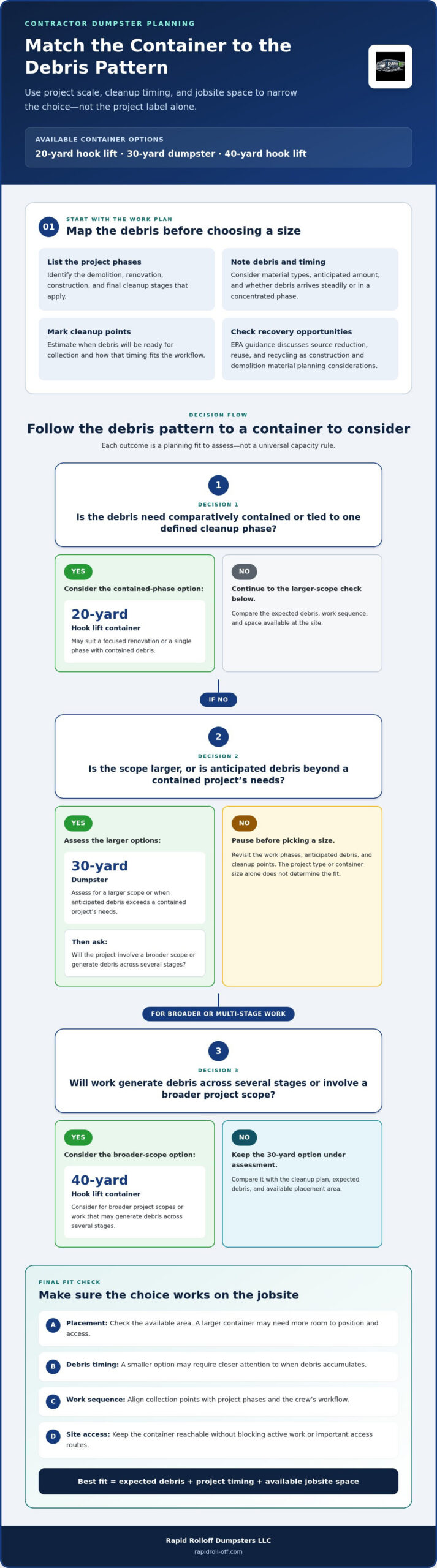
The right dumpster size depends on more than the project label. A kitchen renovation can create a concentrated cleanup phase, while a larger construction job may generate debris steadily across several stages. Rapid Rolloff offers 20-yard and 40-yard hook lift containers, plus 30-yard dumpsters. Compare these options against the amount and timing of debris, the available placement area, and how the crew will access the container.
Use this framework to narrow the choice. It’s a planning guide, not a universal capacity chart:
| Container option | Project considerations |
|---|---|
| 20-yard hook lift container | Consider for projects with comparatively contained debris needs or a defined cleanup phase. |
| 30-yard dumpster | Assess for a larger scope or when the anticipated debris volume exceeds a contained project’s needs. |
| 40-yard hook lift container | Consider for broader project scopes or work that may generate debris across several stages. |
When might a 20-yard, 30-yard, or 40-yard container fit?
A 20-yard option may suit a focused renovation or a single phase with contained debris. For a more extensive remodel or a project involving multiple work areas, compare the 30-yard and 40-yard options against the cleanup plan. Neither project type nor container size alone determines the fit. The expected debris, the work sequence, and the space available at the site all matter.
Placement can change the practical choice. A larger container may call for more room to position and access it, while a smaller option may require closer attention to when debris accumulates. Match capacity to the work without overlooking how the container will fit into the jobsite layout.
Estimate project debris before scheduling a container
Before selecting a size, map out the work. Note where debris is likely to come from and when the main cleanup points will occur. This estimate helps clarify whether waste will build steadily or arrive in a concentrated phase, and whether one container plan can support the job from start to finish.
- List each phase: Identify demolition, renovation, construction, and final cleanup stages relevant to the project.
- Note expected debris: Consider the kinds of material and how much work is planned, without assuming a universal capacity.
- Mark cleanup points: Anticipate when debris will be ready for collection and how that timing fits the workflow.
- Review recovery opportunities: The EPA’s Sustainable Management of Construction and Demolition Materials guidance discusses source reduction, reuse, and recycling, which can help inform jobsite planning.
This practical estimate makes waste removal for contractors easier to coordinate with project scope and access needs. Review Rapid Rolloff dumpster rental options as you plan the container that best fits the work.
How to coordinate dumpster placement, delivery, and pickup
A suitable container still needs a workable route in and out. Before arranging delivery, walk the site from the entrance to the proposed drop point. Check whether gates can open fully, trucks have room to turn, overhead clearance is unobstructed, and daily site traffic can continue without crossing the container’s access area. These details help reduce last-minute adjustments and keep the delivery plan aligned with active work.
Use this sequence to plan the logistics:
- Identify placement: Choose a practical drop location near the cleanup area, while keeping entrances, crew paths, and active work zones clear.
- Assess access: Review gate width, turning space, overhead clearance, and the route trucks will use. Note temporary obstructions such as parked equipment or stored materials.
- Coordinate delivery: Share the planned location and access considerations when arranging the rental, and line up delivery with a suitable project milestone.
- Plan pickup: Identify when the container should leave or be collected, and keep its route accessible as site conditions and work phases change.
Choose a workable container location on the jobsite
Place the container where crews can use it without turning it into a barrier. For example, a spot close to a renovation area may reduce the distance workers carry debris, but it shouldn’t block a building entrance or the route for equipment. Consider the approach and turning path a truck needs, along with overhead obstructions and the site’s surface. Revisit the location if staging areas or active work zones shift.
Make the drop point easy to identify for both the crew and delivery team. Tell workers where project debris should go, and keep the route to that location clear. Good placement supports orderly work without assuming every jobsite has the same layout.
Fit delivery and pickup into the project schedule
Connect container service to actual work milestones. A renovation may need delivery before a major cleanup phase, while a construction site may need pickup planned around a change in trades or a cleared work area. Rapid Rolloff provides container delivery and pickup for construction projects. Treat both as parts of rental coordination, and plan timing around the job rather than relying on an assumed arrival window.
Access can change as equipment moves, materials are staged, or work shifts to another area. Recheck the approach before delivery and again before pickup. Contractors working in Groves, Beaumont, Port Arthur, Nederland, Port Neches, Orange, or Bridge City can use this planning sequence to coordinate waste removal for contractors with local jobsite conditions and keep container service from competing with the work.
How contractors can keep dumpster use organized during the job
A container only helps if the crew uses it consistently. Set a simple routine from the first workday: collect debris in a designated staging spot, keep it out of walkways, then move it into the container when the route is clear. This reduces scattered piles and helps workers maintain access to active work areas.
Set simple debris-handling expectations for the crew
Identify the collection area and show the crew where project debris belongs. Explain how to approach and use the container safely, and keep the path to it clear of tools, equipment, and materials. If project requirements or disposal rules call for separating materials, make the sorting steps clear before work begins. Consistent direction prevents confusion as crews or tasks change.
- Collect: Gather debris in the agreed staging area rather than leaving it across the jobsite.
- Check: Keep access paths and active work zones clear as debris is moved.
- Place: Load the container according to its rental terms and applicable disposal requirements.
Waste restrictions and loading limits can depend on the rental terms and disposal requirements that apply to the project. Don’t assume every material or load is handled the same way. Review the terms for the container and give the crew clear instructions before loading begins. This section keeps the focus on everyday organization; any separate weight-limit guidance should be treated as its own planning topic.
Plan for changing volumes and project phases
Debris patterns can shift as the work progresses. A demolition phase may produce a concentrated cleanup, while later construction tasks may generate debris more gradually. Reassess the collection routine and expected volume at each major phase. A setup that worked at the start may need adjustment as crews, work zones, and cleanup points change.
Use a brief check-in at phase transitions: Is debris building faster than expected? Is the staging area still practical? Can workers reach the container without crossing active work? These questions help the site lead respond to the actual pace of the job instead of relying on an assumption that one setup will fit every project.
Good waste removal for contractors depends on clear crew habits as well as a container that suits the project. Keep instructions simple, revisit them when the work changes, and plan rental needs around the job’s real scope and sequence. Arrange contractor dumpster rental with Rapid Rolloff to support an organized jobsite cleanup.
Arrange contractor dumpster rental with Rapid Rolloff in Southeast Texas
A clear rental plan starts with the job itself. Before arranging a container, outline the project scope, expected debris volume, main work phases, and the site conditions that could affect placement. This gives you a practical basis for choosing among Rapid Rolloff’s 20-yard and 40-yard hook lift containers and 30-yard dumpsters, then coordinating delivery and pickup around the cleanup plan.
What project details help organize a rental?
Prepare a few useful details before you discuss the rental. Include the type and scale of the work, when debris is expected to accumulate, and whether cleanup will happen in one phase or at several points. Share the intended container location and any access considerations, such as gates, turning room, overhead clearance, or changing work zones. Include your desired delivery and pickup timing as part of the schedule, without treating it as a guaranteed time window.
- Project: Describe the construction, renovation, or cleanup scope.
- Debris: Estimate how much is expected and when it will be generated.
- Placement: Identify a workable drop location and the truck’s access route.
- Schedule: Note the project milestones that shape delivery and pickup needs.
These details help connect container choice to real jobsite conditions. A project with a focused cleanup phase may have different needs from work that produces debris across multiple stages. Consider both volume and timing, then match the rental option to the site layout and planned workflow.
Keep contractor cleanup moving with a local rental
Rapid Rolloff provides container delivery and pickup for commercial and construction projects. Coordinating those service components with the project plan gives crews a defined place for debris and helps keep cleanup connected to the work schedule. It also gives the site lead a chance to account for access changes as trades, equipment, and work areas shift.
Rapid Rolloff serves Groves and nearby Southeast Texas communities, including Port Arthur, Beaumont, Nederland, Port Neches, Orange, and Bridge City. For a straightforward approach to waste removal for contractors, bring your project scope, anticipated debris, placement details, and timing needs together before arranging a rental. Contact Rapid Rolloff to discuss a contractor dumpster rental that fits your project and cleanup plan.
Set Up Your Next Jobsite Cleanup With Confidence
A smoother cleanup starts with a container plan that fits the project’s scope, work phases, and jobsite access. Estimate debris needs before choosing a size, and keep the drop location and crew workflow clear as work progresses. Coordinating delivery and pickup with project milestones can help keep cleanup from interrupting active work.
For waste removal for contractors in Southeast Texas, Rapid Rolloff Dumpsters provides 20-yard and 40-yard hook lift containers and 30-yard dumpsters, with professional delivery and pickup for commercial and construction projects. Based in Groves, the company serves nearby communities including Port Arthur, Beaumont, Nederland, Port Neches, Orange, and Bridge City.
Have your project type, anticipated debris, placement plan, and timing needs ready to make rental planning straightforward. Plan your contractor dumpster rental with Rapid Rolloff and take the next step toward a more organized jobsite. With a clear plan and a container suited to the work, your crew can keep the project moving and cleanup manageable.
Frequently Asked Questions
What size dumpster do contractors need for a construction project?
The right size depends on the project’s scale, expected debris volume, work phases, and available space. A 20-yard hook lift container may suit comparatively contained debris needs, while a 30-yard dumpster or 40-yard hook lift container may be worth considering for larger scopes. Estimate when debris will accumulate and where the container can go. No single size fits every construction project.
How do contractors arrange waste removal for a jobsite?
Start by outlining the project scope, expected debris, and cleanup phases. Choose a practical container location, then assess truck access, including gates, turning space, overhead clearance, and site traffic. Share the placement and timing plan when arranging rental, delivery, and pickup. A clear crew routine for collecting and loading debris helps keep walkways and active work areas open as the job progresses.
Can a dumpster be delivered to an active construction site?
Yes. Rapid Rolloff provides container delivery and pickup for commercial and construction projects. Before delivery, identify a drop location that works with current site operations and consider the truck’s route, gates, turning space, and overhead clearance. Keep the access path clear of equipment and staged materials. Coordinate the planned delivery with the project schedule so the container can be placed without unnecessarily disrupting active work.
What types of dumpsters does Rapid Rolloff rent to contractors?
Rapid Rolloff rents 20-yard and 40-yard hook lift containers, along with 30-yard dumpsters. Contractors can compare these options based on project scale, anticipated debris, work sequence, and placement space. The size labels are not a substitute for assessing the specific job. Consider whether debris will arise during one concentrated phase or accumulate across several stages when planning a container rental.
How should contractors plan dumpster pickup during a project?
Plan pickup around cleanup milestones and the project schedule. Consider when a phase will be complete, whether crews still need the container, and whether the truck’s access route will remain clear. Reassess as equipment, trades, and work areas change. Rapid Rolloff includes container pickup as part of its rental service, helping contractors coordinate removal with jobsite activity without assuming a specific pickup window.
What can contractors put in a rented construction dumpster?
Accepted materials depend on the rental terms and applicable disposal requirements, so don’t assume every project material can go into the container. Before loading, identify the debris your job will produce and review the relevant instructions for the rental. If project requirements call for separating materials, set up a clear sorting routine for the crew. This helps keep dumpster use organized throughout construction or renovation work.
Does Rapid Rolloff serve contractors outside Groves, Texas?
Yes. Based in Groves, Rapid Rolloff serves contractors in nearby Southeast Texas communities, including Port Arthur, Beaumont, Nederland, Port Neches, Orange, and Bridge City. Container rental includes delivery and pickup for commercial and construction projects. When planning service, have the project location, container placement, and timing needs ready so these details can be considered as part of the jobsite cleanup plan.