The biggest risk on a teardown isn’t ordering a dumpster that’s too small; it’s filling a box that exceeds legal highway weight limits while still looking half-empty. When handling dense materials like slab concrete, ceramic tile, or wet drywall, choosing the wrong demolition waste container quickly leads to steep overweight penalties, damaged driveways, and stalled jobsite momentum. You shouldn’t have to worry about rough steel rollers gouging fresh pavement or container swap-out delays bringing your entire crew to a standstill.
Discover how to choose the right demolition waste container size, manage heavy debris limits, and streamline jobsite haul-off. In this guide, we break down container dimensions, payload physics, precision hook-lift placement, and Southeast Texas disposal rules. Whether you’re stripping an interior or taking down a residential structure, you’ll learn how to keep your demolition workflow efficient, compliant, and on schedule.
Key Takeaways
- Balance volume against debris density, since heavy structural materials like concrete and tile reach legal hauling caps long before filling container capacity.
- Select the right demolition waste container size, pairing 20-yard, 30-yard, or 40-yard heavy-gauge steel bins to the exact scope of your residential or commercial teardown.
- Safeguard sensitive pavement by utilizing precision hook-lift delivery trucks that set containers vertically without abrasive cable winch dragging.
- Prevent severe regulatory penalties by reviewing Texas Commission on Environmental Quality (TCEQ) landfill restrictions for hazardous materials, wet chemicals, and asbestos.
- Maintain continuous jobsite productivity with responsive local container swap-outs coordinated through Groves dispatch across Jefferson and Orange counties.
Demolition Waste Container Fundamentals: Selecting the Right Capacity
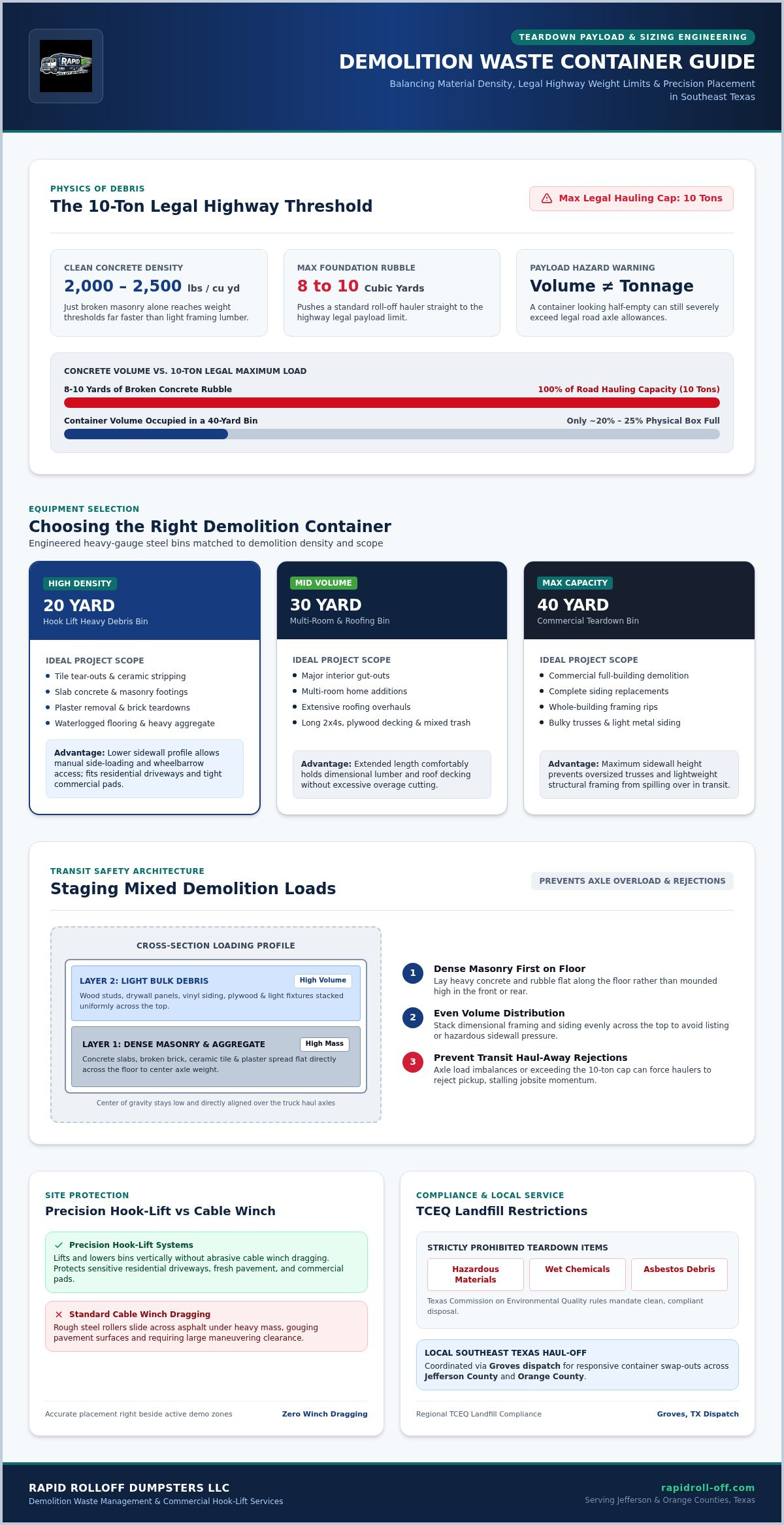
A demolition waste container is an engineered, heavy-gauge steel bin built specifically to handle abrasive, high-mass structural rubble. Unlike standard municipal trash bins, these units endure severe impacts from dropped lumber, shattered masonry, and buckled metal. Successfully managing teardown debris requires balancing physical container volume with material density. Light wood framing consumes massive space without much mass, while concrete footings can max out road legal weight limits before filling a fraction of the box.
According to research on demolition waste, materials like concrete, brick, and mixed rubble make up the overwhelming majority of jobsite refuse. Selecting the wrong container footprint often leads to jobsite overflow, project delays, or unsafe hauling conditions. Hook-lift systems also change the equation on constricted jobsites. Rather than dragging containers across asphalt with heavy winch cables, precision hook-lift trucks lift and lower bins vertically, allowing accurate placement right beside active work zones.
20-Yard Hook Lift Containers for Dense Demolition Materials
Dense materials demand compact, heavy-duty containment. A 20 Yard Hook Lift Dumpster Rental provides the ideal balance for tile tear-outs, plaster removal, flooring, and masonry teardowns. The lower sidewall profile lets work crews manually side-load sledgehammered stone or wheelbarrow loads without excessive overhead lifting. Its compact footprint fits neatly on standard residential driveways and tight commercial pads, keeping access lanes completely clear for other staging equipment.
30-Yard and 40-Yard Containers for Large-Scale Structural Rips
Extensive structural teardowns require taller sidewalls and expansive cubic capacities to contain bulky components. Consider these capacities for high-volume jobs:
- 30 Yard Dumpster Rental: Built for major interior gut-outs, multi-room additions, and extensive roofing overhauls. It easily handles long two-by-fours, plywood decking, and mixed building trash.
- 40 Yard Hook Lift Dumpster Rental: Engineered for commercial demolitions, full siding replacements, and whole-building framing rips. High walls prevent oversized trusses, structural framing timbers, and light metal siding from spilling over during teardown and transit.
Matching your debris type to the right demolition waste container keeps your site organized, maintains worker safety, and prevents double-handling debris throughout the teardown process.
Managing Heavy Debris: Density, Weight Allowances, and Safety
Cubic yard volume does not equal payload capacity when loading heavy structural rubble. A standard roll-off truck faces strict highway weight thresholds, with a maximum legal hauling capacity capped at 10 tons. Packing a high-capacity box with dense masonry quickly triggers transport hazards, axle overload violations, and steep freight overage fees. The EPA outlines federal guidelines for handling construction materials under broader Demolition Disposal Regulations, emphasizing that proper sorting and volume management protect both road infrastructure and jobsite personnel.
As a dependable rule of thumb, clean concrete weighs approximately 2,000 to 2,500 pounds per cubic yard. Just eight to ten yards of broken foundation rubble will push a hauler right to the state highway limit. Because of this, selecting the proper demolition waste container requires evaluating the density of your waste stream before turning a single screw or swinging a hammer.
Calculating Material Density for Teardown Projects
Different materials demand completely different waste strategies on site:
- Dense masonry and aggregate: Broken concrete, brick, tile, asphalt, and waterlogged plaster demand smaller, reinforced footprints like a 20-yard container to keep total tonnage legal.
- Dimensional framing and light debris: Wood studs, drywall panels, vinyl siding, and cabinetry take up immense space but weigh relatively little, making them ideal for high-capacity 30-yard or 40-yard units.
- Mixed demolition loads: Stage materials deliberately. Lay dense masonry along the floor, then stack lighter interior elements on top to keep axle weight centered.
Safe Loading Practices to Prevent Haul-Away Rejections
Loading mistakes create transit risks that can force a driver to reject your haul-off. Prevent pickup delays by following three operational rules:
- Maintain a level waterline: Keep all debris flush with the container’s top rail so the automated tarp mechanism seals securely. Mounded rubble will spill onto highways.
- Distribute foundation weight evenly: Spread concrete footings flat across the floor rather than piling them against the front bulkhead or tailgate.
- Use the ground-level swing door: Open the rear door to walk or wheelbarrow dense rubble directly inside instead of tossing it over sidewalls.
If you’re planning a complex structural strip or teardown, you can coordinate equipment early through Rapid Rolloff Dumpsters LLC to ensure your project’s weight limits align with local hauling regulations.
Jobsite Delivery Logistics: Protecting Pavement and Optimizing Access
Jobsite delays often begin before demolition work starts. Dropping a multi-ton steel box in the wrong location blocks equipment staging, restricts dumpster access, and risks costly structural repairs to paved surfaces. Federal workplace rules outline strict standards for waste drop zones under OSHA Jobsite Delivery Logistics regulations, requiring safe, unobstructed waste disposal paths. A smooth delivery relies on proper staging, spatial clearance, and choosing the right equipment mechanics for delicate residential or commercial flatwork.
Traditional cable-pulled roll-off rigs drag heavy steel wheels across driveways as they tilt their beds, scoring asphalt and cracking decorative concrete. In contrast, specialized hook-lift trucks lift the bin using a hydraulic arm and set it down with vertical precision. This eliminates dragging entirely, providing clean placement within tight building setbacks and narrow urban driveways.
Site Preparation Checklist for Smooth Container Delivery
Before the transport truck pulls up to your site, verify these staging requirements to prevent missed drops:
- Approach path: Secure at least 60 feet of direct, straight-line space so the hauler can align the container without sharp turning maneuvers.
- Overhead space: Ensure 20 feet of vertical clearance. Look up for low-hanging live oak limbs, power lines, and residential roof eaves that could clip a raised hydraulic rail.
- Ground obstacles: Relocate parked contractor trucks, utility trailers, and stacked lumber piles out of the delivery zone.
Driveway Protection and Surface Preservation Methods
A loaded demolition waste container places thousands of pounds of pressure on small contact patches. Coastal Texas soils and wet subgrades soften under heavy rain, making paved pads vulnerable to stress fractures. To preserve your concrete, lay three-quarter-inch plywood sheets or structural 2×10 wooden boards flat beneath the container’s rear wheels and front feet. This simple buffer spreads out the point-load weight evenly. Keep heavy containers well clear of buried irrigation lines, shallow drainage culverts, and residential septic tanks, which can crush easily under shifting foundation rubble loads.
Demolition Disposal Regulations: Prohibited Items and Recycling Rules
Tossing every piece of teardown refuse into a single open-top bin invites major regulatory headaches. In Texas, the Texas Commission on Environmental Quality (TCEQ) enforces strict disposal guidelines under 30 TAC §330.15, banning specific hazardous and liquid materials from municipal solid waste landfills. Discarding contaminated debris into a standard demolition waste container forces transfer stations to reject the entire haul. Worse, it triggers hefty processing fines and delays haul-off schedules while your crew manually digs out the contraband.
Jobsite supervisors must recognize that standard teardown rubble cannot mix with restricted toxic substances. Maintaining an efficient jobsite means knowing exactly what local landfills accept and isolating recyclable materials to keep processing smooth.
Identifying Prohibited Hazards on Demolition Sites
Environmental regulations draw a hard line between ordinary structural framing and hazardous teardown refuse. Keep these restricted items completely out of your roll-off equipment:
- Asbestos siding and insulation: Regulated asbestos-containing materials (RACM) require a minimum 10-day prior notification to TCEQ and EPA Region 6. They must be wetted, bagged in labeled impermeable plastic, and hauled to specialized facilities.
- Cooling equipment and HVAC units: Air conditioners, heat pumps, and commercial chillers must have their refrigerant fluids recovered and documented by an EPA-certified technician before bin loading.
- Chemicals and liquid toxins: Wet paints, solvent buckets, lead-acid equipment batteries, fuel cans, and industrial adhesives cannot enter standard landfills. Cans must be cured dry or diverted to hazardous drop points.
Sorting Clean Debris for Efficient Processing
Diverting clean structural components streamlines waste handling and controls project overhead. Sort clean structural steel, copper pipes, and heavy wiring early; scrap metal yards process these quickly without landfill disposal costs. Similarly, clean, rebar-free foundation rubble can go directly to regional aggregate crushers for use as road base. If you run a full structural gut-out alongside framing teardowns, staging separate bins for masonry rubble and general wood framing prevents contamination and speeds transit.
Stay compliant on every project stage. When you need dependable equipment for your jobsite, rent a roll-off dumpster today to keep your waste streams sorted and your site moving forward.
Streamlining Teardowns with Rapid Rolloff Dumpsters in Southeast Texas
Demolition projects move fast. Waiting around for sluggish container haul-offs stalls heavy equipment and burns through crew labor. Rapid Rolloff Dumpsters LLC operates local dispatch directly out of Groves, Texas, giving contractors and property owners a responsive alternative to distant national brokers. Our drivers understand the regional conditions across Jefferson and Orange counties, from rain-softened coastal subgrades to narrow neighborhood streets. Partnering with a dedicated local team ensures every demolition waste container arrives on schedule and sits safely on your work site.
Tailored Container Solutions Across the Beaumont-Port Arthur Region
Every jobsite presents unique footprint limitations. We provide targeted container inventory configured for both dense masonry and expansive structural framing:
- 20 Yard Hook Lift Dumpster Rental: Engineered for dense materials like tile, concrete, and wet plaster, fitting easily into constricted driveways.
- 30 Yard Dumpster Rental: Bridges the gap for substantial residential additions, full roof tear-offs, and multi-room gut-outs.
- 40 Yard Hook Lift Dumpster Rental: Delivers high-volume containment for commercial demolition, large structural framing, and bulky exterior siding.
Our maneuverable hook-lift trucks deliver to Beaumont, Port Arthur, Nederland, Port Neches, Orange, and Bridge City. They place containers with pinpoint precision, protecting residential concrete without damaging tight access points.
How to Schedule Reliable Delivery and Project Swap-Outs
Keeping a teardown running smoothly requires coordinated hauling logistics. Start by assessing your debris density and volume so you can reserve the right container size before the demo crew arrives. For high-volume projects, schedule staged swap-outs. When your active demolition waste container reaches capacity, our local dispatch coordinates a quick replacement, hauling away the loaded box so your heavy equipment never sits idle. Call our Groves office today to align your container delivery directly with your project timeline.
Keep Your Teardown Efficient and on Schedule
A successful teardown comes down to smart planning, understanding material density, and choosing the proper container footprint. By balancing road weight limits against box volume and shielding paved driveways with vertical hook-lift delivery, you protect both your budget and your jobsite surfaces. Staying compliant with Texas environmental rules ensures haul-offs happen without unexpected delays or fines.
Whether you’re stripping a residential bathroom or leveling commercial framing, having the right containment on site makes all the difference. Rapid Rolloff Dumpsters LLC provides locally operated dispatch right from Groves, Texas, ensuring rapid turnaround times and responsive multi-stage swap-outs. Our specialized hook-lift trucks deliver pinpoint placement for tight access pads, backed by a rugged inventory of 20, 30, and 40-yard containers. Ready to streamline your next project? Reserve your demolition waste container with Rapid Rolloff Dumpsters and keep your jobsite moving forward with confidence.
Frequently Asked Questions
Can I put concrete, brick, and dirt into a standard demolition waste container?
Yes, but you must monitor your debris weight rather than filling the container’s entire physical volume. Clean concrete weighs over a ton per cubic yard, meaning heavy masonry reaches highway haul thresholds very quickly. Use a compact 20-yard container for masonry, distribute the load flat across the floor, and avoid mixing dense foundation slabs into bins intended for light structural framing.
What is the primary difference between a hook lift container and a roll-off dumpster?
The primary difference is the mechanical method used to lift and drop the container. Traditional roll-offs slide off a tilted truck bed using steel cables, which often drags steel rollers across driveway surfaces. Hook-lift trucks use a hydraulic arm to lift and set bins down vertically. This eliminates abrasive dragging, protecting residential concrete and fitting cleanly into tighter driveways across Mid County neighborhoods.
How much clearance space is required for the delivery truck to drop off a container?
You need at least 60 feet of direct approach space and 20 feet of vertical clearance. Delivery trucks need straight room to back in and raise their hydraulic arms without striking obstacles. Inspect your drop zone beforehand for low tree limbs, power lines, and residential roof eaves. Keep access lanes clear of vehicles so the driver can drop your demolition waste container safely.
What happens if rain fills my open-top demolition container during the project?
Rainwater adds significant dead weight and causes porous materials to absorb excess moisture quickly. Teardown materials like drywall panels, insulation, and framing lumber act like sponges in heavy Southeast Texas downpours. Even though containers have drainage ports, soaked debris becomes much heavier. Fasten a heavy-duty tarp over your container before severe storms to prevent unexpected weight overages and keep haul-offs smooth.
Is a municipal permit required to place a demolition container on the street?
Yes, placing a container on a public street or municipal right-of-way typically requires a city permit. Municipalities like Beaumont and Port Arthur enforce local right-of-way ordinances to prevent traffic hazards. You won’t need a permit if you stage the container entirely on private property, such as your driveway. Check city hall guidelines across Jefferson or Orange County before delivery if street staging is your only choice.
How do I know whether a 20-yard, 30-yard, or 40-yard container fits my teardown?
Choose your container size by matching material density to overall debris volume. Select a 20 Yard Hook Lift Dumpster Rental for dense materials like bathroom tile, foundation concrete, and brick. Choose a 30 Yard Dumpster Rental for whole-room gut-outs, framing rips, and roofing jobs. Reserve a 40 Yard Hook Lift Dumpster Rental for commercial teardowns and high-volume framing that requires taller sidewalls to avoid spills.
What materials are strictly prohibited from being loaded into demolition dumpsters?
Texas environmental rules ban hazardous chemicals, liquid waste, industrial solvents, and biohazards from standard solid waste landfills. Never discard wet paints, vehicle batteries, scrap tires, or regulated asbestos into the bin. Cooling systems like air conditioners and heat pumps cannot enter a demolition waste container until a certified technician safely recovers the refrigerant. Contaminated bins are rejected at disposal transfer stations.