What if the dumpster that suits your project can’t reach the spot where you need it? A hook lift dumpster for tight spaces may be practical, but the container’s size is only part of the decision. A narrow gate, parked cars, low branches, overhead wires, or limited room to maneuver can affect whether the delivery truck can access and place it. Checking these details ahead of time can help prevent a difficult delivery day.
It’s understandable to want a clear answer before renting, especially when space is limited. This guide explains what to measure and photograph, how to assess the route and placement area, and which project details to share with a local rental provider. You’ll also learn why container dimensions and truck access both matter, and how to discuss available options without assuming a particular size will fit. Confirm the site conditions, container requirements, and delivery availability for your address before scheduling, so you can make a practical plan with fewer surprises.
Key Takeaways
- Judge whether a hook lift dumpster for tight spaces is practical by considering the full truck route, maneuvering room, drop area, and project needs.
- Inspect the street approach, entrance, travel path, and placement spot. Note obstacles such as gates, parked vehicles, low branches, wires, and slopes.
- Compare the 20-yard and 40-yard hook lift options against your project needs, and confirm container dimensions and truck requirements with the provider.
- Prepare the delivery area by clearing the agreed route and drop spot of vehicles, equipment, bins, and other movable items.
- Share your address, site details, preferred placement, and project needs when requesting a rental, then confirm availability for your location and date.
Can a Hook Lift Dumpster Work in a Tight Space? Start With the Whole Site
A tight dumpster site is any location where the truck’s route, room to maneuver, or placement area could prevent safe delivery or pickup. That can mean a narrow driveway, a restricted gate, an alley, a crowded worksite, or a small drop area. The container may appear to fit once it’s on the ground, but the delivery plan has to account for how the truck reaches and places it.
A hook lift system uses a hydraulic hoist to load and unload containers. The Hydraulic hooklift hoist overview describes the system and its use in locations where maneuvering space is limited. Still, a hook lift doesn’t make every restricted site workable. The delivery vehicle needs suitable access, and the specific truck and container configuration affect what placement is possible.
What “tight space” means for dumpster delivery
Think beyond driveway width. A home may have a clear driveway but a narrow gate, parked cars along the approach, or low branches above the route. At a job site, materials, equipment, fencing, or a narrow alley may limit access. A clear drop area helps, but it doesn’t solve a blocked route or a turn the truck can’t make.
Look at the full path from the street to the proposed spot, including overhead obstructions, slopes, and anything that could restrict entry or movement. There’s no single clearance figure that makes every site suitable. Conditions and equipment vary, so don’t rely on a general measurement alone.
The difference between container fit and truck access
An open area may have enough room for a container and still be unreachable from the street. The truck needs room to approach and carry out the placement process, not just a destination where the container can sit. A tight turn, gate, parked vehicle, or overhead wire can make the route the limiting factor.
Before booking, share clear photos of the entrance, route, and proposed drop area. Describe obstacles and note any measurements you’ve taken. Ask the provider to confirm the dimensions and truck requirements for the specific container configuration, along with any placement conditions. Don’t assume a size will fit based on volume or appearance alone.
Suitability depends on the entire delivery plan: truck route, maneuvering room, drop location, and what your project needs from the container. A provider should review those site details before confirming whether a hook lift dumpster for tight spaces can be delivered and placed as planned.
How to Check Truck Access Before Booking a Hook Lift Dumpster
Walk the full delivery path before choosing a placement spot. A clear area at the end of the route doesn’t tell you whether a truck can reach it. Route measurements matter as much as the container location because delivery depends on both access to the site and room to place the container.
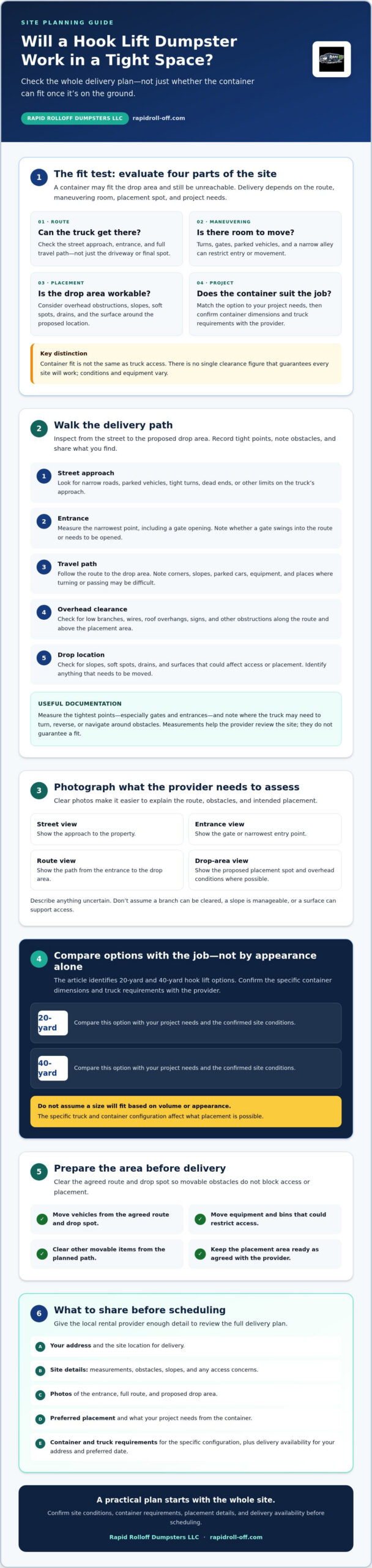
Use this pre-booking inspection to document what the driver may encounter:
- Street approach: Check for narrow roads, parked vehicles, tight turns, dead ends, or other conditions that could limit the truck’s approach.
- Entrance: Measure the narrowest point, including any gate opening. Note whether gates swing into the route or need to be opened.
- Travel path: Follow the route to the drop area. Look for corners, slopes, parked cars, equipment, and places where turning or passing could be difficult.
- Overhead clearance: Look up for low branches, wires, roof overhangs, signs, or other obstructions along the route and above the proposed placement area.
- Drop location: Check the ground for slopes, soft spots, drains, or surfaces that might affect access or placement. Identify anything that needs to be moved.
Measure the approach, entrance, and turning area
Record measurements at the tightest points, especially gates and entrances, and share them with the provider. Note where the truck may need to turn, reverse, or navigate around obstacles. A measurement is useful information, not a fit guarantee: the provider needs to compare your notes with the truck and container configuration planned for delivery.
Check overhead and ground-level obstacles
Take photos from the street, entrance, along the route, and at the proposed drop location. Include overhead conditions where possible, and explain anything uncertain. Don’t assume a branch can be cleared, a slope is manageable, or a surface can support access. For active construction sites, check whether OSHA vehicle safety regulations apply to vehicles operating off-highway at the site.
Send your measurements, photos, and notes to the rental provider before scheduling. Ask them to confirm the truck requirements and placement conditions for the specific configuration, and whether your proposed route and drop area work. This review is especially useful when arranging a hook lift dumpster for tight spaces, since site conditions can’t be judged by container capacity alone.
If you’re planning a project in the local service area, share your access details while discussing dumpster rental options with Rapid Rolloff. Confirm availability for your address and requested delivery date before finalizing the plan.
Hook Lift Dumpster Options for Confined Sites: Match the Plan to the Job
Choosing a container for a restricted site means balancing the debris you expect with the space and delivery conditions you actually have. Rapid Rolloff offers 20-yard and 40-yard hook lift dumpster rentals, as well as a 30-yard dumpster rental. Don’t assume a smaller container will automatically be easier to deliver: the truck still needs a workable route and placement plan.
Start by estimating the project’s debris volume and identifying what you’ll load. Then consider whether the container can be placed where you can use it without blocking access or interfering with the work. Reviewing driveway access management can also help you think through how the site entrance connects to the surrounding roadway. Use the comparison below to organize what to discuss with the provider.
| Planning factor | 20-yard hook lift | 40-yard hook lift | 30-yard dumpster |
|---|---|---|---|
| Project volume | Ask whether it suits the amount and type of debris you expect. | Discuss whether the project needs this available hook lift option. | Ask whether this option matches the project’s expected debris. |
| Access constraints | Confirm truck access and requirements for this configuration. | Confirm truck access and requirements for this configuration. | Ask about its specific delivery and access requirements. |
| Placement area | Share the available drop area and intended loading approach. | Share the available drop area and intended loading approach. | Confirm container fit and placement conditions with the provider. |
| Provider confirmation | Request verified dimensions, truck requirements, and availability. | Request verified dimensions, truck requirements, and availability. | Confirm its configuration and delivery conditions. Don’t assume they match a hook lift. |
Match the option to the job, then verify the fit
For either hook lift size, explain what the project involves, how much debris you expect, how you’ll load it, and where the container could go. A 20-yard option isn’t a guaranteed fit for a narrow driveway, and a 40-yard option isn’t automatically impractical. The site and the specific equipment determine what can work.
Before booking a hook lift dumpster for tight spaces, ask the provider to confirm the container dimensions, delivery-vehicle requirements, placement conditions, and availability for your address and requested date. Compare those details with your measurements and photos. A 30-yard dumpster is another rental option, but its delivery configuration should be confirmed separately rather than assumed to match either hook lift size.
Prepare a Tight Delivery Area Before the Dumpster Arrives
Once the placement plan is confirmed, prepare the entire access path, not just the space where the container will sit. A vehicle left near the entrance, a work bin in a narrow turn, or equipment beside the drop area can change the route the truck needs to use. Keep the agreed path open from the street to the placement spot.
Clear and communicate the planned placement area
Mark the intended drop area in a way the site contact can recognize, then share a current photo or simple description with the provider. Confirm where the container should go and what needs to remain clear around it. Don’t move items based on an assumed plan. First confirm the provider’s placement expectations, then relocate obstacles such as vehicles, bins, tools, materials, and movable equipment.
Use this arrival-preparation checklist:
- Clear the agreed route, including the entrance and any turning area.
- Move vehicles, equipment, bins, and other movable items that could obstruct access or placement.
- Keep the proposed drop area open and make sure it matches the location discussed with the provider.
- Tell the provider about any changed site conditions, such as new equipment or a blocked entrance.
For a shared driveway, commercial property, or active worksite, coordinate with the property owner, manager, or site contact. Confirm that the planned area is available and that other people on site know which route and space must stay clear. This helps avoid a last-minute conflict, especially if visitors, workers, or deliveries use the same access.
Make a backup plan if access is uncertain
If the agreed route or placement area might be blocked, identify an alternate spot and ask the provider to review it before delivery. Share photos and explain what differs between the primary and backup locations. Don’t ask a driver to attempt an unsafe turn, pass an unreported obstruction, or use a placement area that hasn’t been confirmed.
Plans can change. If a vehicle, piece of equipment, or other obstacle cannot be moved, contact the rental provider before the scheduled delivery and confirm whether the route or placement plan needs to change. For a hook lift dumpster for tight spaces, clear communication helps ensure the arrival-day setup reflects the actual site, not an outdated assumption.
Have questions about your access route or proposed drop area? Ask Rapid Rolloff about your delivery site before delivery is scheduled.
Arrange a Local Hook Lift Dumpster Rental for a Tight Site
With your route and placement details organized, you can have a more useful conversation with a local rental provider. Share the project information early so the provider can assess the site, discuss suitable rental options, and confirm what is possible for your address. A hook lift dumpster for tight spaces still needs a delivery plan based on the actual truck, container configuration, and site conditions.
What to tell the rental provider
Prepare the key details before you request a rental:
- Project: Describe the work and the type and estimated amount of debris.
- Container preference: Say whether you’re considering a 20-yard or 40-yard hook lift dumpster, or ask about the available options. Rapid Rolloff also rents 30-yard dumpsters, but confirm that option’s delivery configuration separately.
- Location and timing: Provide the full delivery address and the date or timing you’re hoping for.
- Site access: Share your route measurements, entrance details, obstacle notes, and clear photos of the approach and proposed drop area.
- Placement plan: Explain where you’d like the container placed and how you expect to load it.
Ask what additional information the provider needs to review your site. You might need to confirm measurements, describe a slope, or clarify whether a gate can be opened. Be direct about uncertain conditions. It’s better to flag a possible access issue during planning than leave the delivery team to discover it on arrival.
Confirm the plan before scheduling delivery
Rapid Rolloff serves Groves and nearby Southeast Texas communities, including Port Arthur, Beaumont, Nederland, Port Neches, Orange, and Bridge City. Confirm that service is available for your specific address and requested date. Also verify availability of your chosen rental option, along with the relevant container specifications, truck requirements, and placement conditions.
Before scheduling, ask the provider to confirm the route and drop location you discussed. If the entrance or site conditions change, update them and get approval for any revised plan. Confirm delivery and pickup expectations as part of the rental conversation, too. For the clearest answer, give the provider the full site picture rather than relying on a container size or a single photo.
Ready to discuss your access route and placement needs? Contact Rapid Rolloff to discuss your site.
Plan the Delivery Before You Choose Your Dumpster
A successful rental plan starts with the whole site. Check the truck’s route, entrance, maneuvering space, and proposed drop area, then share measurements and photos with the provider. Match the container option to your project and loading needs, but don’t assume a smaller dumpster will solve an access problem. Confirm the configuration, site requirements, and delivery availability before scheduling.
Rapid Rolloff offers 20-yard and 40-yard hook lift dumpster rentals, along with 30-yard dumpster rentals. Delivery and pickup serve Groves and nearby Southeast Texas communities. Whether you’re considering a hook lift dumpster for tight spaces or another available option, a clear conversation about your site can help you make a practical plan.
Contact Rapid Rolloff to discuss your tight-space delivery and share your project details, address, and access concerns. With the right information in hand, you can move forward with greater confidence and a rental plan that fits your needs.
Frequently Asked Questions
Can a hook lift dumpster fit in a narrow driveway?
Yes, a hook lift dumpster may fit, but driveway width alone can’t confirm that delivery is possible. The truck also needs a suitable route, room to maneuver, and a safe placement area. Measure narrow points, note overhead obstacles, and take photos of the approach and drop spot. Share those details with the rental provider and ask them to confirm the truck and container requirements for your site before booking a hook lift dumpster for tight spaces.
How much space does a hook lift dumpster need?
The space required depends on the container and delivery vehicle configuration, as well as the route and placement conditions. There isn’t one general measurement that guarantees a delivery will work. Ask the rental provider for verified dimensions and access requirements for the option you’re considering. Then share your measurements and site photos so they can review the actual entrance, travel path, and drop area before confirming whether delivery can be arranged.
Can a dumpster delivery truck get through a standard gate?
Possibly, but a gate opening alone doesn’t establish that a truck can reach the placement area. The vehicle may need room to approach, turn, and position the container. Overhead obstructions, slopes, or other ground conditions can also affect access. Measure the gate and route, take photos from the approach, and send them to the provider. Ask them to review the details and confirm the delivery plan before scheduling.
What should I measure before renting a dumpster for a tight space?
Measure the narrowest points along the full route, including the street entrance, gates, and any tight turns, as well as the proposed placement area. Note overhead obstructions, slopes, soft ground, and anything that could block the truck. Take photos from the street, entrance, route, and drop location. Share your notes with the provider and ask whether they need additional measurements to verify the truck and container requirements.
Is a 20-yard hook lift dumpster easier to place than a 40-yard dumpster?
Not necessarily. A smaller container may suit a project, but it doesn’t automatically make delivery possible in a restricted area. The truck route, maneuvering room, placement conditions, and specific container configuration all matter. Compare the project’s debris needs and loading plan with the available rental options. Then ask the provider to confirm the dimensions and delivery requirements for the option you’re considering at your address.
What happens if the delivery truck cannot reach the planned drop spot?
If the route or drop area isn’t suitable, the driver may be unable to place the container at the requested location. Contact the provider as soon as you learn of an obstacle or access change. You can discuss an alternate placement area, but have the provider review and confirm the revised plan before delivery. Don’t assume the driver can safely improvise a different route or placement on arrival.
Does Rapid Rolloff deliver hook lift dumpsters in Beaumont and Port Arthur?
Rapid Rolloff Dumpsters LLC serves Beaumont and Port Arthur, as well as Groves, Nederland, Port Neches, Orange, and Bridge City. The company offers 20-yard and 40-yard hook lift dumpster rentals, along with 30-yard dumpster rentals and delivery and pickup. Availability can depend on your specific address, rental option, and requested delivery timing. Contact the company to confirm local coverage and discuss your site access before arranging delivery.