Did you know that the mechanism used to deliver your waste container is just as important as the size of the bin itself? Most property owners focus entirely on volume, only to watch a traditional cable roll-off drag steel wheels across their expensive driveway. A successful site cleanup dumpster rental shouldn’t leave you with permanent concrete cracks or unexpected repair bills. You deserve a waste removal process that respects your property and your timeline.
We understand the stress of managing heavy debris, especially when you’re worried about hidden fees or unreliable delivery drivers. It’s common to feel uncertain about whether a 20, 30, or 40-yard container is right for your specific debris type. This guide simplifies the entire process. We’ll walk through expert advice on choosing the correct dumpster size, protecting your surfaces with hook lift technology, and streamlining your waste removal for maximum efficiency. By the end, you’ll have a clear plan for a debris-free site without the logistical headaches.
Key Takeaways
- Streamline your waste removal by choosing a dedicated container over inefficient bagged waste or time-consuming landfill trips.
- Use the “pickup truck load” rule to estimate your debris volume and ensure your site cleanup dumpster rental stays within legal weight limits.
- Protect your driveway from cracks and scratches by opting for hook lift systems that offer precision placement without dragging steel wheels.
- Select the ideal capacity for your needs, ranging from a 20-yard hook lift for mid-sized jobs to a 40-yard container for large-scale demolition.
- Save money and avoid hidden fees by partnering with local professional haulers instead of national brokers.
Understanding Site Cleanup Dumpster Rental Fundamentals
A site cleanup dumpster rental is a temporary waste management solution designed specifically for high-volume debris. It provides a central collection point for materials that exceed the limits of standard curbside pickup. Relying on “bagged” waste or making dozens of trips to the landfill in a personal vehicle is inefficient. It wastes fuel, causes unnecessary wear on your truck, and slows down your project timeline. A dedicated container keeps your workspace organized and ensures that heavy or sharp materials stay contained. This level of organization is essential for maintaining site safety and staying compliant with local property maintenance codes.
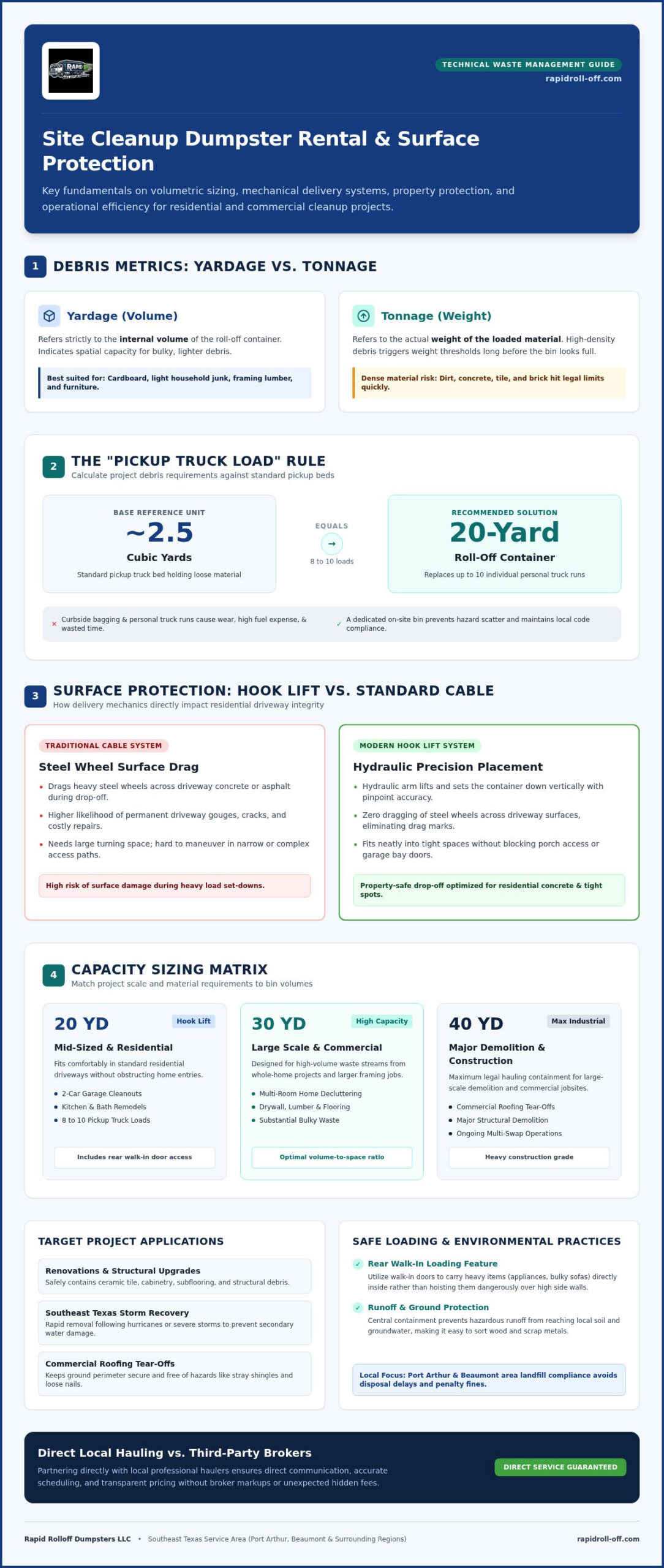
Understanding industry terminology helps you choose the right service for your needs. Yardage refers to the internal volume of the bin, while tonnage describes the weight of the debris inside. It is also helpful to research roll-off dumpster capacities and delivery systems to see how different mechanisms affect your property. While traditional cable roll-offs are common, hook lift systems provide a significant advantage. Hook lifts use a hydraulic arm to lift and lower bins vertically. This allows for precision placement in tight spaces where a standard truck might struggle to navigate.
When Do You Need a Professional Cleanup Container?
Heavy structural changes almost always require professional containment. Kitchen and bathroom renovations generate dense debris like ceramic tile, old cabinetry, and heavy flooring. Major estate cleanouts or deep decluttering projects also move faster when you have a large bin on-site. In Southeast Texas, storm recovery is a frequent reality. Rapid debris removal after a hurricane or severe storm is crucial to prevent secondary damage to your home. Commercial roofing tear-offs and construction sites also depend on these containers to keep the ground clear of hazards like nails and shingles.
The Environmental Impact of Proper Site Management
Managing a project responsibly involves thinking about the final destination of your waste. Proper containment prevents hazardous runoff from uncontained piles, which protects local soil and groundwater. It also makes it easier to sort debris, ensuring that recyclable materials like metal or clean wood don’t end up in a landfill unnecessarily. In the Port Arthur and Beaumont area, landfill regulations are specific regarding prohibited items and weight limits. Using a professional service ensures your site cleanup dumpster rental is handled according to these local standards, helping you avoid environmental fines or disposal delays.
Matching Your Project to the Right Waste Solution
Estimating debris volume is the first step in a successful site cleanup dumpster rental. Use the “pickup truck load” rule as a reliable baseline. A standard pickup bed holds approximately 2.5 cubic yards of loose material. If you expect 8 to 10 loads of waste, a 20-yard container is usually the best fit. Physical dimensions aren’t the only factor to consider. Weight limits matter just as much as volume. Dense materials like concrete, brick, or dirt reach tonnage caps much faster than light bulk waste like cardboard. Exceeding these limits leads to extra fees and safety risks during transport.
Loading your container efficiently saves space and prevents injuries. Most large bins include walk-in doors at the rear. Use these doors to carry heavy items like old sofas or appliances directly into the bin. This is much safer than trying to hoist heavy objects over the high side walls. If you aren’t sure which size matches your specific debris type, you can consult with a local expert to find the most cost-effective solution.
Residential Cleanups: From Garages to Whole Homes
A standard 2-car garage cleanout typically requires a 20-yard hook lift dumpster. This size provides enough room for old shelving, broken tools, and general household junk while fitting comfortably in a standard residential driveway. For whole-home decluttering projects, consider the total volume of furniture and appliances. Hook lift systems are ideal here because they allow for precise placement, ensuring the bin doesn’t block your garage door or access to your front porch.
Commercial and Construction Site Requirements
Construction projects generate diverse waste streams including drywall, lumber, and flooring. Managing these materials requires a larger 30-yard or 40-yard container to handle the high volume. Following EPA guidelines on construction and demolition waste management ensures your site stays compliant and prioritizes material recovery. For ongoing demolition projects, plan for multiple swaps. Scheduling regular pickups ensures your crew never has to stop work because the bin is full.
Hook Lift vs. Standard Roll-Off: Protecting Your Property
Most project owners assume all waste containers are delivered the same way. This is a mistake that can lead to expensive driveway repairs. Standard roll-off systems use a winch and cable to drag the bin off the truck bed. As the container slides, the steel wheels put intense pressure on your pavement, often causing deep scratches or cracks. A hook lift system operates differently. It uses a hydraulic arm to lift the container and set it down vertically. This “precision placement” eliminates the dragging motion, making it the safest choice for a residential site cleanup dumpster rental.
The delivery mechanism also changes how weight is distributed. During a cable delivery, the bin is tilted at a sharp angle. This concentrates the entire weight of the container on the rear wheels as they first hit the ground. Hook lift trucks keep the bin more level throughout the process. By spreading the weight more evenly, the system reduces the risk of the container sinking into asphalt or crushing decorative pavers. It’s a professional approach that prioritizes the long term integrity of your property.
Why Hook Lifts are Ideal for SE Texas Driveways
Navigating the narrow streets of Groves and Port Neches requires equipment that is both powerful and maneuverable. Traditional cable trucks need a long “runway” of clear space to pull a bin onto the truck. Hook lift trucks are more compact and can operate in much tighter spaces. They can drop a 20 or 40-yard hook lift container in spots where a cable truck simply cannot reach. This maneuverability is essential for maintaining OSHA housekeeping and waste container requirements, as it allows you to keep the bin closer to the actual work area, reducing the distance your crew has to carry heavy debris.
Best Practices for Property Protection
While the hook lift system offers superior protection, you should still follow basic site preparation steps. Clearing the area of all vehicles and equipment is the first priority. You should also take the following precautions:
- Use protective barriers: Lay down 2×10 wooden planks or plywood “street pads” where the bin will sit. This adds an extra layer of cushioning for your concrete.
- Check vertical clearance: Look up for low-hanging power lines or tree branches. The hydraulic arm needs significant overhead room to function.
- Ensure level ground: Always place the bin on a flat, stable surface. Avoid placing heavy containers on soft soil or unreinforced grass, which can lead to shifting.
Taking these small steps ensures your cleanup process stays stress-free and your driveway remains in pristine condition.
Planning Your Cleanup: Sizing and Site Preparation
Choosing the right capacity for your site cleanup dumpster rental prevents the frustration of a half-finished project. For mid-sized renovations like a full kitchen gut or a deck removal, the 20-yard hook lift is the most efficient choice. It handles roughly 120 standard trash bags and manages heavy materials like tile or shingles without straining the delivery system. If you’re tackling a whole-home siding project or a massive attic cleanout, the 30-yard dumpster serves as the industry workhorse. For large-scale demolition or commercial remediation, the 40-yard hook lift offers maximum volume, holding the equivalent of 16 to 20 pickup truck loads of debris.
Safety and legal compliance are non-negotiable when loading your container. Federal environmental mandates strictly prohibit specific items from entering the waste stream. You must never discard lithium-ion batteries, wet paints, motor oils, fuels, or asbestos in your bin. Including these items can lead to severe environmental fines and the refusal of your pickup. If you’re ready to start your project, you can schedule your delivery online today to ensure your timeline stays on track.
Step-by-Step Site Preparation
Success starts before the truck arrives. Measure your delivery area to ensure you have at least 60 feet of linear space and 23 feet of vertical clearance away from power lines and tree branches. If you live in Groves, Port Arthur, or Beaumont, check your local municipal codes regarding street placement. You may need a Right-of-Way permit if the bin cannot fit on your private property. It’s also a neighborly practice to notify those living nearby, especially if the delivery truck might temporarily block a narrow street during the drop-off.
Maximizing Your Dumpster Space
Loading your bin strategically helps you get the most value for your money. Place heavy, bulky items like old appliances or furniture on the bottom to create a stable base. Slide flat materials like drywall or plywood along the sides to keep the load contained. You should also break down large items, such as wooden crates or furniture frames, to eliminate “air pockets” that waste valuable space. Always follow the “level load” rule. Filling the container above the top rim creates a significant safety hazard for the driver and can result in extra fees or the requirement to remove excess debris before pickup.
The Advantages of Local Professional Dumpster Services
Choosing a local provider for your site cleanup dumpster rental offers benefits that national brokers simply cannot match. When you call a local asset-based company, you speak with a dispatcher who understands the specific geography of Groves, Port Arthur, and Beaumont. They know which streets are narrow and which neighborhoods have strict placement rules. This local expertise ensures your delivery happens on time and without logistical errors. You aren’t just a number in a database; you’re a neighbor who needs a dependable service to keep a project moving forward.
National brokers often hide behind polished websites but own zero trucks or containers. They act as middle-men, booking your service and then outsourcing it to a local hauler while adding a significant markup to the price. This “hidden fee” trap leads to higher costs and poor communication. If a delivery is delayed, the broker often has no direct contact with the driver. Working directly with a local professional eliminates these layers of confusion. You get transparent pricing and a direct line to the people actually handling your waste removal.
Supporting the Southeast Texas Community
Local businesses like Rapid Rolloff Dumpsters LLC are deeply invested in the success of the region. We understand the unique pressures of the Southeast Texas storm season. When heavy weather hits, regional knowledge of local waste ordinances and disposal sites becomes critical for fast recovery. We serve Nederland, Port Neches, and Orange with a “can-do” attitude that national corporations lack. Our team builds long-term relationships with local contractors and property managers, providing reliable equipment that keeps job sites safe and compliant.
Ready to Start Your Project?
Starting your cleanup shouldn’t be a complicated process. You can get a fast, transparent quote by providing a few details about your project type and location. Whether you need a 20-yard hook lift for a residential remodel or a 40-yard container for a major commercial demolition, we have the inventory ready to deploy. Scheduling your delivery in advance ensures maximum project efficiency and keeps your workspace clear of hazardous debris. Don’t let waste pile up and create safety risks on your property.
Take the first step toward a clean, organized site today. Our team is ready to help you choose the right container and delivery method for your specific needs. Contact Rapid Rolloff Dumpsters for your site cleanup needs and experience the difference of working with a local Southeast Texas expert.
Streamline Your Next Project with Expert Waste Management
Managing a large-scale project requires more than just a big bin. You need the right technology to protect your driveway and the local expertise to navigate regional regulations. Choosing a hook lift system ensures precision placement and minimizes the risk of property damage. Whether you’re clearing out a residential garage or managing a commercial demolition site, selecting the correct container size is the key to maintaining a safe and efficient workspace.
Rapid Rolloff Dumpsters LLC is locally owned and operated right here in Groves, TX. We specialize in hook lift containers that prioritize your driveway safety while serving Port Arthur, Beaumont, and the surrounding Southeast Texas communities. Don’t settle for unreliable brokers or equipment that might damage your concrete. Take control of your debris removal today. Rent Your Cleanup Dumpster from Rapid Rolloff Today to ensure your site cleanup dumpster rental is handled by true local professionals. Your clean, debris-free site is just a phone call away.
Frequently Asked Questions
What size dumpster do I need for a standard kitchen renovation?
A 20-yard hook lift dumpster is the ideal choice for a standard kitchen renovation. This size provides enough volume for old cabinetry, countertops, and appliances without taking up excessive space on your property. It typically holds the equivalent of eight to ten pickup truck loads of debris. For larger projects involving structural demolition or extensive flooring removal, you might consider a 30-yard or 40-yard option to avoid multiple container swaps.
Can I put a dumpster on the street in Port Arthur or Beaumont?
Placing a container on a public street in Port Arthur or Beaumont usually requires a municipal permit. These Right-of-Way permits ensure the bin doesn’t obstruct traffic or emergency services. Costs and requirements vary by city, so it’s best to check with your local public works department. If you can place the dumpster on your private driveway, you typically don’t need a permit. This makes the process much faster and more cost-effective.
How much weight can a 20-yard hook lift dumpster hold?
A 20-yard hook lift dumpster typically includes a weight allowance between 2 and 4 tons. While the container can physically hold more, exceeding the agreed tonnage leads to overage fees. The legal highway hauling limit is strictly capped at 10 tons of debris regardless of the bin’s volume. Always estimate your debris type carefully. Dense materials like ceramic tile or plaster weigh significantly more than general household junk or light construction lumber.
What items are considered “hazardous waste” and prohibited from dumpsters?
Prohibited items include lithium-ion batteries, wet paints, motor oils, fuels, and asbestos. Federal and state environmental regulations strictly ban these materials from standard landfills. Disposing of these items in your site cleanup dumpster rental can result in heavy fines or the refusal of your pickup. You should also avoid tires, car batteries, and appliances containing refrigerants unless they’ve been certified as degassed. Check with your local disposal center for specific hazardous waste collection days.
Will a dumpster rental damage my asphalt or concrete driveway?
A hook lift system significantly reduces the risk of damage to asphalt or concrete. Unlike traditional cable roll-offs that drag steel wheels across your pavement, a hook lift lowers the container vertically. We still recommend placing 3/4-inch plywood or sturdy wooden boards at the contact points for added protection. This extra layer of cushioning prevents high-pressure cracking and keeps your driveway in pristine condition throughout the entire waste removal process.
How long is a typical rental period for a site cleanup project?
Most site cleanup projects utilize a 7 to 10-day rental period. This timeframe provides ample room to complete your demolition or decluttering without feeling rushed. If your project takes longer than expected, you can usually extend the rental for a small daily fee. Always communicate your timeline clearly during the booking process. Scheduling your pickup a few days in advance ensures that the container is removed promptly once your workspace is clear.
What is the difference between a hook lift and a roll-off dumpster?
The primary difference lies in the delivery mechanism and space requirements. A hook lift uses a hydraulic arm to lift and set the container flat on the ground. This requires less linear room and allows for precision placement in tight driveways. A standard roll-off uses a winch and cable to slide the bin off the truck. Cable systems require a much longer clearance runway and often drag the container wheels across the pavement during delivery.
Do I need to be home when the dumpster is delivered or picked up?
You don’t need to be home for delivery or pickup as long as the drop-off area is completely clear. Ensure that vehicles are moved and there are no low-hanging obstructions like tree branches or power lines. Providing clear instructions or marking the placement spot with cones helps the driver position the bin exactly where you want it. This flexibility allows your project to stay on schedule without requiring you to take time off work.