The right roll-off dumpster size depends on the type and amount of debris you need removed. A 30-cubic-yard dumpster is described as holding the equivalent of 8-10 pickup truck loads, a useful comparison when estimating volume. When choosing a local dumpster company in Bridge City, consider restricted items and the space needed for delivery and placement, too.
It’s sensible to want a container that fits your project without making loading or delivery more complicated. This guide explains how to match dumpster size to debris and project scope, which items may be restricted, and what details to share about access and placement. You’ll also learn how the rental process works and what to consider when planning a home cleanout, renovation, roofing job, or construction project. With the right information ready, you can make a practical choice and prepare the delivery area before the dumpster arrives.
Key Takeaways
- Match the dumpster to both the amount and type of debris, rather than relying on project size alone.
- Use the container’s dimensions and your available placement space to narrow down a practical size.
- Share delivery access and placement details when scheduling, and plan ahead for items that may be restricted.
- Compare the available 20-yard, 30-yard, and 40-yard options with your project needs before choosing.
Scheduling and placement information needed for delivery
Plan delivery and pickup around your project start, loading area, and access route. Share clear placement instructions when booking.
Delivery Clearance and Placement
Measure the placement area and the route from the street to the drop-off spot. Compare the selected dumpster’s dimensions with the available space, and check for low branches, overhead wires, gates, parked cars, and tight turns. A driveway may look clear but still be difficult to reach if a vehicle blocks the approach. Choose a firm, level surface that leaves room to load.
Booking and Delivery Availability
When submitting an online rental request, enter the delivery address, preferred drop location, project timing, debris type, and pickup needs. Add access instructions, such as a gate code or a narrow driveway, so the driver can plan the route. Requested dates depend on the schedule and delivery route. Share changes to your project timeline promptly, since they can affect when the container is needed and ready for pickup.
Delivery, Loading, and Pickup
Before delivery, move vehicles and clear the route to the placement area. The driver delivers the container to the agreed spot, so review its position before loading. Keep debris inside the container and leave clear access for loading and pickup. When the project is complete, request pickup. Accurate placement details and a timely update help keep the process straightforward.
Before renting, review the terms for restricted materials, disposal rules, weight limits, and any circumstances that may trigger extra charges. Don’t assume every debris type is accepted or that disposal is covered for every load.
What is the Best Size Roll-off Dumpster Rental for Me?
Choose a roll-off dumpster by estimating debris volume and considering its weight. Bulky remodeling waste may need more space than dense debris, even when the total amount is similar.
Roll-Off Size Range
Roll-off sizes are labeled by cubic yards, and available options vary. Compare the capacity you need with the sizes offered for your project. A 20-yard container is one option; larger projects may call for a 30-yard or 40-yard dumpster. Match the size to the debris estimate and placement space, not just the project name.
Capacity by Dumpster Size
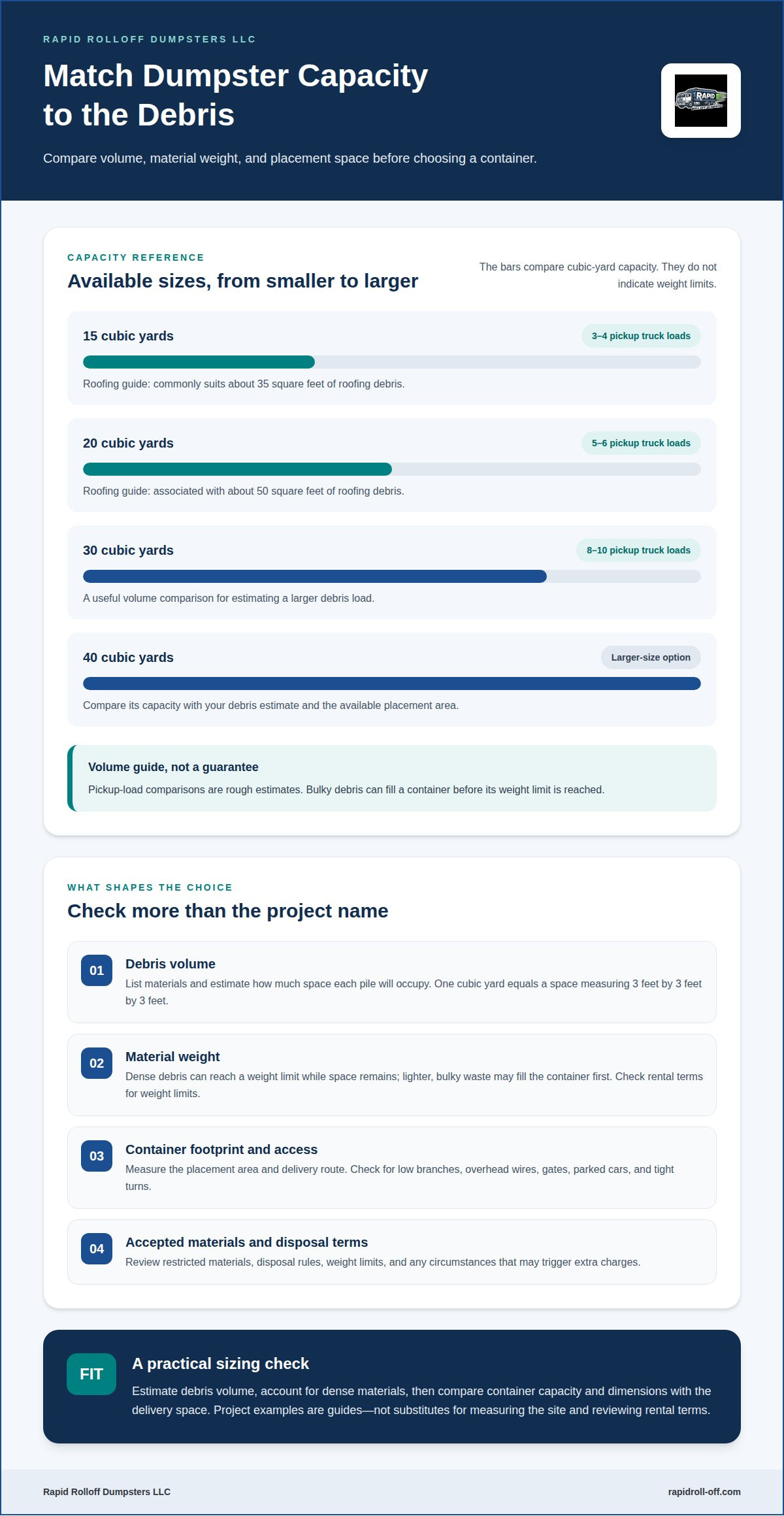
Use pickup loads as a rough volume comparison. A 15-cubic-yard dumpster is described as holding 3-4 pickup truck loads, while a 20-cubic-yard dumpster holds 5-6. A 30-cubic-yard dumpster is described as holding 8-10 pickup truck loads. These comparisons help estimate capacity, but bulky debris can fill a container before its weight limit is reached.
Weight Limits by Size
Dumpster volume and load weight are separate limits. Dense debris can reach a weight limit while leaving space unused; lighter, bulky debris may fill the container first. Estimate both the material type and amount before choosing. For example, a small pile of dense renovation debris can weigh more than a larger volume of lightweight household items. Review the rental terms for weight limits and disposal rules.
For a practical choice, list the materials, estimate their volume, and note whether the load includes dense debris. Then compare that estimate with the available container capacities. Ask about recycling and disposal rules for the materials in your load, since accepted items can affect your plan. Clear details also help customer service match a rental to the removal task. Compare dumpster rental options against your debris estimate and available placement area.
Dumpster dimensions and project size recommendations
Match container dimensions to the project footprint, debris volume, and material weight. For roofing, the estimated debris area offers a practical starting point.
Dimensions for Project Needs
One cubic yard equals a space measuring 3 feet by 3 feet by 3 feet. Use that unit to picture volume, then compare the container’s footprint with your driveway or construction site. Roofing estimates provide another guide: a 15-cubic-yard dumpster commonly suits about 35 square feet of roofing debris, while a 20-cubic-yard size is associated with about 50 square feet.
Dumpster size recommendations vary with the type and amount of roofing debris. These are project recommendations, not a substitute for measuring the available placement area. A long, narrow driveway may fit a different container shape than an open worksite. Compare the site dimensions and the expected debris before arranging rentals.
Capacity and Weight Limits
Capacity describes how much space is available, while the weight limit describes how heavy the loaded container can be. Consider both: dense construction material can become heavy before the container is full, while bulky waste may use the available space quickly. Material type and quantity help you plan the rental.
Before choosing, group debris by type and estimate how much each pile will occupy. For example, separate roofing material from bulky remodeling waste, then compare the estimated volume with a 20-yard, 30-yard, or 40-yard option. Review rental terms for weight limits, accepted materials, disposal terms, and any charges tied to the load. Clear terms help prevent hidden fees and make the rental process more predictable.
Use these steps to narrow the size:
- Measure the placement area, including the driveway approach.
- Estimate debris volume using cubic yards and project examples.
- Account for dense materials that can reach weight limits sooner.
- Compare capacity and rental terms before selecting a container.
Start with accurate measurements and a realistic debris estimate. Keep those details together when arranging your rental.
Choosing a dumpster size based on debris type and amount
List the materials you plan to remove and estimate their volume. A residential cleanup with furniture differs from construction debris removal because the shape and weight of the materials affect how they fit.
Start with three steps: separate materials by type, estimate the space each pile will take, and note which items are dense or bulky. Broken cabinets, for example, take up space differently from compact roofing debris. Consider the whole cleanup area, too, since debris spread across several rooms can be harder to estimate than one organized pile.
- Sort: Group similar debris, such as wood, household items, and renovation material.
- Estimate: Consider both the pile’s footprint and how high it can be safely loaded.
- Compare: Match the estimate to a container size and its weight terms.
Material type affects which dumpster size makes sense. Bulky, lightweight debris may fill the container before reaching its weight limit, while dense construction debris can become heavy with space left over. If your project includes both, estimate each material separately. This gives you a more realistic size estimate and helps you plan around the actual debris.
For a roofing job, use the estimated area of debris as one planning clue. For remodeling, account for cabinets, flooring, and other bulky materials individually. Record the project address and county with your notes, then list any materials whose disposal needs special attention. These details help frame a clear rental request without assuming every debris type follows the same loading plan.
Bring your debris list and project estimate together before selecting a size. Call us to discuss your debris mix and dumpster rental needs and make a practical plan for cleanup.
Rapid Rolloff Dumpsters: 20 Yard Hook Lift Dumpster Rental
Rapid Rolloff Dumpsters LLC offers rental options for residential cleanups, remodeling, and construction debris. Choose from a 20 Yard Hook Lift Dumpster Rental, a 30 Yard Dumpster Rental, or a 40 Yard Hook Lift Dumpster Rental. The right fit depends on your debris type, estimated amount, and available placement space.
Before booking, prepare a brief project summary. Note what you’re removing, where the dumpster should go, and how the delivery area can be reached. This helps match your project with a suitable dumpster and plan for loading and pickup.
Contact Rapid Rolloff Dumpsters LLC to discuss your project and arrange a rental.
Prepare Your Project for a Clear Start
Before cleanup begins, decide which rooms, work zones, or materials you’ll handle first. A simple sequence keeps debris moving and prevents cleared areas from becoming temporary storage. Share the plan with everyone working on the project so loading stays organized.
Keep your project notes together: work sequence, debris types, and preferred delivery area. This gives a local dumpster company in Bridge City the details needed to understand your project. A little preparation can make cleanup easier to manage as work progresses.
Ready to take the next step? Contact Rapid Rolloff Dumpsters today to discuss your project. With a clear plan in hand, you can move into cleanup feeling organized and ready.
Frequently Asked Questions
Are there items I can’t toss in my roll off dumpster?
Yes, some materials may be restricted by the rental and disposal terms. Before loading, sort unusual or mixed waste separately and review the rules that apply to your container. For example, tell the rental provider if your cleanup includes materials beyond ordinary household or construction debris. That helps you avoid putting an unaccepted item into the dumpster and having to remove it later.
How Does Pricing Work?
Pricing depends on the rental details and is provided after a quote request. Rapid Rolloff Dumpsters describes its rates as affordable and competitive, with delivery and pickup charges included and no hidden fees. To make the quote relevant, have your project type, debris description, delivery address, and preferred placement ready. Those details help connect the rental request with the work you need done.
How do I order?
You can order online through the company website or by phone. For an online booking, prepare the service address, project type, debris description, and delivery instructions before starting. Keep a note of any access details that could help the driver reach the placement area. Once submitted, save your booking information so you can refer to the requested service and delivery details.
What should I do if I have too much debris for one roll off container?
Pause loading once the container cannot safely hold the remaining material, then separate what is left from the debris already inside. Estimate the remaining volume and describe its material type when arranging another rental. For example, keep bulky renovation debris apart from dense material. A clear second-load estimate helps you plan the remaining cleanup without mixing up the project’s disposal needs.
Where can I put the dumpster?
A driveway or another firm, level area on your property can be a practical placement spot if the delivery route is clear. Choose a location that leaves room for loading and does not block a garage, work zone, or regular vehicle access. Mark the preferred spot before delivery. For street or shared-property placement, consider local requirements and access conditions before setting the location.
What local dumpster rental companies serve Bridge City, Texas?
Rapid Rolloff Dumpsters LLC serves Bridge City and nearby communities, including Groves, Port Arthur, Beaumont, Nederland, Port Neches, and Orange. If you need a local dumpster company in Bridge City, share your project details and delivery address when booking. Get a free online quote or book online, or call Rapid Rolloff Dumpsters to arrange delivery and pickup.