Do you need to be home when the dumpster arrives? Not necessarily. Preparing your driveway for a dumpster means clearing the placement area, protecting the surface, and leaving enough room for the delivery truck and the container’s rear door.
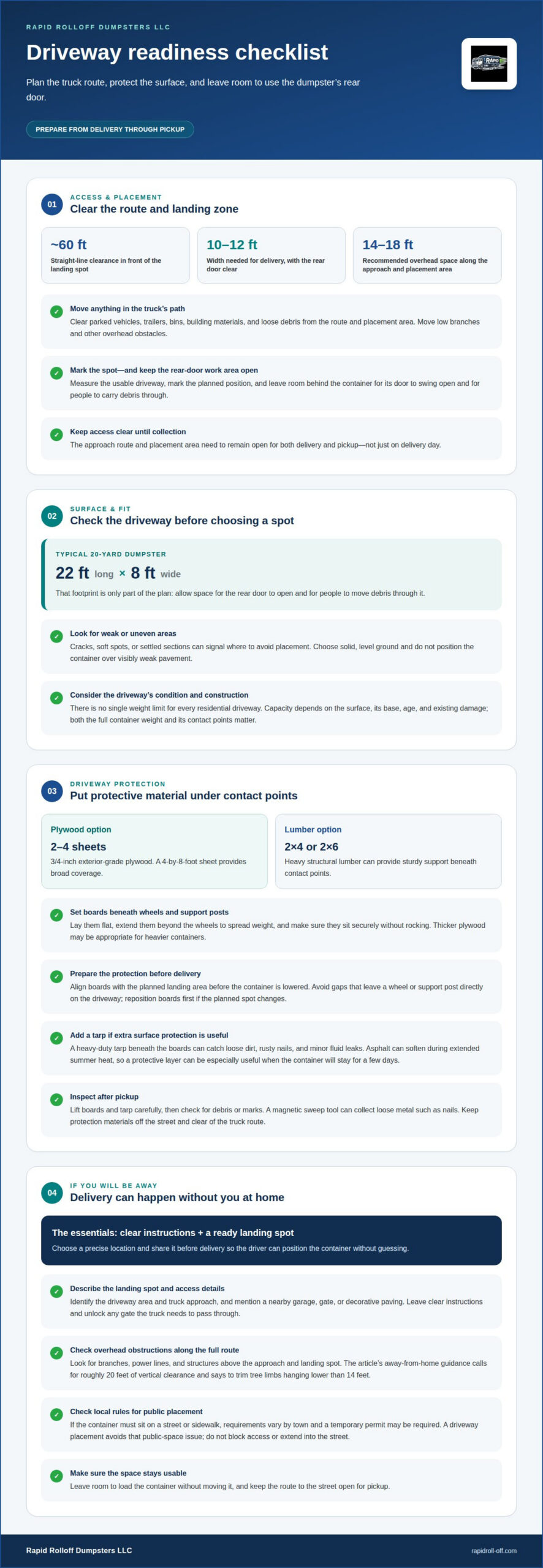
It’s easy to focus on where the dumpster will sit, but access matters just as much. A delivery truck needs about 60 feet of straight-line clearance in front of the landing spot, and the dumpster needs roughly 10 to 12 feet of width with its doors clear.
This guide explains how to protect your driveway with boards or plywood, what obstacles to move, and how to plan space for the dumpster and its rear door. You’ll also learn when delivery can happen without you at home: share clear placement instructions ahead of time, and make sure the designated spot is ready for the truck.
Key Takeaways
- Keep the approach path and placement area clear throughout the rental so delivery and pickup can happen without obstacles.
- Use sturdy boards or plywood to spread the container’s weight and help shield vulnerable driveway surfaces.
- Share clear placement instructions before delivery; you may not need to be home if the location and directions are clear.
- Plan for the rear door to open and for people to move debris through it, not just for the container to fit.
How should one prepare for a dumpster rental pickup?
Keep the placement area and truck route clear from delivery through pickup. Preparing your driveway for a dumpster means measuring the space, checking the surface, and keeping access open.
-
Measure Driveway and Rear-Door Clearance
Measure the usable driveway length and width, then mark the container’s planned position. A typical 20-yard dumpster measures 22 feet long and 8 feet wide. Delivery needs about 10 to 12 feet of width, with the rear door clear. Leave room behind the container for the door to swing open and for people to carry debris through it. Keep this route clear during loading and pickup.
-
Assess Driveway Weight Capacity
Inspect the driveway’s construction and condition before choosing a placement. There’s no single weight limit for every residential driveway; capacity depends on the surface, its base, age, and existing damage. Cracks, soft spots, or settled sections can show where to avoid placing the container. Choose solid, level ground, and don’t position it over visibly weak pavement. Both the container’s full weight and its contact points matter.
-
Clear the Driveway and Placement Area
Move parked vehicles, trailers, trash bins, building materials, and loose debris before delivery. Clear the full footprint and rear-door work area, not just the space beneath the container. Remove low branches and other overhead obstacles. A level, solid driveway is commonly used for residential placement, while steep or narrow areas can make positioning difficult. Rapid Rolloff Dumpsters uses a driveway-safe hook-lift system with protective wood blocking to help protect concrete and asphalt.
-
Clear the Delivery Truck’s Access Path
Keep the route from the street to the landing spot open for delivery and pickup. A roll-off truck needs approximately 60 feet of straight-line clearance in front of the landing spot. Check overhead space along the approach and placement area; 14 to 18 feet is recommended. Move vehicles and other obstacles out of the truck’s path. Preparing your driveway for a dumpster also means keeping that route clear until the container is collected.
Protecting driveway surfaces with plywood or wooden boards
Place protective boards beneath the container’s wheels and support points to spread pressure across asphalt, concrete, or decorative paving. Protection and delivery costs depend on project details; pricing is provided after a quote request, with surface, materials, container size, and disposal needs shaping the estimate.
-
Choose Plywood or Lumber for Surface Protection
Use two to four sheets of 3/4-inch exterior-grade plywood, or heavy structural lumber, beneath contact points. A 4-by-8-foot sheet offers broad coverage, while 2×4 or 2×6 boards provide sturdy support. Choose thicker plywood for heavier containers, and consider the driveway material. Asphalt can soften during extended summer heat, making a protective layer especially useful if the container will remain in place for a few days.
-
Position Boards, Tarps, or Protection Planks
Lay boards flat where the container’s wheels and support posts will rest. Extend each board beyond the wheels to distribute weight evenly, and make sure the pieces sit securely without rocking. For extra surface protection, place a heavy-duty tarp beneath the boards. It can catch loose dirt, rusty nails, and minor fluid leaks, keeping the pavement cleaner during a renovation.
- Set the protection in place before the container arrives, not after it has been lowered. Keep boards aligned with the planned landing area so delivery can proceed smoothly. Avoid gaps that leave a wheel or support post directly on concrete or asphalt. If the container’s position changes, reposition the boards before lowering it onto the driveway.
- After pickup, lift the boards and tarp carefully, then inspect the surface for debris or marks. A magnetic sweep tool can collect loose metal, such as nails, from the driveway. Keep protective materials off the street and clear of the truck’s route. For help planning delivery and placement, review dumpster rental options.
Do I need to be home when the dumpster is delivered?
No. Delivery can happen while you’re away if the placement location and instructions are clear beforehand. Prepare the driveway by confirming access, overhead clearance, and any local rules that apply if you’re planning to place the container on a street.
- Choose a precise landing spot and communicate it before delivery. Identify the driveway area, the truck’s approach, and any nearby garage, gate, or decorative paving. Clear the route and placement area so the driver can position the container without guessing. If you won’t be home, leave clear instructions about the intended spot and any relevant access details.
- Check overhead obstructions along the full truck route. Look for tree branches, power lines, and structures above the driveway and landing spot. A roll-off delivery needs roughly 20 feet of vertical clearance. Trim tree limbs that hang lower than 14 feet, and avoid placing the container beneath wires or branches that could interfere with delivery.
- Review local rules if the container must sit on a public street or sidewalk. Requirements vary by town, and some municipalities may require a temporary permit for public placement. A driveway location avoids that public-space issue, but make sure the container won’t block access or extend into the street. Include any applicable permit arrangements in your delivery plan.
- Use a pre-delivery checklist before leaving the property. Move vehicles, bins, and materials; unlock any gate the truck needs to pass through; and clear the approach and turning space. Point out driveway cracks, soft spots, or decorative surfaces that could affect placement. Make sure there’s room to load the container without moving it, and keep the route to the street open for pickup.
Allowing room for the dumpster and rear door
Plan for the container’s full footprint, its rear door, and the path people need to carry debris. A clear layout also gives the truck room to place the dumpster and return for pickup.
- Measure the intended footprint, then mark its front, sides, and rear on the driveway. A typical 20-yard dumpster measures 22 feet long, 8 feet wide, and 4 feet high. A typical 30-yard dumpster is also 22 feet long and 8 feet wide, but stands 6 feet high. Use the dimensions for the selected size, not just the visible space available.
- Keep the rear end open for loading. Roll-off containers have a swing door at one end, so debris can be carried inside instead of lifted over a five-foot wall. Leave a clear route from the work area to that door. For a garage cleanout, for example, position the container so people can carry bulky items directly outside without crossing parked vehicles or stored materials.
- Check the approach and overhead conditions before placing boards or choosing the final position. Low branches, overhead wires, fences, and narrow turns can affect access even when the driveway’s condition seems suitable. Keep the space around the container clear during the rental, especially behind the rear door. That makes loading easier and leaves access open for pickup.
- Walk the planned route from the street to the landing spot, then check it again from the container’s rear door. Move bins, vehicles, tools, and renovation debris that could block either path. If the available space cannot fit the container and door access, choose another placement area rather than squeezing it beside a wall or fence. Plan your dumpster placement around the container size and access needs.
Rapid Rolloff Dumpsters LLC
Rapid Rolloff Dumpsters LLC helps make driveway placement part of a practical dumpster rental plan. Choose from a 20 Yard Hook Lift Dumpster Rental, a 40 Yard Hook Lift Dumpster Rental, or a 30 Yard Dumpster Rental based on the project’s debris and available space. Consider the container’s footprint, truck access, and rear-door clearance when planning the placement. Clear instructions about the intended location can help coordinate delivery with your driveway layout. For a cleanout, renovation, or construction project, contact Rapid Rolloff Dumpsters LLC to discuss your dumpster rental needs.
Make the Placement Plan Part of Your Project
Before cleanup begins, include the container’s location in your work plan. Decide how people will carry debris to it, which routes must stay open, and where vehicles can park during loading. Planning ahead helps prevent the driveway from becoming a bottleneck once work is underway.
Preparing your driveway for a dumpster is also a chance to make the project easier to manage. Set aside clear routes for household members, workers, and pickup access, then keep them open as the job progresses. If your plans change, communicate the new placement details before delivery.
For a rental that fits your cleanup or renovation, contact Rapid Rolloff Dumpsters LLC to discuss your project and placement needs. With a clear plan in place, you can focus on getting the work done and moving forward.
Frequently Asked Questions
How much space should I clear before the dumpster rental arrives?
Clear the planned container footprint, rear-door work area, and route people will use to carry debris. Move anything that could obstruct the delivery truck, such as parked cars, bins, or renovation materials. For a garage cleanout, leave a clear path between the garage and container so bulky items can be moved without blocking household access.
How much space is needed for a dumpster delivery and pickup?
Allow the truck about 60 feet of straight-line clearance in front of the landing spot, and keep roughly 10 to 12 feet of width available for delivery. The container also needs room for its rear door and loading access. Keep the approach open during the rental, since the same route must remain usable when the truck returns for pickup.
What driveway surfaces can support a full dumpster?
No surface type alone guarantees that a driveway can safely hold a full container. Capacity depends on the pavement’s condition, underlying base, and any existing cracks or soft spots. Concrete and asphalt are common driveway surfaces, but damage or weak areas can affect placement. In Port Arthur, Beaumont, or Groves, assess the actual driveway rather than relying only on its material.
How do you protect a driveway from dumpster damage?
Spread the container’s contact pressure with protective boards under its wheels and support points. This helps reduce concentrated pressure that can mark concrete, asphalt, or decorative paving. Place the protection before delivery and keep it stable as the container is lowered. A tarp beneath the boards can catch loose dirt, rusty nails, and minor fluid leaks during a project.
Should you use plywood or boards under a dumpster, and what kind?
Use two to four sheets of 3/4-inch exterior-grade plywood or heavy structural lumber. A 4-by-8-foot plywood sheet provides broad coverage, while 2×4 or 2×6 boards can support contact areas. Choose thicker plywood for heavier containers, and make sure boards extend beyond the wheels. Lay them flat so wheels and support posts don’t rest directly on the pavement.
Where should a dumpster be placed on a driveway for safe access?
Choose a solid, level area that lets the truck approach and leaves the rear door clear for loading. Avoid steep sections, narrow turns, overhead wires, and low branches. Keep the container away from weak or visibly damaged pavement, and leave access open for pickup. For properties in Nederland, Port Neches, Orange, or Bridge City, account for gates and tight driveway approaches.