The right dumpster is only one part of a water-damage cleanout. A water damage cleanup dumpster in Port Arthur helps contain damaged materials and household contents as the affected space is cleared, but timing and cost depend on the project’s scope and delivery logistics.
It’s understandable to want to know how quickly a container can arrive, especially when water has left rooms full of soaked materials. Delivery timing depends on scheduling and site access, while the cleanout itself depends on what was affected and what needs to be removed. This guide explains which water-damaged materials and contents may need disposal, how a professional cleanout typically moves from assessment to removal, and what can influence dumpster rental pricing without treating every project as the same.
You’ll learn how debris volume and material type affect container selection, and which site details to share when arranging delivery. These steps help you plan a practical cleanout for your Port Arthur property.
Key Takeaways
- Learn which water-damaged materials may need disposal, including porous items that cannot be cleaned and dried adequately.
- See how the affected area, debris volume, and site conditions can influence cleanout costs.
- Understand how the mix and amount of damaged materials help determine a suitable dumpster size.
- Find out why disposal planning matters when clearing flood-damaged materials in Jefferson County.
Water-damaged building materials and contents
Floodwater from a hurricane can carry bacteria, sediment, and debris into Port Arthur homes. A cleanout separates damaged building materials and contents from items that may be cleaned and kept.
Removal of Damaged Materials and Items
A cleanout may include waterlogged drywall, insulation, flooring, carpet, furniture, and other contents affected by floodwater. What needs removal depends on which materials were submerged and what can be cleaned and dried completely. Consider each item and surface when planning the debris load.
The Centers for Disease Control and Prevention advises discarding porous materials if they have been submerged, are difficult to clean, cannot dry completely within 48-72 hours to a moisture content below 20%, or odors remain. It also advises discarding drywall and insulation contaminated with sewage or floodwater.
Disposal hazards include contaminated debris and lingering odors from wet porous materials. Flood-damaged drywall, insulation, and flooring can conceal moisture behind finished surfaces, so the affected area matters during restoration planning. Equipment used for drying addresses moisture; it does not change whether a material should be removed.
Include both building materials and household contents in your cleanout description. A flooded room, for example, may contain damaged carpet and furniture as well as wet wall materials. Listing the debris categories by affected room makes it easier to plan removal.
Dumpster Size for Flood-Damaged Materials
A rental provider helps select a dumpster size by considering the rooms affected, the amount and type of debris, and how materials will be loaded. Bulky furniture takes up space differently from removed drywall or flooring. Clear information about the affected areas helps the provider match container capacity to the cleanout’s needs.
Dumpster rental companies serving Port Arthur and Southeast Texas provide containers for projects with different debris volumes. For a flood-damaged home, the useful details are the materials being removed and the scale of the cleanout. That information supports a practical size choice without assuming every property has the same damage.
Water damage cleanout pricing
For a Port Arthur cleanout, the price depends on the project and is provided after a quote request. The key factors are the volume and type of debris, the container size, rental duration, and delivery and pickup needs. Storm damage across one room creates different requirements from a cleanout spanning several rooms.
Begin with the affected areas and the materials to be removed. Bulky contents take up space differently from dense building debris, and mixed materials can affect loading. Describe damaged rooms, flooring, and contents, and consider both the debris volume and weight when selecting a dumpster.
Rental duration for water damage cleanup is determined by the time needed to complete removal and coordinate the container’s pickup. A smaller, contained cleanout may move on a different schedule from storm damage involving several rooms and ongoing repairs. The cleanup timeline, debris volume, and damage restoration work all influence how long the container is needed.
Access is another planning factor in Port Arthur. The placement area, approach for delivery, and space for loading affect the logistics of a rental. If remediation or repair work is happening alongside debris removal, the sequence of those activities can shape the schedule. Keeping the work scope clear helps avoid planning for a smaller load or shorter rental than the project requires.
To make a quote request useful, describe the affected spaces, the main debris categories, and the expected cleanout timeline. For example, note whether the work involves damaged flooring, household contents, or building debris, and whether restoration work will continue during removal. These details help establish the container needs and rental period without relying on a generic estimate. A project-specific dumpster quote can reflect those job details.
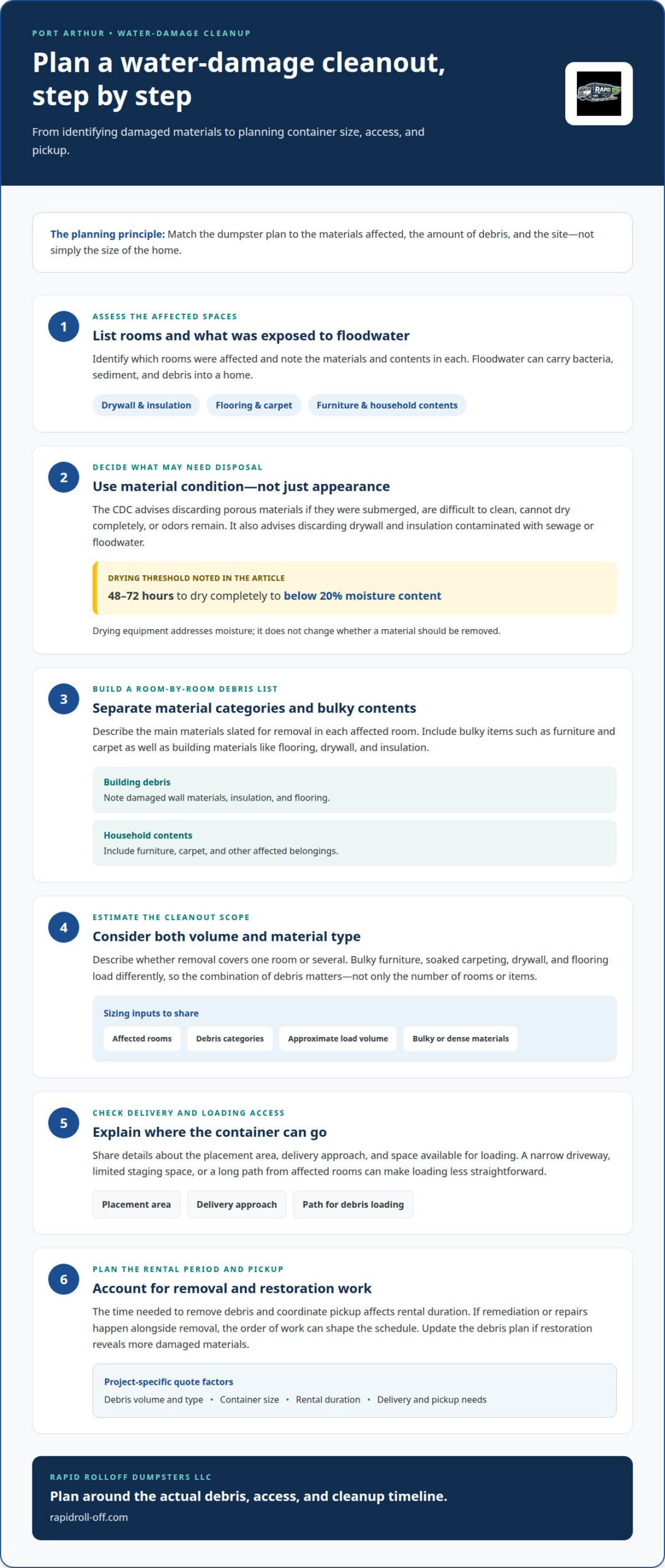
How a rental provider helps choose a dumpster size for flood-damaged home materials
Match container capacity to the debris expected from the cleanout. Start with the rooms affected, materials being removed, and approximate load volume. A bathroom with damaged flooring and wall materials differs from a flooded living room with furniture, carpet, and household contents. Describing each area helps establish the job’s scale.
Material type matters as much as the number of rooms. Drywall and flooring stack differently from bulky furniture or soaked carpeting. Consider the combination of debris, not just the number of bags or items. One room with heavy contents may need a different loading plan from several rooms with lighter, broken materials.
- List affected spaces: Identify rooms and the main materials slated for removal.
- Describe bulky contents: Include furniture, carpet, and other items that take up substantial space.
- Explain the cleanout scope: Clarify whether removal covers one room or multiple areas.
Site access shapes placement and loading plans. Consider where the dumpster can sit and how debris will reach it. A narrow driveway, limited staging space, or a long path from the affected rooms can make loading less straightforward. Share these details when arranging the rental.
For a Port Arthur home, a useful sizing conversation combines the debris list with the layout and removal scope. The provider can use those details to suggest a suitable capacity, while avoiding assumptions based only on the home’s overall size. If the damage expands during restoration, updated information about additional materials helps keep the container plan aligned with the work.
Water damage cleanup debris disposal rules Jefferson County Texas
In Jefferson County, Texas, disposal planning starts by identifying what the flood cleanout will remove. Drywall, flooring, carpet, furniture, and mixed household debris are different material groups. A clear list helps organize loading and communicate the waste types involved. It also prevents a cleanup plan from treating every item as interchangeable.
Group debris by material and condition in your cleanout plan. Note, for example, whether flooring is being removed with carpet and whether furniture or other household contents are included. Keep a list of affected rooms and major debris categories to clarify what the dumpster will hold.
- Building materials: Identify removed drywall, insulation, flooring, and other construction debris.
- Household contents: Include furniture, carpeting, and other damaged belongings.
- Mixed loads: Describe when several material types will be placed together.
Condition matters, too. Floodwater can carry bacteria, sediment, and debris, so handle affected materials carefully during removal. A load of wet flooring and household contents differs from clean, separated renovation debris. Describe the water-affected materials accurately rather than calling everything general cleanup waste.
For a Port Arthur property, disposal planning should connect the debris list, container placement, and loading sequence. A narrow access route may affect how materials move from the affected rooms to the dumpster. The person coordinating removal can use the room list and material categories to plan a practical loading approach without assuming county disposal requirements that do not fit the specific waste.
Keep the material description consistent from cleanout planning through container loading. If the scope changes, such as adding flooring removal after contents are cleared, update the debris list before loading continues. Plan a dumpster rental for your cleanup around the materials and removal scope.
Rapid Rolloff Dumpsters
Rapid Rolloff Dumpsters helps Port Arthur property owners plan a dumpster rental around flood-cleanout debris. Share which areas are affected, the materials being removed, and the expected scope. These details help guide the choice among a 20 Yard Hook Lift Dumpster Rental, 30 Yard Dumpster Rental, or 40 Yard Hook Lift Dumpster Rental. The right fit depends on the project’s debris volume and loading needs.
A dumpster rental is useful when water-damaged materials and contents need to be removed from a property. Describe the cleanup scope and access conditions to plan the right container for the work.
For help discussing your cleanup and rental needs, contact Rapid Rolloff Dumpsters.
Set Up the Next Step for Your Cleanup
A well-planned cleanup coordinates debris removal with the work that follows. Before arranging a rental, note the affected areas, expected removal scope, and any access details that could affect placement. This gives you a practical starting point for planning the cleanout alongside restoration work.
For a water damage cleanup dumpster in Port Arthur, focus on matching the rental plan to the property’s needs rather than rushing into a decision. A concise project outline can help clarify what must be removed and how the site will be used during the work. With those details ready, you can move from assessing damage toward organizing the cleanout.
Contact Rapid Rolloff Dumpsters to discuss your cleanup needs and rental options. Take the next step with a clear plan for your property.
Frequently Asked Questions
Where can I rent a water damage cleanup dumpster in Port Arthur, TX?
Rapid Rolloff Dumpsters LLC provides dumpster rentals for Port Arthur projects, with delivery and pickup supporting residential and commercial cleanup. Its local service area also includes Beaumont, Nederland, Port Neches, Groves, Orange, and Bridge City. For a water damage cleanup dumpster in Port Arthur, share the property location and debris scope so container planning reflects the cleanup rather than a general household cleanout.
What dumpster sizes are available for water damage debris cleanup?
Available options include a 20 Yard Hook Lift Dumpster Rental, a 30 Yard Dumpster Rental, and a 40 Yard Hook Lift Dumpster Rental. The right capacity depends on the amount and bulk of debris, such as whether removal includes flooring, furniture, or materials from several rooms. A rental provider can use the project description to help match container size to the expected load.
How much does dumpster rental cost in Port Arthur, Texas?
Rental pricing is offered at flat rates, with delivery, pickup, weight allowance, and disposal included. The specific rate depends on the dumpster selected for the project, so a quote request is the way to get pricing for your cleanup. For a useful estimate, describe the debris type and scope, and whether the work involves one area or several parts of the property.
What debris can go in a cleanup dumpster in Port Arthur?
Water-damaged cleanup debris may include drywall, flooring, carpet, furniture, and other household contents slated for disposal. The mix varies by project, so describe the materials rather than treating the load as a single generic waste category. Flooring and wall materials, for example, take up space differently from bulky furniture.
Is same-day emergency dumpster delivery available in Port Arthur, TX?
Same-day or next-day delivery options are available for Southeast Texas projects, including Port Arthur. Arrange a rental through Rapid Rolloff Dumpsters’ online booking or by phone. Share the delivery address, site access details, and expected debris to coordinate drop-off. The dumpster supports debris removal; water extraction and restoration are separate work.
How should a rental provider prepare and load a dumpster after water damage?
Rapid Rolloff Dumpsters coordinates dumpster delivery and pickup based on the project scope. The cleanup crew or property team loads the debris; dumpster rental does not include water extraction or restoration work. Share details about affected areas, debris categories, and container access when arranging the rental. Bulky contents, for example, may need a different loading approach from flooring debris.