The biggest dumpster isn’t always the right choice for a concrete project. A dumpster for concrete disposal can reach its weight limit while there’s still plenty of room inside, so choosing by appearance alone can leave you with an overloaded container or a disrupted job.
It’s natural to focus on how much space broken concrete will take up. But weight matters just as much, and it can be difficult to estimate the total before demolition begins. Start by measuring the concrete, keeping it separate from other waste, and planning a container and loading approach around the job.
This guide explains how weight and volume affect your rental plan, how to estimate and load a concrete-only haul, and what to consider for delivery in Southeast Texas. Rapid Rolloff Dumpsters LLC offers 20- and 40-yard hook lift rentals and 30-yard dumpster rentals, with delivery and pickup around Groves, Port Arthur, Beaumont, Nederland, Port Neches, Orange, and Bridge City. A clear plan helps keep disposal organized from demolition through pickup.
Key Takeaways
- Estimate concrete output by measuring the demolition area and slab thickness, then keep concrete separate from other debris.
- Choose a dumpster for concrete disposal based on project conditions, including load amount and site access, not yardage alone.
- Plan a stable placement area with enough room for delivery and pickup before demolition begins.
- Break concrete into manageable pieces and distribute the load evenly while following the container’s fill instructions.
- Rapid Rolloff provides delivery and pickup for residential and commercial projects in Groves, Port Arthur, Beaumont, Nederland, Port Neches, Orange, and Bridge City.
Why a Dumpster for Concrete Disposal Must Be Planned Around Weight
A concrete disposal dumpster collects and hauls broken concrete from projects such as patio, walkway, or driveway removal. Its size describes volume, not the weight the hauling setup can carry. Because concrete is dense, a load can reach its permitted weight while leaving space in the container.
Quotable takeaway: Concrete dumpster planning must account for both load weight and container volume, because a container can look underfilled and still be too heavy to haul.
Why concrete weight can limit a dumpster before it fills
Household junk and many renovation materials are lighter and leave gaps. Concrete is different. A modest-looking stack of broken slabs can be heavy, so adding pieces just to use the remaining space may not be practical or safe. The container’s cubic-yard rating tells you how much space it holds. It does not, by itself, establish the allowable concrete weight.
Project details affect the amount and shape of the debris. A thicker slab produces more material than a thin walkway with the same surface area. Large chunks pack differently from smaller pieces, and soil or other material attached to the concrete changes what the load contains. As a result, pile size alone can be misleading.
Plan from the demolition details, not just the container’s apparent capacity. Record the concrete’s area and thickness, and consider how it will be broken up and loaded. The rental agreement’s weight and loading limits set the practical boundaries. A larger yardage rating does not automatically mean more concrete can be hauled.
What belongs in a concrete-only disposal load?
A concrete-only load is kept separate from mixed construction and demolition debris. Clean concrete has no unrelated waste mixed in, while a mixed load might include soil, wood, plastic, or general trash. Keeping materials apart makes it easier to describe the load and may simplify handling. Concrete can also be processed for reuse, as outlined in this overview of the concrete recycling process and benefits. Acceptance and disposal options vary, so don’t assume every facility handles every mix the same way.
- Keep concrete separate from soil, wood, and general trash while the project is underway.
- Note any material attached to or mixed with the concrete.
- Follow the rental agreement for accepted materials, weight limits, and loading instructions.
Separation is especially useful when demolition happens in stages. Set aside a designated area for concrete instead of adding miscellaneous debris as cleanup progresses. Before loading, compare the project material with the rental agreement. This helps ensure the planned load matches the container’s requirements.
How to Estimate a Concrete Disposal Load in Southeast Texas
A useful estimate starts before demolition. Measure the slab and record its thickness while the surface is still easy to inspect. These measurements give you a better basis for planning than trying to judge a pile of broken pieces once the work is underway.
Measured project dimensions are a better starting point than visual guesswork because they help estimate the original concrete volume before the debris shifts, breaks apart, or mixes with other material.
Measure the slab before breaking it up
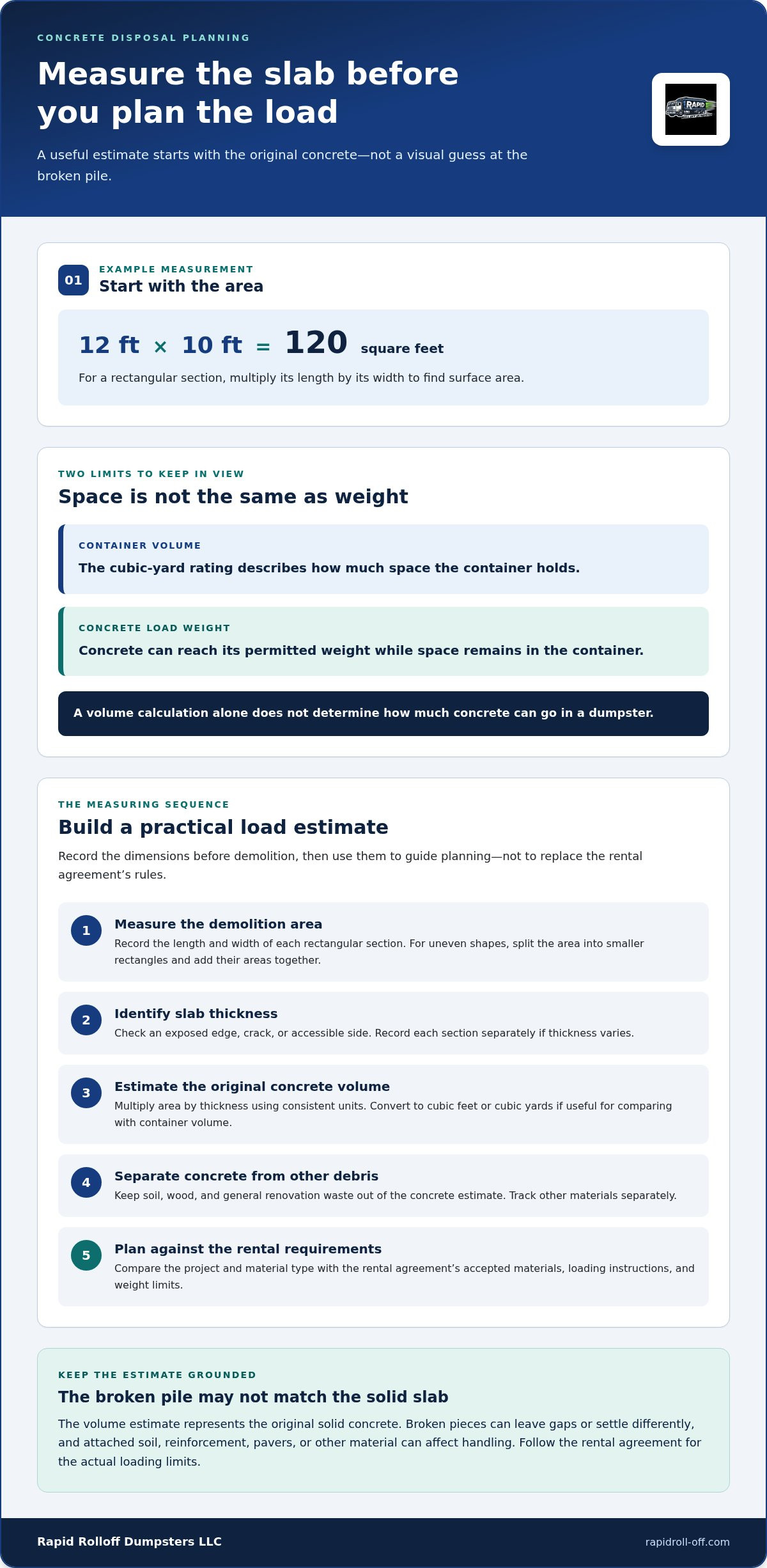
Record the slab’s length, width, and approximate thickness. Use the same units for each measurement, such as feet, and multiply length by width to calculate the surface area. For example, a rectangular section measuring 12 feet by 10 feet has a surface area of 120 square feet. Note whether the slab includes reinforcement or has soil, pavers, or other material attached, since these details can affect handling.
Turn project measurements into a realistic load plan
For a large or irregular project, divide the work into sections and estimate each area separately. This helps you track different slab thicknesses instead of treating the entire demolition area as uniform. Use your measurements for planning, then follow the rental agreement for accepted materials and weight limits. An estimate does not replace those requirements.
- Measure the demolition area. Note the length and width of each rectangular section. For an uneven shape, split it into smaller rectangles, estimate each area, and add them together. Keep a written record so the measurements are useful after demolition starts.
- Identify slab thickness. Check an exposed edge, existing crack, or accessible side of the slab. Record the approximate thickness for each section rather than assuming all concrete is uniform. If thickness varies, list the areas separately.
- Estimate the original concrete volume. Multiply the area by the slab thickness, using consistent units. Convert the result to cubic feet or cubic yards if that helps you compare the project with container volume. This estimates the solid slab, not how broken pieces will sit in a container.
- Separate concrete from other debris. Keep soil, wood, and general renovation waste out of the concrete estimate. Track those materials separately, especially if the project will produce mixed debris as well as concrete.
- Use the estimate to plan the load. Compare the measured project and material type with the rental agreement’s loading and weight rules. Don’t use a volume calculation alone to decide how much concrete can go in a dumpster for concrete disposal.
Broken pieces can leave gaps, settle differently, or include attached material, so their final volume may not match the original slab measurement. Avoid turning your volume estimate into a weight figure unless you have a reliable, project-appropriate basis for the calculation. A guessed weight can create a false sense of certainty.
For residential or commercial work in Groves, Port Arthur, Beaumont, Nederland, Port Neches, Orange, or Bridge City, a clear measurement record makes rental planning more straightforward. Use it alongside the rental terms when considering dumpster rental options for the project.
Choose a Concrete Dumpster by Project Conditions, Not Yardage Alone
A container’s yardage rating describes its volume, not the amount of concrete it can safely carry. Dense material can reach a weight limit while leaving visible space unused. Choose a dumpster for concrete disposal by considering the debris quantity, its weight allowance, site access, and whether other materials will be mixed in.
Rapid Rolloff offers 20- and 40-yard hook lift rentals and 30-yard dumpster rentals. These sizes describe container volume, not concrete weight ratings. Use the project details and rental agreement together to plan the job. Don’t assume a higher yardage number means more concrete can go in the container.
| Project condition | What to assess | Planning implication |
|---|---|---|
| Amount of concrete | How much slab or other concrete is being removed, based on project measurements | Estimate volume, then account separately for weight limits |
| Concrete weight | Slab thickness, chunk size, and any attached or mixed material | Follow the rental’s weight allowance, even if the container still has room |
| Loading access | Space for delivery, a clear path to the container, and room to load safely | Consider how the work area and container placement affect the loading process |
| Mixed-material needs | Whether the job also produces soil, wood, or general construction debris | Plan separately for concrete and other debris according to accepted-material rules |
When a small, separated concrete load is easier to manage
A smaller project, such as removing one section of walkway, may be easier to organize when the concrete stays separate from other debris. Separation makes it easier to track what’s being hauled and manage cleanup as demolition proceeds. Consider access too: the delivery area, route to the work, and space for moving pieces all affect the loading process. Don’t judge container suitability by the project’s appearance alone.
When project scale and mixed debris change the decision
A patio or walkway removal may produce a contained amount of concrete, while a larger construction cleanup could produce concrete alongside wood, soil, and other debris. These jobs need different plans, but a bigger mixed-waste project doesn’t automatically mean everything belongs in one container. Separate debris streams when needed, and treat container volume, weight allowance, and accepted materials as distinct requirements.
Before settling on a rental option, use this decision order:
- Describe the project amount and the concrete being removed.
- Review the weight allowance and accepted-material terms for the rental.
- Assess loading access and whether other debris needs a separate plan.
This keeps the decision grounded in the actual work rather than a size label. It also helps residential and commercial project teams plan cleanup without treating a 20-, 30-, or 40-yard rating as a promise of concrete capacity.
Prepare the Site and Load Concrete Safely Before Pickup
A well-planned placement area makes delivery, loading, and pickup easier to coordinate. Before the dumpster for concrete disposal arrives, choose firm, level ground with a clear approach and enough room for the delivery vehicle to position the container. Keep the route to the demolition area practical so concrete doesn’t need to be moved farther than necessary.
Plan delivery access around the work area
Walk the proposed route from the street or driveway to the placement spot. Look for narrow gates, low branches or overhead structures, tight turns, parked vehicles, and other obstacles that could restrict access. Consider how the vehicle will enter, position the container, and leave. A spot that looks open from the work area may still be difficult to reach from the road.
Site layouts vary across Groves, Beaumont, Port Arthur, and other Southeast Texas communities. Check the actual property rather than relying on a general placement assumption. Clear the area before delivery and leave room for pickup access after the project is finished. If the preferred spot is blocked, identify a practical alternative before work begins.
Load dense debris with control
Break concrete into manageable pieces before loading, and place each piece carefully. Distribute the material across the container floor instead of concentrating it in one area. Keep the load below the fill line and follow the rental instructions for accepted materials, weight, and loading. Don’t climb into the container to arrange debris or use a loading method that puts you at risk.
Keep concrete separate from unrelated debris such as wood, soil, and general trash. A clean, clearly separated load is easier to track and supports more straightforward handling. If the project produces other waste, plan for it separately instead of adding it to the concrete load without regard to the rental terms.
- Clear the delivery and pickup route, including gates and turning areas.
- Use a stable placement area that leaves room to work around the container.
- Load pieces carefully and distribute them evenly across the floor.
- Stop at the fill instructions and keep other debris separate.
Before pickup, check that material isn’t above the fill line, the container is accessible, and the load follows the rental instructions. These checks help prevent last-minute adjustments and keep cleanup organized.
For a project in Rapid Rolloff’s Southeast Texas service area, arrange dumpster delivery and pickup to manage debris from site preparation through cleanup.
Arrange Concrete Project Dumpster Delivery Across Rapid Rolloff’s Service Area
For a residential renovation or commercial cleanup, delivery and pickup provide a straightforward way to manage project debris. Rapid Rolloff rents 20- and 40-yard hook lift dumpsters and 30-yard dumpsters for projects around Groves, Beaumont, Nederland, Port Neches, Port Arthur, Orange, and Bridge City. These sizes describe container volume, not guaranteed concrete capacity. Plan for project scale, weight limits, accepted materials, and site access together.
What to plan before scheduling a local dumpster rental
Gather the key project details before work begins. Note the job location, what concrete is being removed, its approximate dimensions, and where a container can be placed with a clear route for delivery and pickup. A measured estimate helps describe the job, while the rental terms and loading instructions guide how to use the container.
Make a short checklist:
- Project address and whether the work is residential or commercial
- Concrete source, such as a patio, walkway, or driveway section
- Approximate area and thickness of the material
- Placement location, access route, and any gates or overhead obstructions
- Rental terms for accepted materials, weight limits, and loading
Keep concrete separate from other debris if the cleanup includes materials such as soil, wood, or general renovation waste. A clear description of what the project will produce helps you plan the rental and avoid treating a mixed load as concrete-only.
Get delivery and pickup organized for the project
Plan the container’s arrival around the work area and sequence of demolition. A suitable placement spot can reduce unnecessary material handling and keep debris in one organized location as the job progresses. Leave the access route clear for pickup too. If the site layout changes during the work, keep the loading area and container approach in mind.
Match the rental option to the overall project, but don’t use yardage alone to judge how much concrete can be hauled. A 20-, 30-, or 40-yard container may provide different amounts of space, while the concrete load still needs to stay within the applicable weight and loading limits. Follow the rental terms throughout the job, even if the container doesn’t look full.
For concrete cleanup in Groves, Beaumont, Nederland, Port Neches, Port Arthur, Orange, or Bridge City, explore local dumpster rental options and share your project location, concrete dimensions, and placement details to plan delivery and pickup around the work.
Set Your Concrete Project Up for a Smooth Start
Make the disposal plan part of the project schedule, not a decision left until debris is piling up. Choose a point person to track what goes into the container, keep the work area organized, and prepare the site for delivery and pickup. That coordination helps homeowners and crews avoid rushed choices as the job moves from demolition to cleanup.
As you plan a dumpster for concrete disposal, keep your measurements and project notes close at hand. Use them to shape the rental plan, and treat the rental terms as the guide for accepted materials and loading. If the project scope changes, revisit the plan before adding a different debris stream or changing how the container is used. Preparation makes the work easier to manage from start to finish.
Whether you’re preparing a home improvement project or coordinating a larger cleanup, a clear plan gives everyone a practical next step and lets the crew focus on the work. Explore dumpster rental options for your project and plan delivery and pickup around your concrete cleanup.
Frequently Asked Questions
Can concrete and other construction debris go in the same dumpster?
Sometimes, but the rental terms and disposal requirements determine whether a mixed load is acceptable. A renovation might produce concrete alongside drywall, lumber, and packaging. Combining materials can change how the load is handled, so keep separate piles while work is underway and follow the rental agreement before mixing them. Plan a dumpster for concrete disposal around accepted materials as well as weight and volume.
Can concrete with rebar be placed in a dumpster?
It depends on the rental’s accepted-material rules and how the rebar is attached. Short, embedded reinforcement may be handled differently from long, exposed bars that protrude from broken pieces. Sharp ends can create hazards during loading and handling. Don’t assume reinforced concrete is treated the same as plain concrete. Follow the rental agreement’s material and loading instructions before placing rebar-containing pieces in the container.
Can broken concrete be recycled in Southeast Texas?
Broken concrete can be recycled where a facility accepts it and has a suitable process, but options and requirements vary. For a project in Groves, Port Arthur, Beaumont, Nederland, Port Neches, Orange, or Bridge City, keep concrete separate from general waste while planning disposal. Acceptance depends on the facility and the material, so don’t assume every facility takes concrete.
What happens if a concrete dumpster is overloaded?
An overloaded container can create a safety problem during transport and disrupt the planned pickup. If concrete is above the fill line or the load exceeds the rental’s weight allowance, the load may need to be corrected before it can be hauled, according to the rental terms. Don’t add more material just because space remains. Track what goes in and stop at the stated loading limits.
Should concrete be broken into smaller pieces before disposal?
Breaking concrete into manageable pieces usually makes loading and placement easier than handling a few oversized slabs. Piece size also affects how debris sits in the container, so don’t assume smaller fragments mean a lighter load. Plan the demolition method around safe handling, and don’t climb into the container to rearrange material. Follow the rental’s loading instructions and fill requirements.
Can dirt, gravel, or asphalt be mixed with concrete in a dumpster?
Don’t assume these materials can share a concrete load. Soil or gravel attached to a slab differs from a separate pile of excavated dirt, and asphalt may have its own handling requirements. A driveway project, for example, could produce concrete edging, asphalt, and soil in separate areas. Keep each material distinct until you’ve reviewed the rental agreement’s accepted-material rules. Mixing debris can affect how the load is handled or disposed of.
Do I need permission to place a dumpster at a project site?
If the container will sit on private property, get permission from the property owner or responsible manager and make sure the placement won’t block access. A dumpster placed on a public street may require approval or a permit from the local municipality. Requirements can differ by location, including across Southeast Texas communities. Decide where the container will go before the project starts, and account for access to nearby driveways and walkways.