A dumpster plan that ignores the turnover schedule can leave debris in the way of cleaning, repairs, and the next tenant. For landlords, dumpster rental works best when it follows the property’s workflow, not just a rough guess at project size. The right setup can keep cleanout and maintenance waste in one place while crews move from one task to the next.
It’s not always easy to estimate how much a unit cleanout or renovation will produce. Access, placement, and pickup timing can also take coordination, especially at an occupied property. This guide explains how to plan dumpster rental for landlords around turnovers, property cleanouts, and repairs. You’ll learn how to assess the project’s debris, choose among 20-yard, 30-yard, and 40-yard options, and coordinate delivery and pickup with your work schedule. For Southeast Texas properties, a plan built around the job sequence can help keep cleanup organized and reduce avoidable delays.
Key Takeaways
- Plan dumpster rental for landlords around the turnover workflow so cleanup, repairs, and unit preparation stay coordinated.
- Match a 20-, 30-, or 40-yard container to the project’s scope, expected debris, and available placement space.
- Prepare for delivery by mapping out placement and access, then coordinating pickup with the work schedule.
- Keep cleanup organized by planning how project debris will be loaded and following applicable disposal guidance.
- Local delivery and pickup can support rental-property projects in Groves, Port Arthur, Beaumont, Nederland, Port Neches, Orange, and Bridge City.
When Landlords Need a Dumpster Rental for a Property Turnover
A unit can’t move to repairs and final cleaning while unwanted debris still fills the rooms. For landlords, the challenge is coordinating cleanup with the next steps so waste doesn’t become a bottleneck between move-out and occupancy. A dumpster rental for landlords can help consolidate debris from a larger turnover or renovation, giving the cleanup a clear place in the work sequence.
Common projects include move-out cleanouts, unit refreshes, renovation work, and maintenance tasks that have left debris accumulated over time. A roll-off dumpster is delivered to a project site and can provide a central container for debris during the work. The key is to assess the whole job, rather than decide based on one room or one repair.
Which landlord projects are a good fit for a dumpster rental?
A move-out cleanout may involve clearing unwanted belongings and leftover household debris. A unit refresh can add waste as crews remove or replace items during repairs. A larger renovation may generate debris across several work areas. Consider a container when the volume is substantial enough that scattered piles or repeated trips would make the site harder to manage. Estimate what each task will produce, and follow applicable disposal guidance for the materials involved.
For one property, the need may be a single turnover with a defined start and finish. If several local properties need attention, map each cleanup separately: note its scope, access, placement options, and place in the overall schedule. That makes it easier to plan a coordinated series of cleanups without assuming every address needs the same container or timing.
How can waste removal fit between tenants?
Build removal into the turnover sequence instead of treating it as a last step. Start with the move-out and an initial assessment of debris. Then schedule cleanup alongside repair work, with final cleaning and readiness for the next occupant after debris is cleared. Estimate the likely volume before arranging delivery and pickup, and account for how the work may change that estimate.
At an occupied property, placement and access need extra thought. Choose a location that supports loading while keeping entrances, driveways, and work areas usable. In Southeast Texas, landlords planning a turnover in Groves, Port Arthur, or nearby communities can organize delivery and pickup around the work sequence. A clear plan helps keep debris together and gives each phase of the turnover room to proceed.
How to Match a Landlord Dumpster Rental to the Project
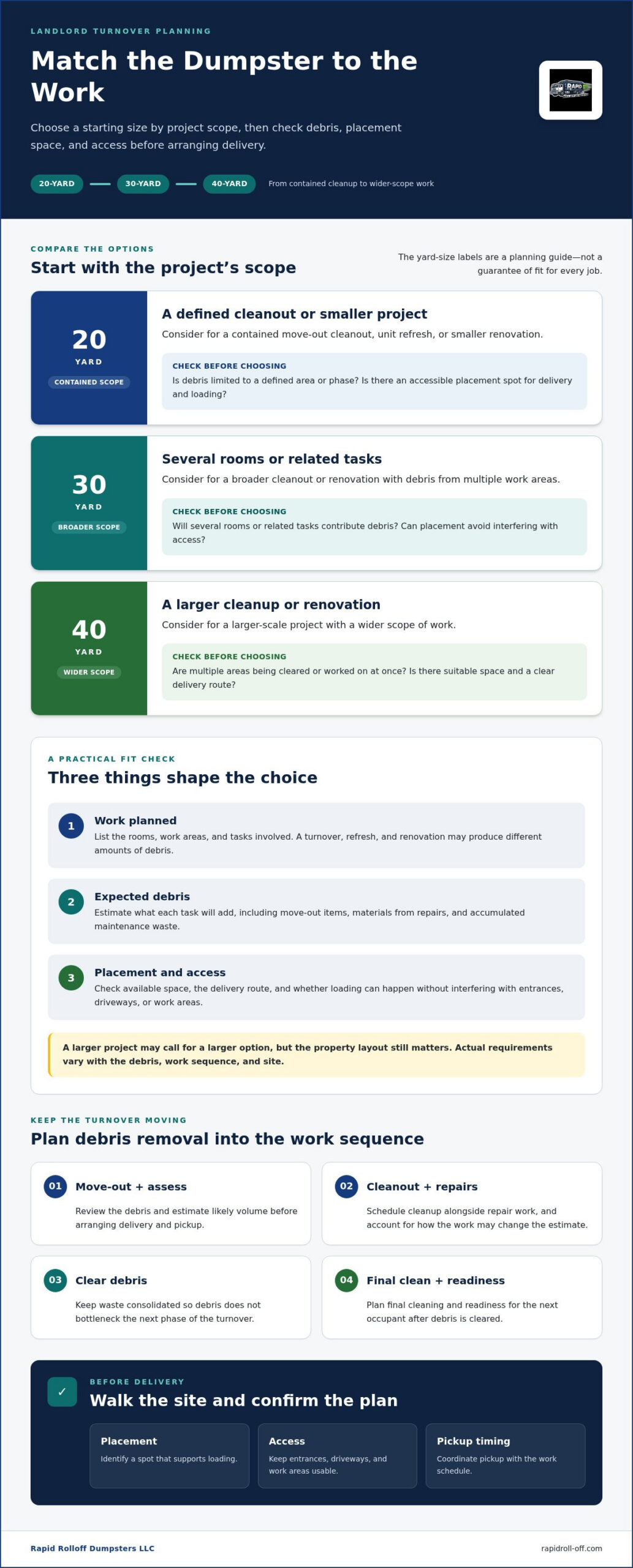
The right container depends on the work planned, the amount of debris expected, and the space available for placement. A 20-, 30-, or 40-yard option isn’t automatically best just because a project is called a turnover or renovation. Use the comparison below as a starting point, then assess the actual cleanup and property access.
| Option | Project scope to consider | Debris and placement questions |
|---|---|---|
| 20-yard | A contained move-out cleanout, unit refresh, or smaller renovation. | Is debris limited to a defined area or phase? Is there an accessible placement spot that works for delivery and loading? |
| 30-yard | A broader cleanout or renovation with debris from multiple work areas. | Will several rooms or related tasks contribute debris? Can the property accommodate placement without interfering with access? |
| 40-yard | A larger-scale cleanup or renovation with a wider scope of work. | Are multiple areas being cleared or worked on at once? Is there suitable space and a clear route for delivery? |
The yard-size labels identify the options, but they don’t replace a project assessment. The table is a planning guide, not a promise that a particular container will fit every job. Actual requirements vary with the debris, how the work is staged, and the property layout.
When might a 20-yard dumpster suit a rental-property cleanup?
Consider a 20-yard option for a more contained cleanup or smaller renovation. To estimate debris, list the rooms and tasks involved, then note what each is likely to add. Include items from the move-out, materials from the unit refresh, and any accumulated maintenance waste. This gives you a more useful project picture than guessing from the property’s overall size.
When should landlords compare 30- and 40-yard options?
Compare the 30- and 40-yard options as the scope expands. Clearing several rooms, shared areas, or multiple work zones at the same time can change the plan. Group the work by area and estimate the debris from each before selecting an option. Also consider whether the container can be placed with adequate access for delivery and loading. A larger project may call for a larger option, but available space still matters.
For dumpster rental for landlords, match the container to both the cleanup plan and the site. Rapid Rolloff Dumpsters LLC offers 20-yard and 40-yard hook lift rentals and 30-yard dumpster rentals. Review the dumpster rental options as you plan the project scope and placement.
What Landlords Should Plan Before Dumpster Delivery in Southeast Texas
A smooth delivery starts with a clear plan for the container’s location and the work around it. At a rental property, a blocked gate or shared driveway can disrupt loading, repairs, and resident access. Before scheduling a dumpster rental for landlords, walk the site and note where the container could go, how it can be reached, and when the project will be ready for pickup.
Where should a dumpster be placed at a rental property?
Assess the property’s available space and access route together. A spot may look open but still interfere with a gate, parked vehicles, a shared driveway, or the work area. Consider how tenants, contractors, neighbors, and delivery vehicles will move through the site while the container is in use. No single placement works for every property, so account for the specific layout and conditions.
For a multi-unit building in Beaumont, for example, a shared drive may need to remain usable during cleanup. At a house in Groves or Port Arthur, check whether parked cars or a gate could obstruct the planned delivery route. These are site-planning examples, not guarantees about what any particular property can accommodate.
What should landlords coordinate before delivery and pickup?
Set the work sequence first. Identify when the move-out is complete, when cleanup and repairs will happen, and when debris will be loaded. Share the placement location and access instructions with everyone working at the property. Plan pickup around project progress so the container can be removed after loading is complete, without disrupting remaining work.
- Placement: Choose a workable location and note nearby gates, vehicles, and shared access.
- Project scope: Estimate the debris and identify the cleanup or renovation tasks that will use the container.
- Access: Make the delivery route clear and communicate arrangements for residents and workers.
- Pickup: Align removal with the work sequence and the expected completion of loading.
- Disposal: Verify applicable local requirements and material guidance for the debris before loading.
Conditions can differ from one address to the next, even within the same community. A property in Nederland, Port Neches, Orange, or Bridge City may have different access constraints from another site nearby. Treat each location as its own plan, especially when coordinating cleanups across multiple rentals. A short walkthrough and clear instructions help keep delivery, work, and pickup organized without relying on assumptions about the site or disposal rules.
How to Keep Turnover Cleanup Organized and Avoid Preventable Delays
A container helps most when everyone knows what goes into the cleanup plan and when each task happens. Before work starts, walk the unit and shared areas, estimate the debris, and identify which parts of the project will use the dumpster. This early review can help you make a suitable container choice and reduce interruptions caused by an unexpected increase in scope.
How can landlords coordinate cleaners and repair crews?
Set the work order before crews arrive. Clear unwanted belongings and project debris first, then move into repairs and final cleaning. Tell everyone where the container is and how to reach it. Build pickup coordination into the schedule, rather than waiting until the container is full or the work is nearly done to consider the next step.
- Before work: Walk the property, list the areas involved, and estimate the debris from each task.
- During cleanup: Keep the loading area accessible and separate debris by type when practical.
- As work progresses: Reassess the project if additional rooms or repair tasks are added.
- Before completion: Coordinate pickup with the loading progress and remaining work.
Clear instructions matter. If cleaners are clearing rooms while repair crews work elsewhere, agree on which areas are ready to empty and keep traffic to the container from interfering with active work. A shared plan helps prevent duplicated effort and keeps the turnover moving from clearing to repairs to final cleanup.
How can a landlord reduce cleanup surprises?
Look beyond the initial visible pile. Check closets, storage areas, and shared spaces included in the job, then estimate what each will add. If the scope grows, revisit the container plan before loading continues. Keep disposal guidance close at hand, and don’t assume every material can go in the same container. Follow verified local requirements and material instructions for the project.
Organizing debris by type can make the cleanup easier to oversee and helps workers follow the applicable disposal guidance. Avoid relying on assumed weight limits, overage policies, or prohibited-item lists. Those details can vary, so use the instructions that apply to the rental and the materials involved.
A well-planned dumpster rental for landlords supports the turnover without taking over the schedule. Rapid Rolloff Dumpsters provides rental containers with delivery and pickup for residential cleanouts and commercial projects in Southeast Texas. Plan your property cleanup with Rapid Rolloff Dumpsters around the work sequence, debris estimate, and pickup needs.
Choosing a Local Dumpster Rental Partner for Southeast Texas Properties
For a landlord coordinating a turnover or renovation, delivery and pickup are part of the project plan, not separate errands. Working with a locally based rental service can make it easier to organize container logistics around the property’s work sequence. Rapid Rolloff Dumpsters is based in Groves and serves nearby Southeast Texas communities, including Port Arthur, Beaumont, Nederland, Port Neches, Orange, and Bridge City.
Why does local delivery matter for rental-property projects?
A turnover may involve clearing a unit before repairs begin, while an active renovation may need a container available as debris is generated. Plan delivery around when the work area is ready, and coordinate pickup with the cleanup’s progress. For landlords managing properties in different nearby communities, keeping the project scope and access details organized for each address helps make those arrangements clearer.
How should landlords prepare to request a rental?
Gather a few practical details before arranging a rental: the property location, the type of project, an estimate of the debris, and the intended placement area. Note any access considerations, such as a gate, shared driveway, or nearby parking. This gives the project a clear description and helps match the work with an appropriate container option.
Rapid Rolloff Dumpsters offers 20-yard and 40-yard hook lift dumpster rentals and 30-yard dumpsters. Consider the scope rather than choosing by habit: a contained unit cleanup differs from a broader renovation, and the property’s placement conditions matter alongside expected debris. Clear project details help keep the container plan aligned with the work, whether the property is in Groves, Port Arthur, Beaumont, Nederland, Port Neches, Orange, or Bridge City.
- Property location: Identify the address and community.
- Project scope: Describe whether the work is a cleanout, unit refresh, or renovation.
- Debris estimate: Consider the areas and tasks contributing waste.
- Placement: Note the available location and any access constraints.
- Work sequence: Think through how delivery and pickup fit with cleanup and repairs.
A prepared request makes the rental conversation more focused and helps connect the container choice to the property’s real needs. Explore dumpster rental options for your property and plan the cleanup around the work ahead.
Make Your Next Property Cleanup Easier to Plan
A well-planned dumpster rental for landlords follows the turnover schedule: estimate debris, choose a container that suits the project and placement space, then coordinate delivery and pickup with the work. Clear instructions for cleaners and repair crews help keep cleanup organized and reduce avoidable interruptions.
Rapid Rolloff Dumpsters is based in Groves, Texas, and serves nearby Southeast Texas communities. Rental options include 20-yard and 40-yard hook lift dumpsters and 30-yard dumpsters, with delivery and pickup for residential and commercial cleanup projects.
Gather your property location, project scope, debris estimate, and placement details to make your next cleanup easier to plan. Plan your rental-property cleanup with Rapid Rolloff Dumpsters and take the next step with a clear project plan.
Frequently Asked Questions
How does a landlord choose a dumpster size for a rental property?
Start with the project scope, the rooms or shared areas being cleared, and the debris you expect. Compare the 20-, 30-, and 40-yard options, then factor in placement space and delivery access. No single size fits every turnover. For a larger renovation or a cleanout that expands beyond the original plan, reassess the debris estimate before work begins so the container choice reflects the updated project.
Can landlords use one dumpster for a tenant turnover and renovation debris?
One container may suit both tasks if the project scope and applicable disposal guidance allow the debris to be handled together. Plan the sequence: clear the unit, coordinate repair work, and organize loading so crews can work efficiently. Don’t assume every item belongs in the same container. Disposal guidance can vary by material and location, so follow the instructions that apply to the debris and property.
How far in advance should a landlord arrange dumpster delivery?
Arrange delivery around the property schedule, access conditions, and cleanup sequence. Plan for the container to be available as debris begins accumulating, and coordinate placement with workers and anyone living near the site. Build pickup into the plan as well, but don’t schedule it before loading is realistically complete. Share the project scope and access details when arranging the rental so the delivery plan suits the property.
What should landlords do before a dumpster arrives?
Choose a potential placement area and review the delivery route. Check gates, parked vehicles, shared driveways, and resident access. Estimate the debris and outline the order of turnover tasks, then give cleaners or repair crews clear instructions about access and loading. Also review the disposal guidance that applies to the materials involved. Don’t assume all household or renovation debris can go in the same container.
Can a dumpster be placed at an occupied rental property?
It may be practical if the site has a suitable placement area and an accessible delivery route. Plan around parking, shared entrances, and residents’ daily movement, and make sure the cleanup crew can reach the container. Explain the project schedule to tenants or other occupants where appropriate. Site conditions determine what placement will work, so include relevant access details in the rental plan rather than assuming every area can accommodate a container.
What dumpster rental options does Rapid Rolloff Dumpsters offer landlords?
Rapid Rolloff Dumpsters offers 20-yard and 40-yard hook lift dumpster rentals, plus 30-yard dumpster rentals. These options support a range of residential and commercial cleanup projects. To plan a turnover, cleanout, or renovation, consider the expected debris, the project scope, and available placement space. The right option depends on the property and work involved, not just the type of project.
Does Rapid Rolloff Dumpsters serve landlords near Groves, Texas?
Yes. Rapid Rolloff Dumpsters is based in Groves and serves nearby Southeast Texas communities, including Port Arthur, Beaumont, Nederland, Port Neches, Orange, and Bridge City. Delivery and pickup support residential and commercial projects. Landlords can plan around the property location, cleanup scope, and site access to fit container logistics into a turnover or renovation schedule.