Imagine finishing your weekend roofing project, feeling the satisfaction of a job well done, only to receive a surprise invoice for significant overage fees. It happens more often than you think because most homeowners underestimate how much debris actually weighs. When you are searching for a dumpster rental for roofing shingles, the sheer weight of asphalt can quickly push you past standard tonnage limits. It’s frustrating to feel like you’ve done everything right only to be penalized by technicalities you didn’t see coming. We understand that you want your project to be simple, predictable, and strictly within your budget.
You deserve a stress-free cleanup without the anxiety of hidden costs or concerns about heavy equipment damaging your Beaumont driveway. This guide will help you master the logistics of dumpster weight limits so you can choose the perfect container size with confidence. We’ll break down the difference between volume and tonnage, provide a simple way to estimate your project’s weight, and show how specialized hook lift systems offer a safer solution for residential spaces. By the end of this article, you’ll know exactly how to manage your disposal needs without any expensive surprises.
Key Takeaways
- Understand the difference between volume and tonnage to avoid unexpected fees when your project materials are heavier than they look.
- Use simple calculations to accurately estimate the weight of your debris before booking a dumpster rental for roofing shingles.
- Learn how specialized hook lift systems provide a safer delivery and protect your residential driveway from damage caused by excessive weight.
- Discover how to keep your container dry during Southeast Texas rain to prevent water weight from triggering overage charges.
- Identify the right size for your specific needs, whether it is the 20-yard “sweet spot” for home cleanouts or a larger 40-yard container for major projects.
What Are Dumpster Rental Weight Limits?
A weight limit is a pre-set threshold for the total mass of debris allowed in your container. In the waste industry, we call this the tonnage allowance. This limit isn’t a random number; it’s a safety and logistical standard designed to protect the equipment and comply with local road regulations. If your load exceeds this limit, you’ll likely see overage fees on your final bill. These fees aren’t hidden traps. They simply reflect the additional costs charged by local landfills for processing heavier loads. Understanding these limits upfront ensures your project stays on budget and runs smoothly from start to finish.
Volume vs. Weight: A Critical Distinction
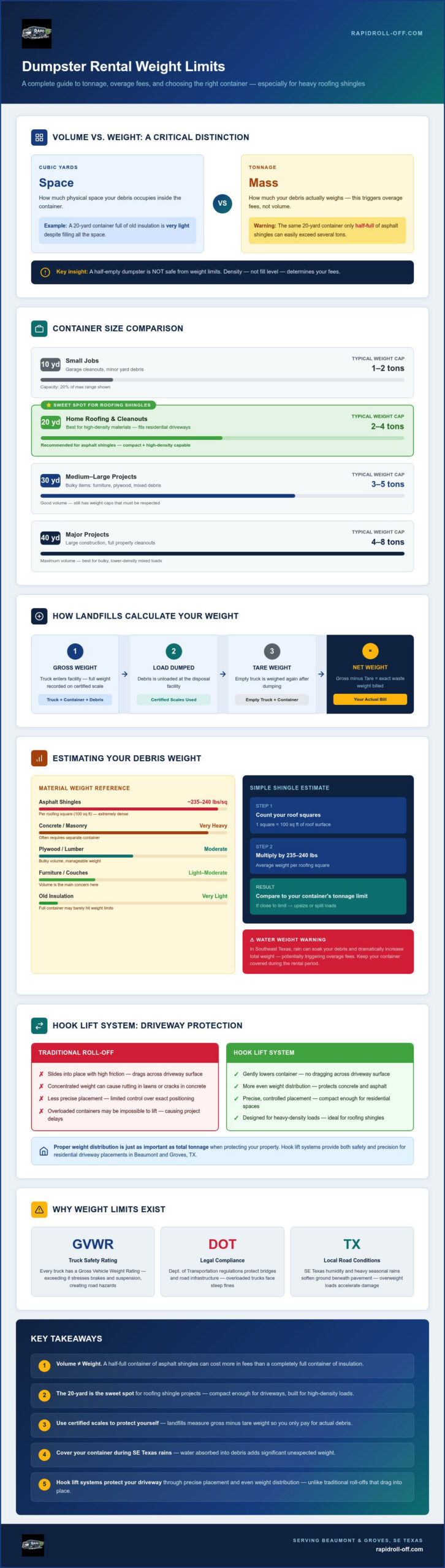
Cubic yards measure the space your debris takes up, while tonnage measures how much it actually weighs. It’s a critical distinction for any home project. For example, a 20-yard container full of old insulation is very light, but that same container only half-full of old asphalt shingles could easily exceed several tons. This is why you shouldn’t assume a half-empty dumpster is safe from weight limits. When you book a dumpster rental for roofing shingles, density is your biggest challenge. Our 20-yard hook lift container is often the sweet spot for these heavy materials because it’s built to handle high-density debris while remaining compact enough for residential driveways. Larger 30 and 40-yard containers provide more volume for bulky items like couches or plywood, but they still have specific weight caps that you must respect to avoid extra charges.
How Landfills Determine Your Final Weight
Local disposal facilities in Southeast Texas use certified truck scales to maintain total accuracy. The process is straightforward and transparent. When our driver enters the facility, the truck stops on a scale to record the gross weight, which includes the vehicle, the container, and your debris. After the load is dumped, the driver weighs the empty truck again to find the tare weight. By subtracting the tare weight from the gross weight, the facility determines the exact weight of your waste. Landfill tonnage is the net weight of your discarded materials. This system relies on calibrated equipment to ensure you’re only billed for the weight you actually disposed of during your cleanup in Beaumont or Groves.
Why Weight Limits Matter: Safety and Legality
Weight limits are more than just a guideline for your final bill. They are critical safety standards that protect your property, our equipment, and everyone on the road. Every truck has a Gross Vehicle Weight Rating (GVWR), which is the maximum weight a vehicle can safely carry. This total includes the weight of the truck itself, the steel container, and your debris. When a load exceeds this rating, it puts immense stress on the vehicle’s braking system and suspension. For homeowners, understanding these limits is the best way to ensure a smooth, incident-free cleanup.
The Legal Side of Waste Hauling
Waste haulers must follow strict Department of Transportation (DOT) regulations. These laws exist to protect the structural integrity of bridges and local roads. In Southeast Texas, our infrastructure often deals with intense humidity and heavy seasonal rains, which can soften the ground beneath the pavement. An overweight truck can cause significant damage to local streets in Beaumont or Groves. If a driver is caught hauling an overloaded container, they face steep fines and legal penalties. Because these costs are passed through as overage fees, staying within your limit is the most cost-effective choice for your project. If you’re unsure about your load, choosing a driveway-safe dumpster rental with clear weight guidelines can save you from legal and financial headaches.
Protecting Your Driveway and Landscape
A heavy container can easily damage a residential driveway if not handled correctly. This is a common concern when you book a dumpster rental for roofing shingles, as asphalt is incredibly dense. Excessive weight can cause “rutting” in your yard or create deep cracks in concrete and asphalt surfaces. We address this risk by using a specialized hook lift system. Unlike traditional roll-offs that slide into place with high friction, the hook lift allows for precise, controlled placement. This system gently lowers the container, which helps distribute the weight more evenly across the surface. Proper weight distribution is just as important as the total tonnage when it comes to keeping your property in pristine condition.
Mechanical limitations also play a major role in why limits exist. Every hoist has a specific lifting capacity. If a container is overloaded, the truck may be physically unable to lift it back onto the bed for transport. This can lead to project delays, as you’ll have to manually remove debris to lighten the load before we can haul it away. By respecting the mechanical caps of the equipment, you ensure that your debris is picked up on schedule without any logistical hurdles.
Comparing Weight Capacities by Dumpster Size
Choosing the right dumpster size is about more than just fitting your debris inside the walls. It is a strategic decision that balances physical space with weight limitations. While a larger container offers more volume, it does not always mean it can carry significantly more weight due to road safety laws. Understanding the specific capacity of each unit helps you avoid overage fees and ensures a safer delivery on your property. Each container size serves a specific purpose based on the density of the materials you are discarding.
The 20-Yard Powerhouse
Our 20-yard hook lift container is the most popular choice for residential projects in Southeast Texas. It is widely considered the sweet spot for home cleanouts and kitchen renovations. The 20-yard container is the industry standard for a dumpster rental for roofing shingles because it manages the high density of asphalt without overloading the truck. A 20-yard unit typically comes with a weight allowance of two to four tons, though this can vary based on the specific debris type. Because shingles are incredibly dense, this size allows you to reach a significant weight before the container is physically full.
The hook lift mechanism provides a distinct advantage for these heavy loads. It offers superior control during the loading and unloading process compared to traditional roll-offs. This precision is vital when the container is at its weight capacity, as it prevents the truck from dragging the bin across your driveway. If you are disposing of heavy materials like old roofing or floor tiles, the 20-yard unit provides the structural integrity needed to haul those tons safely. It is the most reliable option for keeping your project within legal weight limits while still providing ample space.
30 And 40-Yard Capacity Expectations
Larger containers are designed for projects that generate a high volume of bulky, lighter materials. A 30-yard dumpster is ideal for whole-home renovations where you have a mix of furniture, drywall, and general clutter. It offers a balance between high capacity and manageable weight. However, the risk of exceeding weight limits actually increases with these larger bins. Because there is so much room, it’s easy to keep loading heavy items until you’ve surpassed the legal hauling limit. You should reserve 40-yard hook lift rentals for major commercial projects or massive cleanouts involving large, lightweight items like siding, cedar shakes, or office furniture.
- 30-Yard Units: Best for medium renovations, deck removals, and large basement cleanouts.
- 40-Yard Units: Designed for maximum volume; ideal for bulky commercial waste and large-scale estate clearing.
The physical footprint of these containers is also a key consideration for your property. A 40-yard bin requires significantly more space for placement and pick-up than a 20 or 30-yard unit. Before ordering the largest size available, measure your staging area to ensure the truck has enough clearance to operate safely. Matching the container size to the weight and volume of your specific debris keeps your project moving without unnecessary delays or costs.
How to Estimate Your Debris Weight
Avoiding overage fees starts with a realistic estimate of your project’s total weight. You don’t need to be a professional contractor to get this right. By breaking down your debris into categories and using a few standard industry benchmarks, you can predict your tonnage with surprising accuracy. This prevents the stress of a surprise bill and helps you select the right container from the start.
Calculating Roofing Shingle Weight
Roofing projects are the most common source of heavy debris. One ‘square’ of three-tab shingles typically weighs about 230 to 250 pounds. This measurement refers to a 100-square-foot area of your roof surface. If you are using architectural or dimensional shingles, expect that weight to increase to 350 or 450 pounds per square. If your home has a 2,500 square foot roof, which is 25 squares, three-tab shingles will weigh approximately 3 tons. Architectural shingles for that same roof could reach 5 tons. This density is the primary reason a 20-yard dumpster is usually the limit for shingle projects. Any larger and the truck might exceed legal road weight limits when full. If you are ready to start your tear-off, you can book your 20-yard rental today to ensure a safe haul.
Common Household Item Weight Estimates
Estimating household junk is slightly different because the items are often bulky but less dense than construction materials. While volume usually fills up first with furniture, the weight still adds up. For a quick reference, consider these averages:
- Standard Sofa: 150 to 200 pounds
- Large Refrigerator: 250 to 300 pounds
- Washing Machine: 150 to 200 pounds
- Kitchen Table and Chairs: 100 to 150 pounds
As a general rule, it takes about four to five cubic yards of loose household clutter to equal one ton of weight. When you are searching for a dumpster rental for roofing shingles or general cleanouts, remember to pack heavy items at the bottom. This keeps the center of gravity low and makes the container easier for the hook lift system to hoist safely.
Construction materials like drywall and flooring also carry significant weight. A standard 4×8 sheet of half-inch drywall weighs approximately 50 pounds. If you are gutting a room, those sheets add up quickly. Hardwood flooring and ceramic tiles are even heavier, often requiring you to monitor the container’s fill level more closely than you would with light timber or insulation.
Local weather also plays a massive role in your final tonnage. In Beaumont and Groves, our high humidity and frequent rain storms can turn a dry load into a heavy one. Porous materials like drywall, wood, and old carpeting act like sponges. If your dumpster sits open during a typical Southeast Texas downpour, the water weight can easily add hundreds of pounds to your total. If rain is in the forecast, we recommend covering your container with a heavy-duty tarp to keep your debris dry and your costs predictable.
Avoiding Overage Fees in Groves and Beaumont
Managing your project costs in Southeast Texas requires a proactive approach. Unexpected fees often stem from simple mistakes that are easy to avoid with a bit of planning. When you arrange a dumpster rental for roofing shingles, your primary goal is to keep the final weight within the agreed tonnage allowance. By following a few local best practices, you can ensure your cleanup remains affordable and efficient.
One of the biggest culprits for overage fees in our area is water weight. Southeast Texas storms can be sudden and intense. Open containers act like giant rain gauges, soaking porous materials and adding significant weight to your load. Use a heavy-duty tarp to cover the bin during overnight hours or when rain is in the forecast. Additionally, be mindful of prohibited items. Materials like tires, batteries, and certain hazardous liquids add weight and often trigger specialized disposal surcharges from the landfill. Keeping these items out of your container protects your budget and the environment.
Rapid Rolloff’s Local Advantage
Choosing a professional dumpster service in Groves like Rapid Rolloff Dumpsters LLC gives you a distinct advantage in transparency. We are deeply committed to serving the communities of Beaumont, Nederland, and Port Arthur. Our team provides clear terms from the start, so you don’t have to worry about ambiguous billing practices. We specialize in hook lift systems that offer superior precision during delivery and pickup. This technology allows us to place containers in tighter spaces while minimizing the stress on your driveway. You can view our 20-yard hook lift options to find the perfect fit for your next home improvement project.
Final Checklist Before Pickup
Before you call for a pickup, take a few minutes to inspect your load. A well-organized container is safer to transport and helps you stay within your limits. Follow this checklist to ensure a smooth conclusion to your rental:
- Level the load: Ensure debris doesn’t extend above the top rail of the container. Hauling an overflowing dumpster is illegal and unsafe.
- Audit for weight: If you’re close to your limit, consider donating heavy furniture or appliances to local charities instead of throwing them away.
- Secure the door: Make sure the back loading door is fully latched and locked. A loose door can be a major safety hazard during transit.
- Clear the path: Ensure there are no vehicles or obstacles blocking the truck’s access to the container on the scheduled pickup day.
Selecting the right size upfront is the best way to prevent “double hauling” costs. If you underestimate your needs and require a second dumpster, your expenses will rise quickly. Our 20-yard container remains the most popular choice for heavy debris like shingles, but our 30 and 40-yard options provide the necessary volume for larger renovations. Talk to our local team about your specific project goals to get an expert recommendation on the best container for your needs. We’re here to make your disposal process as simple and predictable as possible.
Take Control of Your Project Cleanup
Mastering weight limits is the secret to a successful, stress-free home project. By understanding the difference between volume and tonnage, you protect your budget from unexpected overage fees and keep your property safe. Whether you’re calculating “shingle math” or clearing out years of household clutter, choosing the right container size from the start ensures your debris is hauled away without a hitch. Remember that density matters; a dumpster rental for roofing shingles requires a sturdy, compact solution like our 20-yard unit to handle the weight safely.
Rapid Rolloff Dumpsters LLC is proud to be locally owned and operated, serving our neighbors in Beaumont, Port Arthur, and Groves. Our specialized hook lift system provides the precision needed for driveway-safe delivery, even in tight residential spaces. We prioritize your peace of mind by offering reliable service and clear communication throughout your rental period. Don’t let logistical worries slow down your progress. Book Your Driveway-Safe Dumpster Rental in Groves Today and experience a simpler way to clean up. We’re ready to help you finish your project with confidence.
Frequently Asked Questions
What happens if my dumpster is over the weight limit?
You will be charged an overage fee based on the additional tonnage recorded at the landfill scale. These fees cover the extra costs we incur for disposal. In some cases, if the load is dangerously heavy, our truck might be unable to lift the container safely. You would then need to remove some debris before we can complete the pickup in Beaumont or Groves. It’s always best to monitor your fill level.
How much weight can a 20-yard dumpster hold for roofing shingles?
A 20-yard container typically holds between 2 and 4 tons of debris, which is usually enough for a standard residential roofing project. When you book a dumpster rental for roofing shingles, remember that asphalt is very dense. One roofing square of three-tab shingles weighs around 250 pounds. Most medium-sized roofs in Nederland or Port Neches fit within these limits, but always estimate your total squares before ordering.
Does rain water add weight to my dumpster rental?
Yes, rain water can significantly increase the total weight of your load, especially if you are disposing of absorbent materials. Items like old carpeting, drywall, and wood act like sponges during a Southeast Texas downpour. Since landfills charge by the ton, that extra water weight can lead to overage fees. We recommend using a tarp to cover your rental in Orange or Bridge City when storms are expected.
Can I put concrete or dirt in a standard roll-off dumpster?
You can put concrete or dirt in a dumpster, but these materials are extremely heavy and require special considerations. Filling a 30-yard or 40-yard container with dirt will almost certainly exceed legal road weight limits and mechanical lifting capacities. For heavy debris projects in Port Neches, we often recommend our 20-yard hook lift units. These are built to handle high-density loads while keeping the total weight within a manageable range.
How do I know how much my debris weighs before it’s picked up?
You can estimate your weight by using industry standard averages for the specific materials you are discarding. For example, calculate your roofing squares or count the number of large appliances and furniture items. While you won’t know the exact tonnage until the truck hits the certified scales at the landfill, these calculations provide a reliable ballpark. Our team in Groves can also help you choose the right size based on your project.
Are there items that don’t count toward the weight limit but have extra fees?
Certain items carry flat disposal fees regardless of their weight because landfills require special handling for them. Common examples include tires, mattresses, and appliances containing freon. These items still count toward your total tonnage, but the surcharges are added separately to your bill. Always check our list of prohibited or restricted items before loading your container in Beaumont to avoid unexpected costs at the end of your project cleanup.
Why is there a weight limit if the dumpster isn’t full yet?
Weight limits exist for safety and legal compliance, not just physical space. A dumpster that is only half-full of heavy materials like brick or shingles can still exceed the truck’s Gross Vehicle Weight Rating. Overloaded trucks are harder to stop and can damage local roads in Port Arthur. We prioritize the safety of our drivers and the integrity of your neighborhood streets by strictly adhering to these tonnage allowances for every haul.
Is a hook lift dumpster better for heavy loads on a driveway?
A hook lift dumpster is often a better choice for heavy loads on residential driveways. Unlike traditional roll-off systems that slide and scrape, the hook lift mechanism allows for a more controlled, vertical placement. This precision helps distribute the weight more evenly and prevents the container from shifting under heavy pressure. It’s a much safer option for protecting the concrete or asphalt surfaces at your home in Groves or Nederland.