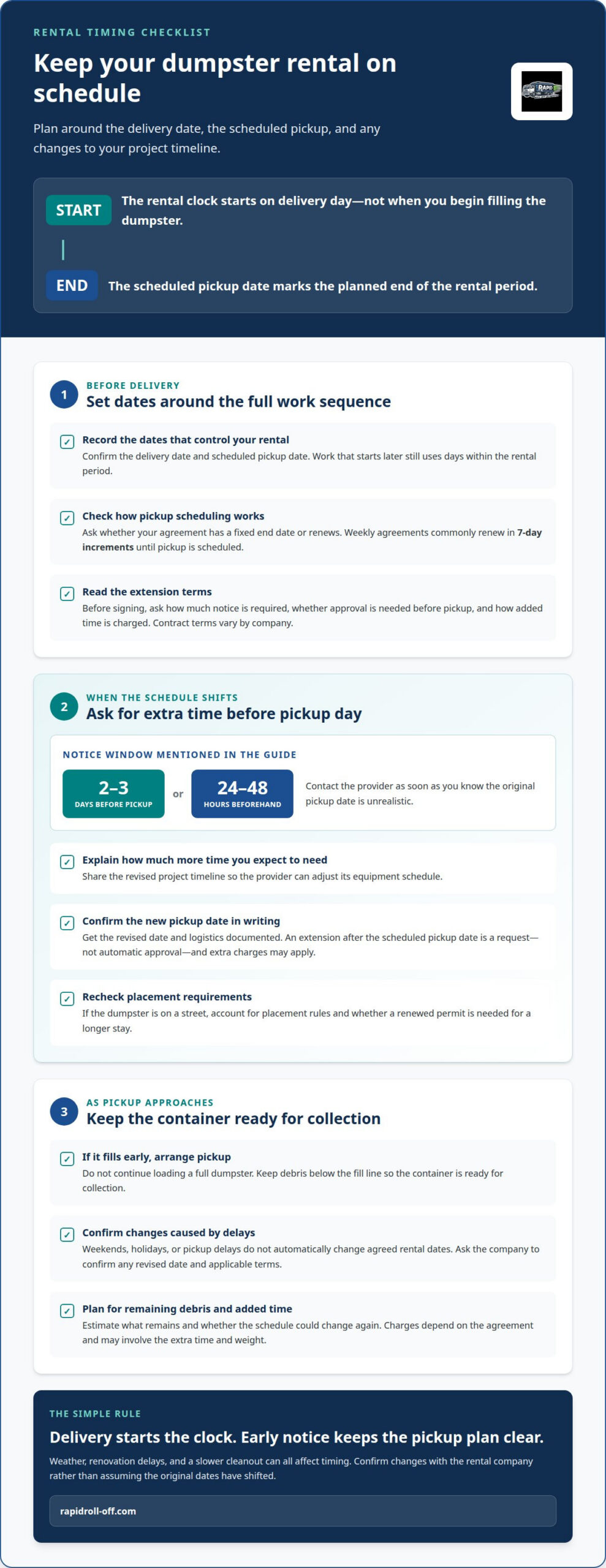
The rental clock starts when the dumpster is delivered and runs until its scheduled pickup date, not from the day you begin filling it. Most U.S. rentals last 7 to 14 days, but extending a dumpster rental period means arranging more time before pickup so the schedule and new date are clear.
Projects can easily run past their original timelines. Weather, renovation delays, or a slower cleanout may leave debris to remove just as pickup approaches. Knowing how delivery and pickup dates shape the rental period helps you plan ahead.
This guide explains how to plan around your rental period and what to do if your project needs more time. Early communication helps keep the pickup schedule clear and avoid confusion about next steps.
Key Takeaways
- Ask about extension terms before signing, including notice requirements and possible charges for keeping the dumpster beyond the agreed date.
- Request extra time as soon as your project schedule changes, rather than waiting for pickup day.
- When arranging an extension, share how much additional time you expect to need and confirm the revised pickup date in writing.
- Plan for delays that can stretch a cleanup or renovation, and leave room in the schedule for sorting and disposing of debris.
What Is a Dumpster Rental Period?
A dumpster rental period is the agreed time the container stays at your project site. It commonly begins on delivery day and ends on the scheduled pickup date. A residential renovation may start filling the dumpster later, but the rental period still begins at delivery. For example, a garage cleanout that starts two days after delivery still uses those days within the rental period.
Keeping the dumpster past pickup without approval can lead to overage charges. Some companies apply a higher penalty rate for an unapproved extension than for an agreed extension. The exact charge and notice rules depend on the rental contract. Read the extension terms before signing, and note how the provider handles a missed pickup date or a delayed removal.
Extension policies vary by rental company and agreement. Before booking, ask how to request more time, whether you need approval before the scheduled pickup, and how any added time is charged. For example, plumbing delays during a bathroom renovation may push back the project, so raising the issue early gives you time to arrange a revised schedule.
Budget for the extra time and the waste still waiting for removal. The amount due may depend on the extension terms, the remaining debris, and the additional time and weight involved. Before approving a longer stay, estimate how much debris remains and whether the project schedule could change again. This helps you plan for charges without assuming that every extension follows the same pricing policy.
Can you extend a rental after its scheduled pickup date? You can request more time, but it is not automatically approved, and extra charges may apply. Contact the rental company as soon as a delay becomes clear. Getting approval and confirming the new pickup date keeps the plan clear. If the dumpster is on a street, account for any placement rules that apply when arranging the revised date.
How delivery and pickup dates determine the rental period
The rental period begins on delivery day, even if a cleanout or construction project starts later. The scheduled pickup date marks the planned end. For example, if a dumpster arrives before demolition starts, the days before work begins still fall within the rental period. Set your dates around the project schedule, not just the expected filling date.
Ask how pickup scheduling works before delivery. Weekly agreements commonly renew in 7-day increments until pickup is scheduled. That can affect your timeline if you expect a short rental but leave the pickup date open. Confirm whether your agreement has a fixed end date or renews, and record the date that controls your rental period.
Request more time as soon as you know the schedule has shifted. Contact the provider two or three days before pickup, or at least 24 to 48 hours beforehand. Share how much additional time the contractor needs, then get the revised pickup date and logistics in writing. Early notice gives the provider time to adjust the schedule before the original pickup.
Holidays, weekends, and pickup delays can affect collection, but they do not automatically change your agreed rental dates. Contact the rental company to confirm any revised pickup date and the terms that apply while the dumpster remains on site.
If the dumpster fills early, arrange pickup rather than continuing to load it. Keep debris below the fill line so the container is ready for collection. If your schedule or waste volume changes, confirm whether an earlier pickup affects the planned end date or any weekly renewal. A dumpster placed on a street may also need a renewed permit if it stays there longer.
For cleanouts and construction projects, plan delivery and pickup around the work sequence. A contractor can coordinate demolition and removal dates with the rental window to avoid unused days at the start or a rushed finish. Explore dumpster rental options when planning the container and timing for your project.
Typical dumpster rental periods
Across the United States, standard dumpster rental periods commonly range from 7 to 14 days. Companies also commonly offer rental periods of 5 to 14 days, so the rental agreement sets the actual window. A short-term rental can last 1 to 3 days. For a simple weekend cleanout, homeowners may need 2 or 3 days, while a garage cleanout often takes 3 to 7 days.
Match the rental duration to the work, not just the amount of debris. A roof replacement typically needs 3 to 7 days, and a bathroom remodel typically requires 7 to 10 days. Kitchen renovations often fit a 10 to 14-day window. These ranges help frame a timeline, but demolition, sorting, and debris removal all use rental time.
A 7-day rental is described as the industry standard for most residential projects. Choose a 10-day period when work is expected to run slightly longer than a week. A 14-day rental can suit larger renovations, commercial cleanouts, or projects with multiple demolition phases. For a project expected to take five days, a seven-day booking allows some room for the work to finish.
Weather, contractor schedules, and unexpected renovation work can stretch an initial estimate. A whole-house renovation could require 14 days or longer, while long-term rental agreements commonly cover 28 or more days. Commercial renovation rentals typically last 30 to 60 days. Some construction projects use specific rental periods, such as 30 or 60 days, depending on the project plan.
Before choosing a rental period, map the timeline from the first task that produces debris through final removal. Compare it with the rental dates and extension terms. For example, if a kitchen renovation has several demolition phases, plan around the full sequence rather than only the first day. A realistic schedule helps you dispose of debris without rushing the project.
Contacting the rental company promptly about an extension
Contact the rental company as soon as a delay makes the original pickup date unrealistic. The container may already be scheduled for another project, so early notice helps the company adjust its equipment schedule. A cleanup that uncovers more debris or a renovation that expands beyond its original scope can both require extra disposal time.
Don’t wait until pickup day. Request an extension two or three days before the scheduled collection, or at least 24 to 48 hours beforehand. Explain why the timeline changed and estimate how much additional time you need. Have your rental agreement or invoice number ready so the company can identify the booking efficiently.
Rental companies coordinate containers across customer projects, so keeping one past its agreed pickup date can affect the next delivery or collection. Early notice helps clarify whether the pickup date or rental terms need to change. Confirm the revised plan before the original pickup date whenever possible.
Discuss extension pricing before accepting the new date. The charge can depend on the rental agreement, extension length, and whether the added time is arranged in advance. Some agreements use a daily charge; others may offer a flat rate for another full week. Compare the total for the extra days with the full-week option, and ask for the exact amount in writing. This helps prevent hidden billing surprises.
For example, if weather delays a roof project and debris removal needs more time, tell the company before the planned pickup. Confirm the approved end date and any revised collection logistics in writing. If you need a container for an upcoming project, plan a dumpster rental around the work schedule and expected disposal needs.
Rapid Rolloff Dumpsters: 20 Yard Hook Lift Dumpster Rental
Rapid Rolloff Dumpsters LLC helps homeowners and businesses plan debris removal with dumpster rental options for projects of different sizes. Choose a 20 Yard Hook Lift Dumpster Rental, 40 Yard Hook Lift Dumpster Rental, or 30 Yard Dumpster Rental based on the waste your project is expected to produce.
For a renovation, cleanout, or construction project, estimate how much debris you expect and consider how the work will progress. Choosing a container that suits the project and setting clear dates makes loading and pickup easier to coordinate. If your timeline changes, communicate promptly so the schedule can be addressed.
Contact Rapid Rolloff Dumpsters LLC to discuss your dumpster rental needs.
Set Your Project Up for a Smooth Finish
Before work begins, turn your project scope into a practical waste-removal plan. Consider which tasks will produce debris, how the work will unfold, and what could change. This gives you a clearer basis for choosing a container and setting dates that fit the job.
If your project shifts, treat extending a dumpster rental period as a scheduling decision, not an afterthought. A revised timeline can change when debris is ready for pickup and how the next stage of work proceeds. Communicate promptly so the removal plan can adapt.
For a home cleanout, renovation, or construction job, Rapid Rolloff Dumpsters offers container options to support debris removal. Share what your project involves and what you expect to discard, then discuss the rental option that fits your needs.
Contact Rapid Rolloff Dumpsters to discuss your project and dumpster rental needs. A clear plan can help you move forward with confidence.
Frequently Asked Questions
Are there extra fees for keeping a dumpster longer?
Keeping a dumpster beyond the agreed rental dates can lead to extra charges, especially if the extension wasn’t approved. The amount and billing method depend on the rental agreement. Before the rental begins, find the terms covering additional days, notice, and any extension options. For example, a contract may treat an approved extension differently from an unapproved overage.
How long can you have a dumpster in your driveway?
There is no universal time limit for keeping a dumpster in a driveway. The applicable rules may depend on local homeowners association requirements and city ordinances. For residents in Beaumont, Port Arthur, Nederland, Port Neches, Groves, Orange, and Bridge City, rules can differ by location. Check the requirements that apply to your property before planning a longer stay, especially if the container could affect access.
What If I Need More Time?
Tell the rental company as soon as your project timeline changes, and explain how much longer you expect to need the container. A renovation that uncovers extra debris, for example, can change both the disposal schedule and pickup plan. Get the revised end date and extension terms in writing. This gives you a clear plan for finishing the work and preparing the container for collection.
How do I request an extension for a dumpster rental?
Contact the rental company with your rental agreement or invoice number, the scheduled pickup date, and your estimated new end date. Explain the reason for the change, such as a contractor delay or additional cleanup. Ask for the revised pickup arrangements and extension terms in writing. Keep that confirmation with your rental paperwork so you can refer to the updated schedule.
How many rental days are typically included with a dumpster?
Typical rental periods commonly range from 7 to 14 days, but the agreement sets the actual duration. A short weekend cleanup may need less time than a renovation with several stages. Check the start and end dates in your booking, and consider when debris-producing work will happen. That helps match the rental window to your project rather than assuming every rental includes the same number of days.
When should I request a dumpster rental extension?
Request extra time as soon as you know your original schedule won’t work. Aim to contact the rental company two or three days before scheduled pickup, or at least 24 to 48 hours beforehand. For example, if weather delays demolition, give notice once the revised work plan is clear. Early communication helps address scheduling and prevents an extension request from becoming an unapproved overage.