Imagine finishing a grueling weekend of ripping up an old concrete patio only to find out your disposal bin is too heavy to be legally hauled away. It’s a scenario that happens more often than you might think. You put in the hard work of the demolition, but the logistics of a heavy debris dumpster rental can quickly turn a successful project into a financial headache. You deserve a disposal process that is as solid and predictable as the concrete you’re removing.
We understand that the fear of unpredictable overage fees and potential driveway damage is enough to make any homeowner or contractor hesitate. It’s frustrating when the clean fill you thought you had gets flagged as a mixed load at the landfill, leading to unexpected costs. This guide will help you master the logistics of heavy debris removal to ensure a safe, compliant, and cost-effective project. We’ll break down how to navigate strict weight limits, why specific hook lift systems provide a safer delivery for your property, and how to maintain transparent pricing through every stage of your heavy load project.
Key Takeaways
- Learn to distinguish between “clean fill” and mixed loads to avoid the high costs and processing delays associated with heavy materials like concrete and asphalt.
- Discover why the hook lift system is the preferred choice for a heavy debris dumpster rental, offering precise placement that protects your driveway from damage.
- Master tactical loading techniques, starting with the heaviest items on the floor, to maintain weight distribution and ensure a safe haul.
- Understand the impact of Gross Vehicle Weight Ratings (GVWR) and local landfill regulations in Beaumont to keep your project compliant and budget-friendly.
- Gain confidence in selecting the right container size, such as the industry-standard 20-yard dumpster, specifically designed for dense materials.
What Qualifies as Heavy Debris and Why Does it Matter?
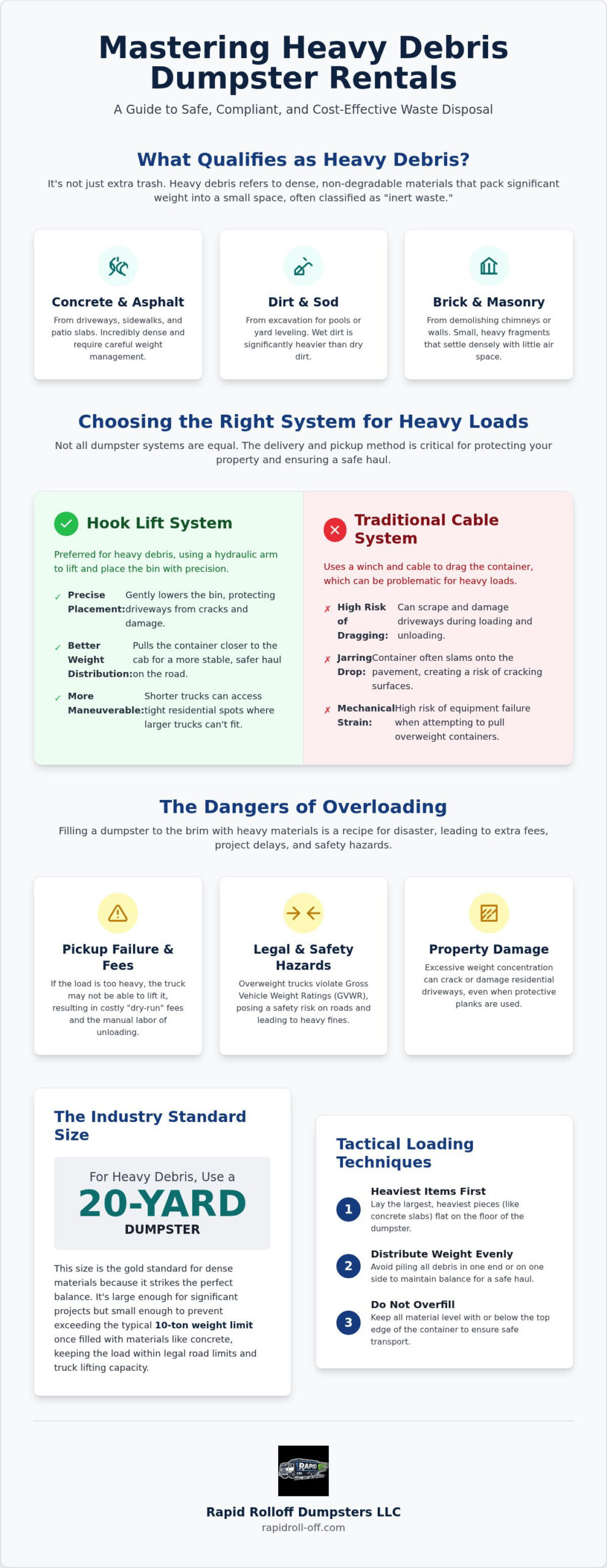
Heavy debris isn’t just extra trash. It refers to dense, non-degradable materials that pack significant weight into a small space. When you book a heavy debris dumpster rental, you’re dealing with materials like concrete, dirt, brick, and asphalt. Unlike standard household waste, these items are often classified as “inert waste.” This means they don’t produce chemical reactions or odors as they sit in a landfill. Because inert waste is so stable, facilities often process it separately or recycle it into road base.
The core challenge involves the difference between volume and weight. A 20-yard dumpster can hold a massive amount of furniture, but it can only hold a fraction of that volume in concrete before it reaches legal weight limits. Standard Roll-off dumpster systems that rely on cables often struggle to pull these loads onto the truck. If the container is too heavy, the mechanical strain can lead to equipment failure or dangerous weight imbalances during transport.
Common Heavy Materials in SE Texas Projects
For projects in Beaumont or Port Arthur, heavy debris usually comes from three main sources:
- Concrete and asphalt: These come from removing old driveways, sidewalks, or patio slabs. They are incredibly dense and require careful weight management.
- Dirt and sod: Excavating for a new pool or leveling a yard creates massive amounts of heavy soil. Wet dirt is significantly heavier than dry dirt, which can surprise many homeowners.
- Brick and masonry: Demolishing a chimney or a brick wall generates small, heavy fragments that settle quickly, leaving very little air space in the container.
The Dangers of Overloading Your Container
Filling a dumpster to the brim with heavy materials is a recipe for disaster. If the weight exceeds the truck’s lifting capacity, the driver might be unable to pick up the load. This leads to dry-run fees and the grueling task of having to unload the excess material by hand. It’s a situation that delays your project and increases your costs.
Overloading also creates legal liabilities. Trucks on Texas roads must follow strict Gross Vehicle Weight Ratings. An overweight truck is a safety hazard for other drivers and can result in heavy fines. Finally, excessive weight increases the risk of surface damage. Even with protective planks, a container that is too heavy can crack a residential driveway during the pickup process if the truck has to struggle or drag the load.
Hook Lift vs. Roll-Off: Choosing the Right System for Heavy Loads
Choosing the right equipment for a heavy debris dumpster rental is just as important as the project itself. Most people are familiar with traditional cable roll-offs. These systems use a winch and a steel cable to pull the container onto the truck bed. While common, they lack the precision required for dense materials like concrete or dirt. A hook lift system uses a hydraulic arm to physically lift and place the bin. This mechanical difference provides a level of control that cable systems simply cannot match, especially when the container weighs several tons.
Weight distribution is another critical factor. Hook lift trucks are designed to pull the container closer to the cab. This shifts the center of gravity forward, creating a more stable and safer haul. When you’re moving ten tons of driveway debris, stability is not optional. It’s a requirement for road safety and property protection. If you’re planning a project in the Golden Triangle, choosing a 20-yard hook lift dumpster ensures your load stays balanced from your driveway to the landfill.
Mechanical Advantages of the Hook Lift
The hook lift system eliminates the “jarring” effect common with cable trucks. When a cable truck drops a heavy bin, the container often slams onto the pavement as it reaches the end of the rails. A hook lift arm gently lowers the bin until it makes soft contact. This precision is vital for homeowners in Groves and Port Arthur who want to avoid cracked driveways. These trucks are also shorter and more maneuverable. They can back into tight alleys or narrow residential spots where a massive cable truck would struggle to fit.
Sizing Your Container for Weight
In the waste industry, the 20-yard dumpster is the gold standard for heavy debris. There is a practical reason for this: the 10-ton rule. Most trucks have a maximum lifting capacity and a legal road weight limit. A 20-yard container filled with concrete already pushes these limits. If you were to fill a 40-yard dumpster with dirt, the truck wouldn’t be able to lift it, and it would be illegal to drive on Texas roads. Following guidelines for the Sustainable Management of Construction and Demolition Materials helps ensure that these heavy loads are handled responsibly and safely.
Before the truck arrives, estimate your weight by calculating the square footage of the material you’re removing. A standard four-inch thick driveway slab weighs approximately 4,000 pounds per 100 square feet. Knowing these numbers helps you avoid the trap of overfilling. It also ensures your project stays compliant with local hauling regulations. Stick to the 20-yard size for your heaviest materials to keep the process predictable and stress-free.
How to Load a Heavy Debris Dumpster: A Step-by-Step Guide
Loading a heavy debris dumpster rental requires more than just muscle; it requires a strategy. Before the truck even arrives, prepare the drop-off site. Lay down several long 2×4 wood planks where the dumpster wheels or rails will sit. This simple step distributes the massive weight of the container and prevents the steel from gouging or cracking your driveway surface. Once the bin is placed, your goal is to maintain a low and centered balance.
Always start by placing the densest materials across the floor of the container. Don’t pile all the concrete in the back or against one side. An imbalanced load makes the hydraulic lift process dangerous and can cause the truck to tilt during pickup. Follow the “Even Load” rule by spreading dirt or gravel in flat layers. Finally, respect the fill line. Texas transit laws require every load to be covered with a safety tarp. If debris sits above the top rail, the driver cannot legally transport it, and you’ll be left digging out excess material by hand.
Strategic Loading Techniques
Efficiency starts with breaking things down. Large concrete slabs are bulky and create “air pockets,” which are empty gaps that waste the space you’re paying for. Use a sledgehammer to break slabs into smaller, manageable chunks that nest together. This maximizes your volume and keeps the load stable. Also, avoid the “Mountain Top” effect. It’s tempting to peak the debris in the center, but this prevents the tarp from closing securely. If the load isn’t level with the top, the driver may refuse the pickup to avoid road hazards and fines.
What NOT to Include in a Heavy Debris Load
Keep your load “clean” to avoid massive price hikes. Landfills in the Golden Triangle have strict definitions for clean fill. If you mix dirt or concrete with trash, wood, or plastic, the entire load is reclassified as mixed waste, which is much more expensive to process. You must also keep out prohibited items like tires, paint cans, and batteries. These hazardous materials can’t go into a standard heavy debris bin.
Managing moisture is another hidden factor for projects in Beaumont and Port Arthur. Southeast Texas rain can turn a dry dirt load into a saturated mud pit overnight. Wet soil can weigh significantly more than dry soil. If a storm is in the forecast, cover your dumpster with a personal tarp. This keeps the water out and prevents you from paying for the weight of the rain when the truck hits the landfill scales.
Navigating Weight Limits and Local Regulations in Beaumont
Managing a heavy debris dumpster rental in Southeast Texas requires an understanding of road safety laws. Every truck has a Gross Vehicle Weight Rating (GVWR). This is the maximum weight the vehicle can legally carry, including the truck, the container, and your debris. When you load a bin with concrete or dirt, you reach this limit much faster than you would with household trash. Exceeding the GVWR isn’t just a safety risk; it leads to heavy fines from the Texas Department of Public Safety. Always confirm the weight capacity of your specific unit before you begin your project.
Local landfill requirements in Jefferson and Orange Counties are strict regarding what they accept as clean material. If you’re hauling debris from a site in Beaumont or Port Arthur, you must ensure your concrete isn’t mixed with rebar or wood unless specified. Additionally, check your local city ordinances regarding placement. If you plan to put your dumpster on a public street or sidewalk in Beaumont, you generally need a permit from the city office. Placing the unit on your private property or driveway usually bypasses this requirement, making the process much simpler.
The Impact of SE Texas Climate on Heavy Debris
Our local weather plays a major role in the success of your rental. Southeast Texas is known for its heavy rainfall and soft, clay-heavy soil. A 20-yard dumpster filled with concrete is incredibly heavy. If you place it on soft ground after a storm, the weight can cause the bin to sink or tilt. Always choose a hard, level surface for delivery. During hurricane season or after major storms, rapid debris removal becomes a priority. Plan your loading schedule during the cooler morning hours to avoid the intense afternoon heat and humidity common in Groves and Nederland.
Avoiding Overage Fees and Penalties
Transparency is key to a cost-effective project. Every rental agreement includes a specific tonnage cap. If your load exceeds this weight, you will face overage fees. Understanding the difference between flat-rate pricing and tonnage-based models helps you budget accurately. Flat-rate models often include a set amount of weight, which is ideal for predictable projects like driveway removals. These models offer peace of mind by eliminating the guesswork of final disposal costs.
Always ask for your weight ticket from the landfill. This document provides the official scale reading of your load. It shows the “gross weight” of the truck and the “tare weight” of the empty vehicle. The difference is your actual debris weight. Reviewing this documentation ensures you are billed fairly for what you actually disposed of. If you need a reliable partner for your next project, schedule your heavy debris rental with a team that understands local Beaumont regulations.
Why Rapid Rolloff is the Trusted Choice for Heavy Debris in Groves
Rapid Rolloff Dumpsters LLC isn’t just another waste company. We’re a local business rooted in Groves. We understand the specific challenges of Southeast Texas terrain. When you call us, you speak to a local dispatcher who knows the streets of Port Arthur and Beaumont. You won’t get stuck in a national call center queue. This direct connection ensures your heavy debris dumpster rental arrives exactly when and where you need it. We prioritize your schedule because we know that project delays cost you time and money.
Our fleet features specialized hook lift trucks. These are essential for heavy residential projects where space is tight. Unlike bulky cable trucks, our systems allow for surgical precision. This matters when you’re placing a 20-yard container filled with concrete onto a residential driveway. We live and work in these neighborhoods. We take pride in providing clean, well-maintained containers. You won’t find rusted eyesore bins on your property when you work with us. We treat your project with the same care we’d give our own homes.
The Rapid Rolloff Difference
National chains often lack the precision of a hook lift system. They rely on equipment that can be too long or heavy for local residential spots. We offer tailored solutions for local contractors and property managers who need reliable, fast service. Our commitment to property protection means we use the right tools for every heavy load. We prioritize your peace of mind by ensuring the delivery and pickup are stress-free. Our team understands local soil conditions and placement strategies to keep your driveway safe from damage.
Ready to Start Your Project?
Booking your container is simple. We offer 20-yard, 30-yard, and 40-yard options to fit your specific needs. For concrete and dirt, we recommend the 20-yard hook lift model. It’s the industry standard for dense materials. When you call for a quote, have your delivery address and the type of debris ready. Tell us where you want the bin placed. Mention if there are any overhead obstacles like low-hanging branches or power lines. This helps our drivers prepare for a perfect delivery. Get a Heavy Debris Dumpster Quote from Rapid Rolloff today and experience the local difference.
Streamline Your Next Heavy Debris Project
Tackling a renovation involving concrete, dirt, or brick doesn’t have to be a logistical nightmare. Success comes down to choosing the right equipment and understanding local weight limits. By using specialized 20-yard containers and a precision hook lift system, you can protect your property from damage and avoid the headache of hidden overage fees. These tactical choices ensure your project remains compliant, safe, and cost-effective from start to finish.
Navigating the specific requirements of Beaumont and Port Arthur is simpler when you partner with local experts. We provide the reliability and direct communication you need to keep your job site running smoothly. When you’re ready to arrange your heavy debris dumpster rental, our team is standing by to help. Book Your Heavy Debris Dumpster Rental with Rapid Rolloff Today to secure a stress-free disposal solution. We’re proud to support the success of your next project in the Golden Triangle.
Frequently Asked Questions
Can I fill a 40-yard dumpster with concrete?
No. A 40-yard dumpster filled with concrete would exceed the truck’s lifting capacity and legal road weight limits. For heavy materials, a 20-yard container is the industry standard to prevent equipment strain. This size ensures the load remains manageable and safe for transport on Texas roads. Overfilling a larger bin often leads to mechanical failure or a refusal of pickup, which causes unnecessary delays for your construction or demolition project.
How much does a yard of dirt or concrete weigh?
On average, one cubic yard of solid concrete weighs about 4,000 pounds, while a cubic yard of dry dirt weighs roughly 2,000 to 2,700 pounds. These weights increase significantly if the materials are wet. Because of this density, a 20-yard heavy debris dumpster rental is usually the limit for these materials. This sizing helps you stay within legal hauling weight ratings while ensuring the truck can safely lift the load for disposal.
Do I need a permit for a heavy debris dumpster in Beaumont?
Permits are generally only required if the dumpster is placed on public property, such as a city street or sidewalk. If you place the container on your private driveway or job site, you usually don’t need a permit. Check with the Beaumont city office for specific local ordinances if your project requires street placement in neighborhoods like the West End or Dowlen Road. We always recommend confirming placement details before the delivery truck arrives.
Will a heavy dumpster damage my driveway?
Heavy loads can cause surface cracking if not handled correctly. Our hook lift system provides precise placement to minimize impact. To further protect your property, we recommend placing several wood planks where the container will sit. This distributes the weight across the surface, which is especially important for the soft clay soil found throughout the Golden Triangle. These simple precautions help ensure your driveway remains intact throughout the duration of your heavy material project.
What happens if my dumpster is over the weight limit?
If a heavy debris dumpster rental exceeds the legal weight limit, the driver cannot legally transport it on public roads. You will be asked to remove excess material until the container meets the required weight. This often results in dry-run fees and significant project delays. We help you estimate your load beforehand to ensure your project stays on track. Understanding these limits is key to maintaining a safe and compliant job site in Southeast Texas.
Can I mix dirt and concrete in the same dumpster?
Yes, you can mix these materials, but it may affect your disposal costs. Many landfills classify mixed heavy loads differently than “clean” loads of just concrete or just dirt. Mixing them can prevent the material from being recycled into road base at local facilities. Always clarify your specific debris mix during the booking process. This helps us provide the most accurate guidance and ensures you aren’t surprised by any processing fees at the scale.
How long can I keep the heavy debris container on-site?
We offer flexible rental periods to suit your project schedule. Standard rentals in the Groves and Port Arthur area typically last 14 days. If you finish your demolition sooner, just call our local dispatcher to schedule an early pickup. If your project runs long, we can often extend the rental for a small daily fee. This flexibility ensures you have enough time to load your materials safely without feeling rushed by a rigid deadline.
What is the difference between clean concrete and mixed debris?
Clean concrete contains only concrete fragments without rebar, trash, or wood. This material is often recycled into new construction products. Mixed debris includes concrete combined with other materials like metal, plastic, or household trash. Landfills in Jefferson County charge different rates for these loads. Mixed debris requires more processing and cannot be easily repurposed for local infrastructure projects. Identifying your waste type early helps you choose the most cost-effective disposal method for your project.