What if a small cleanup needs a larger dumpster than a room renovation? The project label alone won’t answer how big of a dumpster do I need. The amount of debris matters, but so do its weight, shape, and the space available to load the container.
To narrow down your options, make an inventory of what you plan to remove. Estimate the debris volume, separate heavy materials from bulky ones, and think about where the container can be placed. This guide walks through those steps and compares 20-, 30-, and 40-yard dumpster options for residential and commercial projects in Groves and nearby Southeast Texas communities.
Rapid Rolloff Dumpsters offers delivery and pickup for its 20-yard and 40-yard hook lift containers and 30-yard dumpsters. Use the guidance below to prepare a practical estimate before choosing a size for your cleanup.
Key Takeaways
- To decide how big of a dumpster do I need, estimate the debris itself rather than relying on the project name.
- Compare 20-, 30-, and 40-yard options with your expected debris volume and the materials you’ll load.
- Separate dense materials like concrete and dirt from lighter mixed debris. Volume and weight are different considerations.
- List bulky items and consider access and placement before settling on a container size.
- Use a project checklist to narrow your options for a residential or commercial cleanup in Groves, Port Arthur, Beaumont, Nederland, Port Neches, Orange, or Bridge City.
How Big of a Dumpster Do I Need? Start With the Debris
A kitchen remodel, yard cleanup, or office cleanout can produce very different amounts of debris. The project name is only a starting point. To answer “how big of a dumpster do I need,” estimate what you’ll remove, how much space it takes up, and whether any of it is especially heavy.
A dumpster’s size describes the volume of space inside the container, not how much weight it can hold. A cubic yard is a volume measurement equal to 27 cubic feet. This lets you compare a debris pile with a container’s stated size, but it doesn’t tell you whether dense materials will reach a weight constraint first. For background on roll-off containers and common uses, see this overview of roll-off containers.
How to Estimate the Amount of Debris
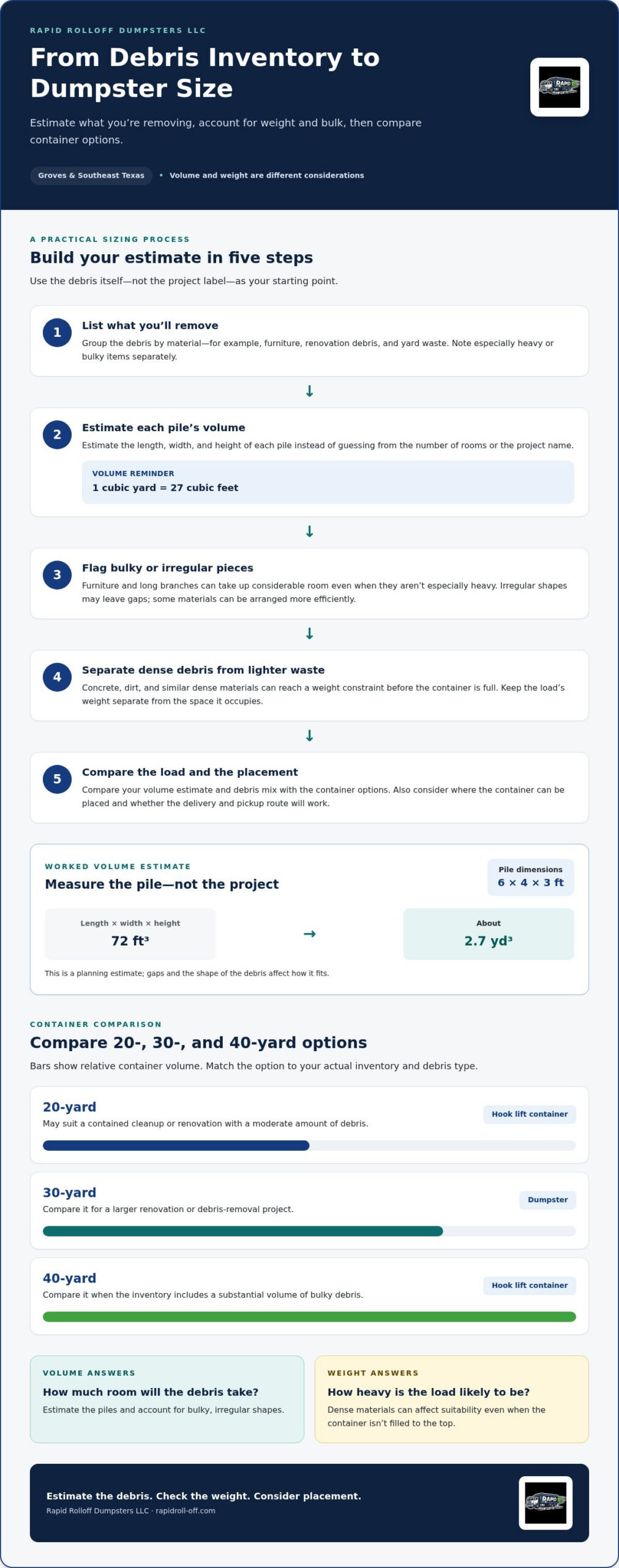
Build a simple inventory before comparing container sizes. Group items by material, such as furniture, renovation debris, and yard waste. Estimate each pile’s length, width, and height instead of guessing from the number of rooms or the project label. For example, a pile measuring 6 feet by 4 feet by 3 feet takes up 72 cubic feet, or about 2.7 cubic yards, before accounting for gaps.
Use the calculation as a planning estimate, not an exact prediction of how the debris will fit. Irregular shapes leave empty space, while some materials can be arranged more efficiently. List bulky pieces such as furniture or long branches separately. They may take up considerable room even when they aren’t especially heavy.
Why Material Type Matters as Much as Volume
A container can look partly empty and still be carrying substantial weight. Concrete, dirt, and similar dense debris may reach a weight constraint before filling the available volume. Furniture, branches, and other bulky, lightweight items can occupy a lot of space without adding comparable weight. Keep two questions separate: how much room will the debris take, and how heavy is it likely to be?
Use this sequence to prepare a useful estimate:
- List the materials you expect to remove.
- Estimate each pile’s length, width, and height.
- Flag bulky, irregular, or compactable items.
- Separate dense debris from lighter mixed waste.
- Compare your volume estimate with the available container options.
If your project includes concrete, dirt, or another heavy material, include it in your project details when planning a rental with Rapid Rolloff. A clear inventory gives you a practical starting point for comparing dumpster sizes.
Compare 20-, 30-, and 40-Yard Dumpster Sizes by Project Scope
Once you’ve estimated the debris, compare your inventory with the container options. A project label can point you in the right direction, but it can’t settle the choice on its own. A renovation might leave a modest pile if you’re replacing a few fixtures, or a much larger one if it includes extensive demolition and bulky materials.
Choose a dumpster size based on your project inventory and debris type, not the project name alone. Rapid Rolloff offers 20-yard and 40-yard hook lift containers, plus a 30-yard dumpster. Use the general guidance below to narrow your choices, then consider how much material you’ll load and how dense it is.
When a 20-Yard Dumpster May Fit the Project
A 20-yard option may suit a contained cleanup or renovation that produces a moderate amount of debris. Look at the items on your list, not just whether the job is called a remodel, cleanout, or landscaping project. A focused renovation may generate less waste than a whole-home cleanout with numerous bulky items. Estimate the pile and account for anything awkward to load before deciding.
When to Compare 30- and 40-Yard Options
For a larger renovation or debris-removal project, assess whether the 30-yard dumpster matches the amount of material you expect. If your inventory includes a substantial volume of bulky debris, compare it with the 40-yard hook lift container as well. The goal is to match the container to the expected load, not to select the largest option automatically.
Project scale needs context. A commercial cleanup can be extensive but produce limited debris if only a small area is being cleared. A residential project can generate a large load if it includes many furnishings or substantial renovation material. Estimate the actual debris in either case.
Keep weight separate from volume as you compare. A larger container gives you more room, but it doesn’t make dense material light. Concrete, dirt, and similar debris can affect suitability even if the container isn’t filled to the top. Include heavy materials in your estimate so the choice reflects both the volume and makeup of the load.
To discuss your project scope and debris mix, visit Rapid Rolloff’s dumpster rental information.
Avoid the Wrong Dumpster Size: Check Weight, Waste, and Placement
A volume estimate is only part of the decision. Before settling on a container, consider the debris weight, which materials can go in it, and whether the delivery and pickup route will work. These checks help you choose a container that fits the actual project, not just the estimate on paper.
How Heavy Debris Changes the Sizing Decision
Dense materials can make a dumpster unsuitable before it looks full. Concrete and dirt take up less space per load than bulky items but add substantial weight. Mixed renovation debris can be harder to predict because a load may combine heavy materials with lighter fixtures, packaging, or furnishings.
Keep volume and weight as separate parts of your estimate. A larger container adds room, but it doesn’t automatically make a heavy load suitable. Review the applicable weight limits for the rental and include dense materials in your project details. For how big of a dumpster do I need, the useful answer accounts for both the space your debris occupies and its material makeup.
Review which materials are accepted and any project-specific restrictions before loading. Set aside items that need special handling rather than assuming they can go in with general debris.
Check Access and Placement Before Choosing
A container needs a suitable place to sit, and the delivery vehicle needs a workable route to reach it. Measure the intended drop area and check the path leading to it. Gates, narrow approaches, low branches, roof overhangs, and overhead utility lines can affect access. Keep the planned space clear for delivery and pickup, and consider whether the container will interfere with driveway use, worksite traffic, or other essential access.
Site layouts vary across Groves and nearby Southeast Texas communities, from open driveways to busy commercial work areas. Think through where the container can be placed without blocking routine movement. If you’re considering a spot on a street or other public area, review applicable local placement requirements before making it your plan. Requirements can depend on the location, so don’t assume one site’s arrangement works everywhere.
- Weight: Identify concrete, dirt, and other dense debris separately.
- Waste: Review accepted materials and project-specific restrictions before loading.
- Placement: Measure the drop area and check the route for obstructions.
- Access: Preserve usable space for delivery, pickup, and project traffic.
These checks refine your size estimate. Choose a container that suits the debris and fits the site, not just one that matches the project label.
Use This Checklist to Choose a Dumpster for Your Project
A short project inventory makes sizing less of a guess. Work through these steps before arranging a rental, and update your notes if the cleanup grows or new areas are added.
- Map the work area. Write down each room, worksite zone, or outdoor section you plan to clear. Include planned additions, such as another room or storage area, so the estimate reflects the full scope.
- List the debris by type. Note large objects like furniture, cabinets, or branches separately from loose renovation debris. Put dense materials such as concrete or dirt in their own category.
- Estimate the volume. Consider the size of each debris pile, including its approximate length, width, and height. Account for bulky or irregular items that may leave empty spaces when loaded.
- Think through the cleanup pace. Will debris collect gradually as work progresses, or will most of it come from one large cleanout? Mixed debris can settle differently from bulky items, so don’t assume every pile will pack neatly.
- Check the site. Identify a suitable container location and look for gates, overhead obstructions, tight approaches, and traffic that could affect delivery, pickup, or project access.
- Compare the available sizes. Use your inventory, material types, estimated volume, and site conditions to assess the 20-, 30-, and 40-yard options. If you add rooms or work areas, update the list and estimate before choosing.
Save this checklist: define the work area, list bulky and dense debris separately, estimate the piles, check access, then compare container sizes. This gives you a clearer answer to “how big of a dumpster do I need?” than relying on the project name alone.
Match the Estimate to Your Site and Schedule
Planning includes more than the debris pile. Consider where the container can sit throughout the work and keep the route to that spot clear. For a project in Groves or a nearby Southeast Texas community, include the job location and site access in your planning. If the cleanup expands, revisit your estimate rather than assuming the original size still fits.
Ready to put your inventory to use? Share your project details with Rapid Rolloff to discuss a container size suited to your cleanup.
Choose a Dumpster Size With Rapid Rolloff in Southeast Texas
Make the final choice by bringing four details together: estimated debris volume, the materials you’ll load, the placement area, and the container options that fit the project. This helps answer “how big of a dumpster do I need?” without relying on the project label alone. Rapid Rolloff rents 20-yard and 40-yard hook lift containers and a 30-yard dumpster, with delivery and pickup for residential and commercial projects.
What to Share When Planning a Rental
Prepare a short description of the work. Include the rooms, outdoor areas, or worksite sections involved, plus the types and approximate amount of debris. Note large or awkward items separately from loose material, and identify dense debris such as dirt or concrete. These details help distinguish a load that needs more room from one where material weight is an important part of the decision.
Also describe where the container can be placed and any access concerns, such as a narrow approach, gate, or overhead obstruction. With a project inventory and site details in hand, you can compare the 20-, 30-, and 40-yard options based on the actual cleanup rather than guessing from its name. Rapid Rolloff can tailor the container choice to the project needs you describe.
Local Dumpster Rentals Around Groves
Rapid Rolloff serves Groves and nearby Southeast Texas communities, including Port Arthur, Beaumont, Nederland, Port Neches, Orange, and Bridge City. Share the job location along with your debris estimate and placement plan. That local context helps frame the rental around the project, whether you’re clearing a home, renovating a space, or handling a commercial cleanup.
Before arranging a rental, review your inventory one more time. Has the work expanded to another room or area? Are there additional bulky items or heavy materials? Update your estimate if the scope has changed, then compare the available container sizes again. A little planning helps you choose a container suited to the debris and the site.
Ready to discuss your project? Explore dumpster rental options with Rapid Rolloff and share the details that will help narrow down a suitable size.
Choose Your Dumpster With Confidence
The right size starts with an inventory, not a project label. Estimate how much debris you’ll generate, separate dense materials from bulky or lighter items, and make sure the placement area and access route suit the container. Those details make it easier to answer, “how big of a dumpster do I need?”
Rapid Rolloff Dumpsters serves Groves, Texas, with 20-yard and 40-yard hook lift containers and a 30-yard dumpster option. Delivery and pickup are available for residential and commercial projects in Groves, Port Arthur, Beaumont, Nederland, Port Neches, Orange, and Bridge City.
Have your project details ready? Explore dumpster rental options for your project and share what you’re clearing, the materials involved, and any site access considerations. A clear starting estimate can help narrow the choice.
Frequently Asked Questions
How do I estimate what size dumpster I need?
Estimate the debris you’ll remove, then compare its volume and material type with the available container sizes. List each room or work area, group debris by type, and note bulky items and dense materials separately. Estimate each pile’s length, width, and height rather than relying on the project name. Then consider where the container can go and compare your inventory with Rapid Rolloff’s 20-, 30-, and 40-yard options.
What size dumpster is best for a home cleanout?
The best size depends on how much you’re clearing, not just the fact that it’s a home cleanout. A few rooms with limited debris may call for a different option than clearing a whole house with furniture, appliances, and accumulated belongings. List the large items, estimate the total pile, and identify any dense materials. Then compare the estimate with the 20-, 30-, and 40-yard options.
Is a 20-yard dumpster big enough for my project?
A 20-yard dumpster may suit a contained cleanup or renovation with a moderate amount of debris, but your inventory should guide the decision. List the items you’ll remove and estimate their combined volume, giving bulky pieces special attention. Also consider material weight. A project with a limited amount of dense debris needs a different assessment than one with mostly lighter items, even if the piles look similar in size.
Should I rent a 30-yard or 40-yard dumpster?
Compare a 30-yard option with a 40-yard one based on your estimated volume and debris type. The 30-yard dumpster may be worth considering for a larger renovation or debris-removal project. A 40-yard hook lift container may be a better comparison for a substantial volume of bulky material. Don’t choose based on project scale alone. Account for dense materials that can affect suitability before the container looks full.
Can heavy debris affect what size dumpster I need?
Yes. Concrete, dirt, and other dense debris can reach a weight constraint before filling the container’s available volume. Separate heavy materials from lighter mixed waste when estimating your load, and include them in your project details. Container volume and weight limits are different considerations. Review the weight guidance for the rental you’re considering, especially if your project includes a substantial amount of dense material.
What should I check before having a dumpster delivered?
Check the debris types and any project-specific restrictions before loading, then make sure the intended placement area and delivery route are clear. Measure the space and look for gates, narrow approaches, low branches, or overhead obstructions. Consider driveway use and worksite traffic, too. Rapid Rolloff provides delivery and pickup for local projects in Groves, Port Arthur, Beaumont, Nederland, Port Neches, Orange, and Bridge City.
Ready to choose a container for your project? Explore dumpster rental options with Rapid Rolloff and share your debris estimate and site details.