Could a dumpster that’s only half full already be overweight? Absolutely. Concrete, soil, shingles, and other dense debris can reach a container’s weight limit well before they fill its available space. If you’re figuring out how to avoid dumpster overweight fees, don’t rely on appearance alone. Track what goes in and understand how the rental’s weight allowance applies to your debris.
A nearly full dumpster is not always the main concern. The material you’re tossing can matter just as much as the container’s volume, especially when a cleanup combines heavy and lightweight waste. Estimate the load before you start, then update your estimate as the project progresses so you can spot a potential weight issue before pickup.
This guide explains how to compare debris types, estimate weight, choose a suitable container, and load it with more control. You’ll also learn what to review in your rental terms so you understand how excess weight is handled. Rapid Rolloff Dumpsters LLC offers 20-yard, 30-yard, and 40-yard dumpsters for residential and commercial projects, helping you plan around both the space you need and the debris you’re removing.
Key Takeaways
- Learn how to avoid dumpster overweight fees by tracking debris weight, not judging a load by how full the container looks.
- Build a practical estimate by listing each material, measuring quantities, and using reliable weight references.
- Keep a simple loading log and compare your running estimate with the allowance in your rental agreement.
- Plan for dense materials like concrete, brick, and soil differently from lighter household waste and vegetation.
- Choose a dumpster by considering debris type, estimated weight, and volume together. More space alone may not solve a weight-limit concern.
How to Avoid Dumpster Overweight Fees by Understanding Weight Limits
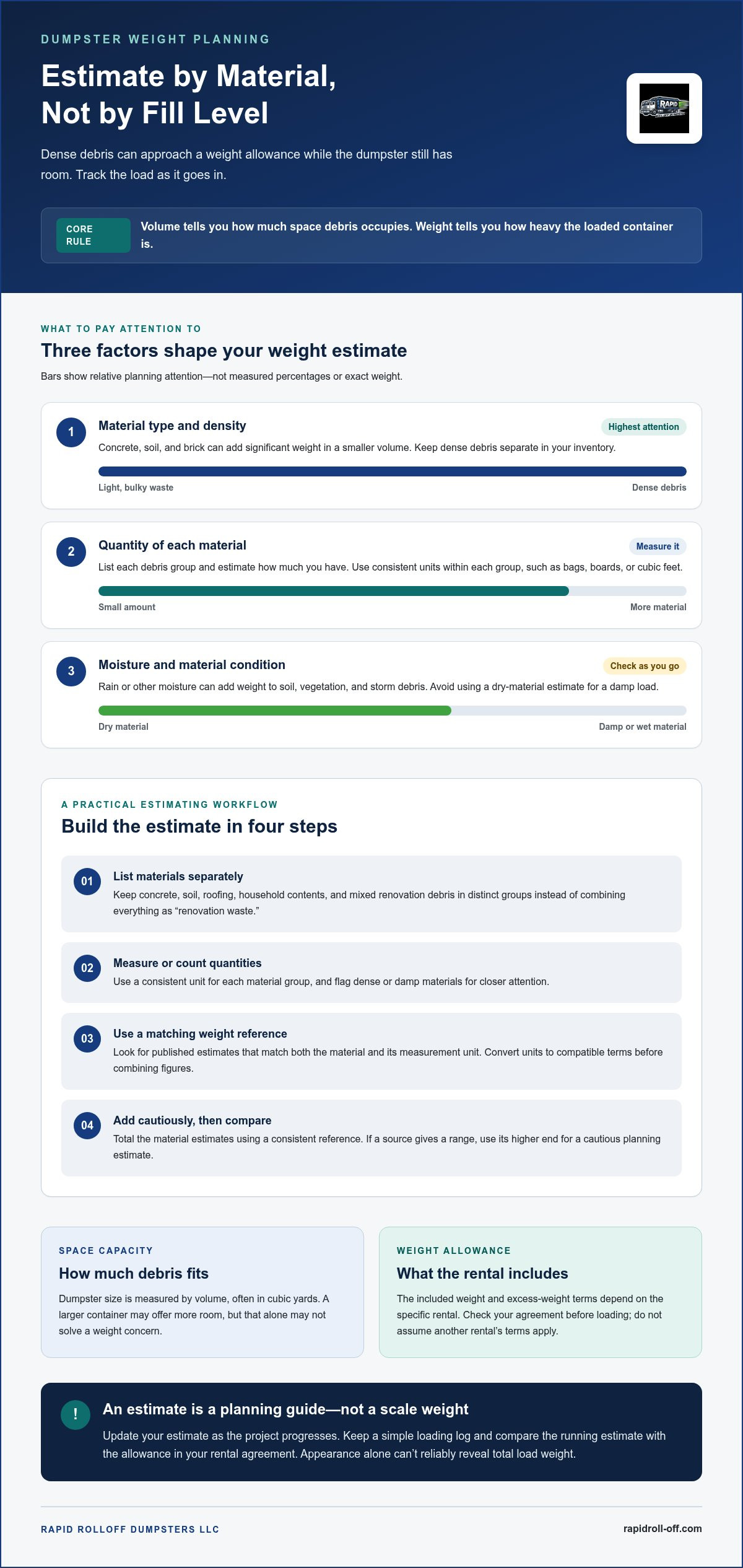
A dumpster has two separate capacities: the space available for debris and the weight allowed under the rental terms. Space is measured by volume, often in cubic yards. Weight is the total mass of the loaded container. You need to account for both because one does not tell you whether you are within the other.
Volume tells you how much space debris occupies; weight tells you how heavy the loaded container is. A container can have room left while already approaching its weight allowance. Choosing a larger dumpster based on volume alone may not solve a weight concern. The general reasons roll-off containers have weight limits, including safe transport, are covered in this overview of Roll-off (dumpster) weight limits.
What does a dumpster weight allowance mean?
A weight allowance is the amount of debris included under the specific rental terms. It is not a universal figure that applies to every dumpster or rental. Your agreement should state the included weight and explain what happens if the load exceeds it. An overweight fee is a charge associated with going over that stated allowance. Before loading, find the included weight, how excess weight is assessed, and how it is handled. Do not assume another rental’s allowance or fee process applies to yours.
Why a half-full dumpster can still be overweight
Light, bulky items can take up considerable space without adding as much weight as compact, dense materials. Concrete, soil, and brick can add significant weight in a smaller volume. A dumpster filled with bulky packaging may look more loaded than one holding dense debris, even though the second load may weigh more.
Hypothetical example: Imagine two dumpsters of the same size. One holds mostly empty boxes and light household items. The other holds a compact pile of broken concrete. The second container may appear only partly full but could reach its weight allowance sooner. Appearance alone can’t reliably reveal total load weight.
To understand how to avoid dumpster overweight fees, read the rental agreement before your project starts. Find the included weight and the section describing excess weight. Keep those terms handy as you plan what materials will go into the container. This gives you a clear reference for estimating your load instead of relying on how much space remains.
Estimate Debris Weight for Southeast Texas Cleanup Projects
A useful estimate starts with the materials, not the dumpster’s fill level. Break the project into separate groups so heavy debris does not disappear into one broad guess. Material, quantity, and moisture all affect debris weight.
Build a debris inventory before filling the dumpster
Walk through the cleanup and list what you expect to discard. Keep concrete, soil, roofing, household contents, and mixed renovation debris separate. Use consistent units for each group, such as bags, boards, cubic feet, or roofing squares. Flag dense or damp materials for closer attention.
Then work through this estimate:
- List materials: Record each distinct debris type instead of combining everything as “renovation waste.”
- Estimate quantities: Measure or count what you can, using the same unit for each material group.
- Find credible weight references: Look for published estimates that match the material and measurement unit. The EPA volume-to-weight conversion factors for solid waste can help convert estimated volume into a planning figure.
- Total cautiously: Convert each material group using a consistent reference, then add the estimates. Treat the result as a planning guide, not a guaranteed scale weight.
Use weight estimates carefully for local project debris
Material labels alone do not capture every difference. Soil may be loose or compacted, roofing debris may include different materials, and renovation waste may combine heavy fragments with lighter packaging. Rain or other moisture can also add weight to soil, vegetation, and storm debris. For projects in Southeast Texas, note whether debris is wet and avoid using a dry-material estimate for a damp load.
Published figures can give you a useful starting point, but check that the source explains its material and unit assumptions. Roofing estimates, for example, may use a roofing “square,” while soil references may use volume. Convert figures to compatible units before adding them. If a reference gives a range, use the higher end for a cautious planning estimate.
As you prepare the inventory, review applicable disposal guidance for the materials in your load. Weight estimates do not determine what a local disposal facility accepts, so account for disposal requirements separately from weight planning.
Once your material list and rough total are ready, compare the estimate with the allowance and excess-weight terms in your rental agreement. That simple check is central to how to avoid dumpster overweight fees. For a container matched to your cleanup plan, review dumpster rental options from Rapid Rolloff.
Track Dumpster Weight as You Load Instead of Guessing
An estimate is most useful when you update it throughout the project. A load log helps you notice when dense debris is adding weight faster than the container is filling. It also gives you a clear record to compare with the weight allowance in your rental agreement.
Use a simple load log during the project
Keep a notebook or spreadsheet nearby. After each substantial loading session, record the material, estimated quantity, estimate source, and updated running total. Include the unit you used, such as bags, boards, or cubic feet, and note assumptions when a quantity or weight estimate is approximate. Your log is a planning tool, not a certified scale reading.
For example, if one renovation phase adds roofing debris and another adds household items, enter them as separate rows instead of combining them under “cleanup waste.” Update the total using the same references and units from your original estimate. This keeps the running figure useful and makes it easier to spot a change in the debris mix.
Compare the running estimate with your rental terms
Keep the agreement’s included weight and excess-weight terms accessible. After each log update, compare your estimated total with the allowance stated there. If the estimate is getting close, pause before adding another dense load. Recheck quantities and assumptions, then decide whether the remaining material needs a different plan. Do not treat an uncertain estimate as proof that there is room for more.
Use these habits to keep the load more manageable:
- Log by project phase: Update the record after demolition, roofing removal, yard cleanup, or another substantial session.
- Keep dense debris visible: Track concrete, brick, soil, and roofing separately so their weight does not get lost among lighter materials.
- Reassess wet loads: If rain or other moisture changes the debris, especially soil or vegetation, account for that uncertainty before adding more.
- Follow loading directions: Keep debris within the fill line and follow any other instructions in the rental agreement.
Distribute material evenly rather than piling it heavily on one side or in one spot. Balanced loading makes the container more practical to fill and supports safer handling. It does not reduce the debris’s total weight, so continue tracking your estimate as you go.
Consistent tracking is a practical part of how to avoid dumpster overweight fees. It replaces a last-minute guess with a running estimate and gives you a chance to adjust before the container is ready for pickup.
Load Concrete, Soil, Roofing, and Mixed Debris More Carefully
Some materials need closer weight checks than others. Concrete, brick, soil, and roofing debris can add weight quickly, while bulky household items may use more of the dumpster’s space than its weight allowance. A mixed load is harder to estimate because its materials and moisture levels vary. Separate material groups in your plan, even if the project ultimately produces a combination of debris.
Compare common debris types before loading
| Material | Typical weight concern | Loading-planning action |
|---|---|---|
| Concrete | Dense pieces can add substantial weight in a compact area. | Estimate separately and add it in controlled amounts. |
| Brick | Masonry is dense, and a small-looking pile may still be heavy. | Keep quantities visible in your load estimate. |
| Soil | Moisture and compaction can change its weight. | Note whether it is damp and avoid relying on a dry estimate. |
| Roofing debris | Weight varies with roofing material and what is mixed in. | Record roofing separately from other renovation waste. |
| Vegetation | Wet branches, leaves, and other yard debris may weigh more than dry material. | Account for moisture and keep the estimate distinct. |
| Mixed household waste | Bulky items take up space, while hidden dense items can increase total weight. | Separate heavy contents from lighter furnishings and packaging when estimating. |
Plan for local project conditions
A bathroom renovation in Groves may produce masonry, tile, and mixed demolition debris. A yard cleanup in Port Arthur or storm-related work near Beaumont may involve branches and other material exposed to rain. These examples do not have fixed weights: composition, quantity, and dampness all affect the estimate. If debris gets wet or its composition differs from your original plan, revise your estimate before adding more.
Load in a controlled way and distribute debris evenly rather than concentrating dense material in one spot. Keep the load within the fill line and follow the rental agreement’s loading directions. Do not assume a material is accepted at a local disposal facility just because it fits in the container. Review applicable disposal guidance before loading unfamiliar debris.
Separating material types and checking them as you go makes how to avoid dumpster overweight fees easier to put into practice. Plan your cleanup around the debris you actually have with choose a dumpster for your debris.
Choose a Dumpster and Rental Plan That Fits Your Debris
Make the container decision after you understand what is going into it. First identify the material groups, then estimate their quantities and review the rental agreement’s weight allowance and excess-weight terms. Choose a container that suits both the debris volume and your weight estimate. This order helps you avoid choosing by size alone.
A larger dumpster gives you more room, but it does not automatically increase the weight allowance. If your project includes dense materials such as concrete, brick, or soil, extra volume may not address the main concern. Plan around the heaviest debris as well as the amount of space the full project requires.
Match project size to a practical container choice
Rapid Rolloff Dumpsters LLC offers 20-yard and 40-yard hook lift dumpsters and 30-yard dumpsters for residential and commercial projects. A smaller project may need less volume, while a larger renovation or debris-removal job may call for more space. These are broad planning considerations, not guarantees of how much any specific load can hold. Let material type and estimated weight guide your choice alongside project scale.
Before selecting a container, write down the project, the debris groups, and your approximate quantities. Then compare that inventory with the rental terms. A clear estimate helps you choose a practical volume without assuming that a bigger container solves a weight-limit issue.
Plan a local rental with fewer weight surprises
Have a few details ready: what the project involves, which materials you expect to discard, your estimated quantities, and your project timeline. Rapid Rolloff serves Groves and nearby Southeast Texas communities, including Port Arthur, Beaumont, Nederland, Port Neches, Orange, and Bridge City, with container delivery and pickup. A clear debris inventory helps you plan the rental around the job.
Understanding how to avoid dumpster overweight fees comes down to matching container space to your project while keeping weight terms in view. Explore dumpster rental options and plan your next cleanup with the materials and estimated load in mind.
Plan Your Cleanup With Weight in Mind
Knowing how to avoid dumpster overweight fees starts with looking beyond container capacity. Identify the materials you’re removing, estimate their quantities, and review the weight allowance and excess-weight terms in your rental agreement. As you load, keep a simple running estimate. Dense or damp debris can add weight even when the dumpster still has room.
Choose your container based on both the volume and weight of the planned load. Rapid Rolloff Dumpsters LLC is based in Groves, Texas, and provides local dumpster rentals with delivery and pickup for residential and commercial projects. Options include 20-yard and 40-yard hook lift rentals and 30-yard dumpsters. The rental terms, rather than container size alone, determine the included weight allowance.
Ready to plan your cleanup? Explore dumpster rental options and take the next step with a clearer idea of your debris and project needs.
Frequently Asked Questions
Can I get an overweight fee if the dumpster is not full?
Yes. A dumpster can be under its visible fill capacity yet exceed the weight allowance in its rental terms. Dense materials such as concrete, brick, or soil may cause this. Estimate debris by type and quantity, not appearance alone. Review the agreement for the included weight and how excess weight is handled, then update your estimate as you load. For cleanups in Groves or nearby Port Arthur, make a material list before filling the container.
How do I estimate the weight of debris in a dumpster?
List each material separately, then estimate its quantity using consistent units, such as bags, boards, or cubic feet. Find credible weight references that match the material and unit, and account for moisture or differences in composition. Add the estimates and record your assumptions. A material-by-material log can support how to avoid dumpster overweight fees, but it is only a planning estimate, not a scale reading. Compare the running total with your rental agreement’s allowance.
Which dumpster materials are most likely to make a load overweight?
Concrete, brick, soil, and some roofing debris deserve especially careful estimates because dense materials can add substantial weight in a relatively small space. Bulky household items may take up more volume without weighing as much. Actual weight depends on quantity, composition, and moisture. Keep masonry, soil, and roofing separate in your project inventory so you can monitor them more closely, whether your cleanup is in Beaumont, Nederland, or another nearby community.
Does rain make dumpster debris heavier?
It can. Soil, vegetation, and other absorbent debris may hold water, making a dry-material estimate less reliable. The added weight varies with the material and how wet it becomes, so do not assume one figure applies to every load. Track damp debris separately and reassess your estimate before adding more. If rain affects a cleanup in Port Neches or Orange, follow your rental agreement’s loading directions as you plan the load.
Can I put concrete and household junk in the same dumpster?
It depends on the rental terms and applicable disposal requirements. Concrete is dense, while household junk can use substantial container space, so combining them can make both weight and capacity harder to manage. Estimate the material groups separately, even if they’ll share a container. Before loading, review the agreement and applicable local disposal guidance. Do not assume every mixed load is handled the same way for projects in Groves, Bridge City, or nearby areas.
How much weight can a dumpster hold before overweight fees apply?
There isn’t one weight allowance that applies to every rental. The included limit and process for handling excess weight are set out in the rental terms, so check the agreement for your specific container. Do not infer an allowance from yardage or how full the dumpster looks. Estimate each material group and track the total as you load. This helps renters across Southeast Texas plan with the actual agreement in mind.
What should I do if my dumpster may be overweight?
Pause loading while you review your estimate and rental agreement. Identify which materials contribute the most weight, including dense debris or materials that have become wet, and compare your running total with the stated allowance. Follow the agreement’s loading directions instead of adding more based on visible space. Keep your inventory handy when arranging pickup. Rapid Rolloff provides dumpster delivery and pickup in Groves, Port Arthur, Beaumont, Nederland, Port Neches, Orange, and Bridge City.