The best way to save dumpster space is to build an even, stable load instead of tossing debris in at random. When learning how to load a roll-off dumpster efficiently, place heavy materials across the bottom, stack usable items vertically, and fill open gaps with smaller debris. Keep the load level and below the top edge so it can be covered safely.
Filling every corner is not the only goal: weight distribution matters just as much as space. Dense materials can reach a dumpster’s weight limit before it looks full, so spread them across the floor rather than compressing debris to fit more. Plan how to sort and stack materials, use gaps, and position flat pieces. A well-organized load makes better use of the container and is ready for pickup.
Key Takeaways
- Spread dense debris across the base to keep the load balanced and make better use of the container.
- Choose a loading order that suits each material, and break down bulky items where practical.
- Use smaller debris to fill open spaces, and stack suitable items vertically without making the load unstable.
- Position flat pieces against the sides to free up room for other materials.
1. Distributing weight evenly
Choose a dumpster by estimating both the volume and weight of your debris, then account for the materials involved. Capacity is not just a question of how much space debris occupies.
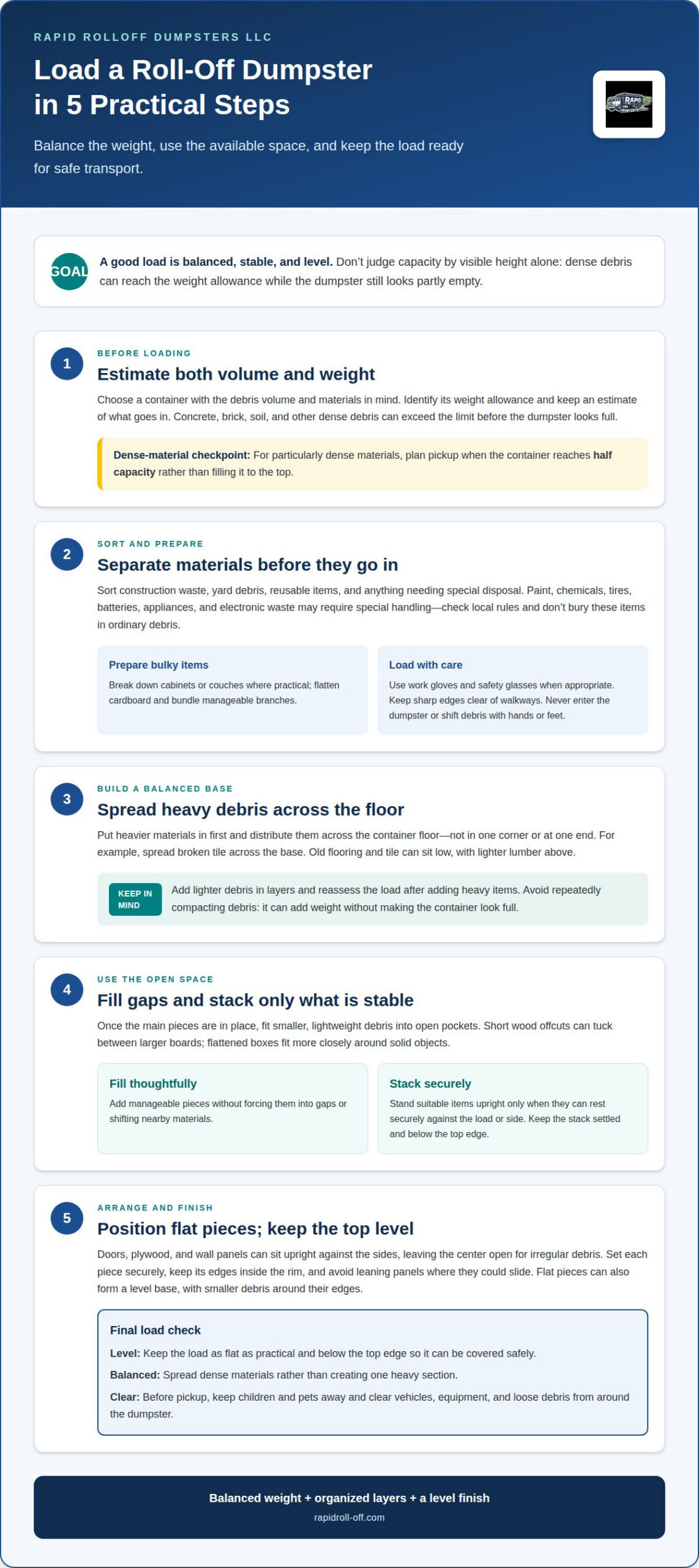
Spread heavy materials across the floor instead of concentrating them in one corner or at one end. For example, distribute broken tile across the base rather than building one dense pile. This helps balance the load for transport and avoids an unnecessarily heavy section. Add lighter debris in layers, keeping weight distributed throughout the container.
Weight limits vary with dumpster size and rental terms. Before loading, identify the container’s weight allowance and keep an estimate of the materials going in. Dense construction debris can exceed the limit while the dumpster still looks partly empty. If your project includes concrete, brick, or soil, account for their density rather than judging the load by its visible height.
Avoid repeatedly compacting debris to create more room. Compression can add weight without making the container look full, increasing the chance of exceeding its weight allowance. Prioritize weight awareness over squeezing in extra material. Sort paint, chemicals, batteries, and other items that may require special handling rather than treating them as ordinary debris.
For particularly dense materials, plan a pickup when the container reaches half capacity instead of filling it to the top. This helps manage weight before the load becomes difficult to transport. A practical way to load a roll-off dumpster efficiently is to consider dumpster size, material density, and even distribution together. Reassess the load as you work, especially after adding heavy items.
2. Loading strategies for different materials
Sort debris at the work area before loading. Separate construction waste, yard debris, reusable items, and materials needing special disposal. This prevents prohibited items from being mixed with ordinary waste. Break down bulky pieces, such as cabinets, and flatten cardboard boxes before they enter the dumpster. Keep sorted materials nearby so each load has a clear place.
Load heavier debris first, then add lighter items around and above it. Distribute materials across the floor instead of building one dense pile. Put old flooring and broken tile low in the container, with lighter lumber above. Keep the top flat, and don’t let waste extend beyond the edge. A level load is easier to cover for transport.
Prepare each material before lifting it. Disassemble couches or cabinets where practical, and bundle manageable branches. Keep sharp edges and protruding pieces clear of walkways. If the dumpster has a loading door, use it for large or heavy pieces instead of lifting them over the side. Never enter the container or shift debris with your hands or feet.
Paint, chemicals, tires, batteries, appliances, and electronic waste may require special handling. Don’t assume these items are accepted with regular waste. Separate them while sorting so they don’t end up buried beneath other debris. Check local disposal rules before loading, since permitted materials can vary by location.
Use appropriate protective equipment while preparing and loading debris. Work gloves help protect your hands from rough lumber and sharp edges; safety glasses can help shield your eyes while breaking down materials. Keep children and pets away from the dumpster, and clear vehicles, equipment, and loose debris from its surroundings before pickup.
Careful sorting and loading make a mixed cleanup easier to manage. For projects that need a container, explore dumpster rental options suited to the debris and work area.
3. Filling gaps and stacking vertically
Once the main pieces are in place, look for open pockets between them. Fit smaller, lightweight debris into those spaces instead of leaving usable volume empty. For example, tuck short wood offcuts between larger boards, or place loose packing material around stable furniture. Keep every addition contained below the dumpster’s top edge.
Build layers that sit securely rather than wedging items under pressure. Flat materials, such as panels or boards, can form a base, with smaller debris filling open areas. Add manageable pieces so the load stays settled. Don’t force an item into a gap if it shifts nearby materials or creates an unstable stack.
Vertical stacking can make better use of a dumpster’s height. Stand suitable items upright only when they can rest securely against the load or side, then use the remaining spaces for lighter pieces. A dismantled shelf, for example, may fit vertically where its assembled shape would leave awkward gaps. Keep the top as level as practical and below the edge.
Use gaps for appropriate debris, not to hide items that may require special handling. Separate electronics, batteries, chemicals, and similar materials before loading, and don’t bury them beneath renovation debris. Load only materials allowed in the container. This keeps the contents organized and easier to identify.
As the dumpster fills, pause to see whether new items are closing gaps or creating them. Break down cardboard and other large, hollow pieces before adding them; flattened boxes fit more closely around solid objects. Use small, sturdy offcuts to fill leftover spaces, and keep loose debris contained. This steady approach makes use of the available volume without excessive compression or an uneven pile.
4. Placing flat items along dumpster sides
Doors, plywood, and wall panels can fit upright along a dumpster’s sides, leaving the center open for irregular debris. Set each piece flat against the wall, with its bottom resting securely on the container floor or stable material. Keep edges inside the top rim, and don’t lean a panel where it could slide when other items shift.
Large flat pieces can also form a base when they lie level across the bottom. Add smaller debris around their edges, then place stable items on top without making an uneven pile. For example, a door panel can cover part of the floor while short wood scraps fill nearby gaps. This arrangement uses space without leaving large voids.
If the container has a loading door, use it to move large or heavy items inside instead of lifting them over the side. Guide a door or panel through the opening, then position it against a wall or flat on the bottom. Keep the route to the door clear, and don’t force an item through if it catches or destabilizes the load.
Break down bulky items before loading. Flatten cardboard boxes, remove detachable shelves from cabinets, and separate reusable pieces from damaged ones. Sort reusable goods and recyclables before they enter the dumpster. Donating or repurposing usable items and separating recyclables can reduce landfill waste while preserving room for debris that needs disposal.
Apply the same sorting step to appliances and other large items. Their size can consume space quickly, so separate them from smaller renovation debris and keep any item requiring special handling out of the general load. During a dumpster rental, a clear plan for flat pieces, reusable materials, and remaining waste makes each placement more deliberate. Choose a dumpster rental that suits the cleanup or renovation load.
Rapid Rolloff Dumpsters LLC
Rapid Rolloff Dumpsters LLC offers dumpster rentals for residential cleanouts, renovations, and commercial debris removal. Choosing a container that suits the project helps you plan how to place bulky items, distribute heavier debris, and leave room for materials that need disposal. Available options include 20 Yard Hook Lift Dumpster Rental, 40 Yard Hook Lift Dumpster Rental, and 30 Yard Dumpster Rental.
Think about the type and volume of debris before selecting a rental. A cleanup with bulky furniture may need a different container than a renovation with dense construction debris. Once you have a suitable dumpster, use the loading steps in this guide to organize materials and use its space carefully.
For help moving your cleanup or renovation forward, contact Rapid Rolloff Dumpsters LLC.
Make Your Cleanup Plan Work for You
A cleanup can change once renovation work begins. Plan the order of work areas, and adjust if the project produces different debris than expected. This connects loading decisions to the work instead of leaving them until the dumpster is nearly full. To load a roll-off dumpster efficiently, think ahead about how the project will unfold, not just what needs removing today.
Choose a container based on the work ahead, then keep your loading approach flexible as the scope becomes clearer. Rapid Rolloff Dumpsters LLC can help you select a rental for your residential or commercial cleanup or renovation. A clear project plan makes it easier to get started and keep debris removal moving.
Contact Rapid Rolloff Dumpsters LLC today to discuss your project. Take the next step with a practical plan and move forward with confidence.
Frequently Asked Questions
What is the best way to load a roll-off dumpster efficiently?
Loading a roll-off dumpster efficiently starts with planning the sequence around your debris. For a Port Arthur home cleanout, sort reusable items and flatten empty boxes before moving furniture to the container. Keep the load stable and leave room to add materials as the work continues. This makes loading more orderly without blocking access.
How high can you fill a roll-off dumpster without blocking the tarp or exceeding the fill line?
Keep all material at or below the dumpster’s marked fill line, with the top arranged so a cover can close securely. Follow the container’s dimensions and markings when deciding how high to load. Don’t build a mound above the rim or leave loose pieces sticking out. Keep the top level and contained for a safe, efficient load.
How can you avoid overage fees and overweight charges when loading a dumpster?
Track the types of debris going in, and pay particular attention to dense materials that add weight quickly. Rapid Rolloff Dumpsters LLC lists weight limits of 2 tons for a 20-yard dumpster, 3 tons for a 30-yard dumpster, and 3.5-4 tons for a 40-yard dumpster. Use the selected container’s limit to plan a load for a Beaumont cleanup or renovation.
What safety precautions should you follow when loading a roll-off dumpster?
Wear sturdy footwear, gloves, and eye protection when handling rough or sharp debris. Keep children and pets away, and leave a clear path around the container. Never climb inside or try to reposition material with your hands or feet. If an item is awkward to lift or unstable, stop and find a safer way to handle it.