The faster option isn’t always the better fit. When comparing junk removal vs dumpster rental, choose junk removal for a small, one-time cleanout or bulky items you can’t lift; rent a dumpster for a larger project that produces debris over several days or weeks, if you’re ready to load it yourself. The right choice comes down to the size of the job, how much work you want to do, and how quickly the space needs to be cleared.
Both options remove unwanted items, but the process differs. With junk removal, a crew typically loads and hauls items in one visit. With a dumpster rental, a container is delivered for you to fill at your own pace before pickup. Start by estimating how much debris you’ll have and whether you can handle the lifting and loading. This guide compares project size, labor, timing, and pricing factors to help you choose. It also explains where dumpster rentals fit for renovations, cleanouts, and other projects that generate debris over time.
Key Takeaways
- Match the disposal method to the project: one-time bulky-item pickups call for a different plan than debris that accumulates over days or weeks.
- Decide how much lifting and loading you can take on. A crew handles the physical work with full-service removal; a rental lets you load at your own pace.
- Compare pricing by what drives the quote: item volume and labor for removal, versus container size and rental duration for a dumpster.
- Consider timing as well as workload. One scheduled haul-away can clear items quickly, while a container gives you room to manage a longer project in stages.
- Use the side-by-side comparison and decision guide to weigh your project’s size, debris, schedule, and preferred level of effort.
Choosing a service based on project size and workload
For a home cleanout or renovation that produces debris over several days, rent a dumpster and load it at your own pace. For one bulky item, a few old couches, or a cleanout you can finish in a day, junk removal can handle the haul-away, especially when you can’t lift the items.
Home cleanout projects
A weekend basement cleanout may suit a dumpster when boxes, furniture, and household debris emerge room by room. You can sort and load each batch as you work. For a one-time estate cleanout or a few bulky items, junk removal can reduce the lifting and clear everything in one scheduled pickup. Choose based on how much material you have and whether you want to load it yourself.
Renovation projects
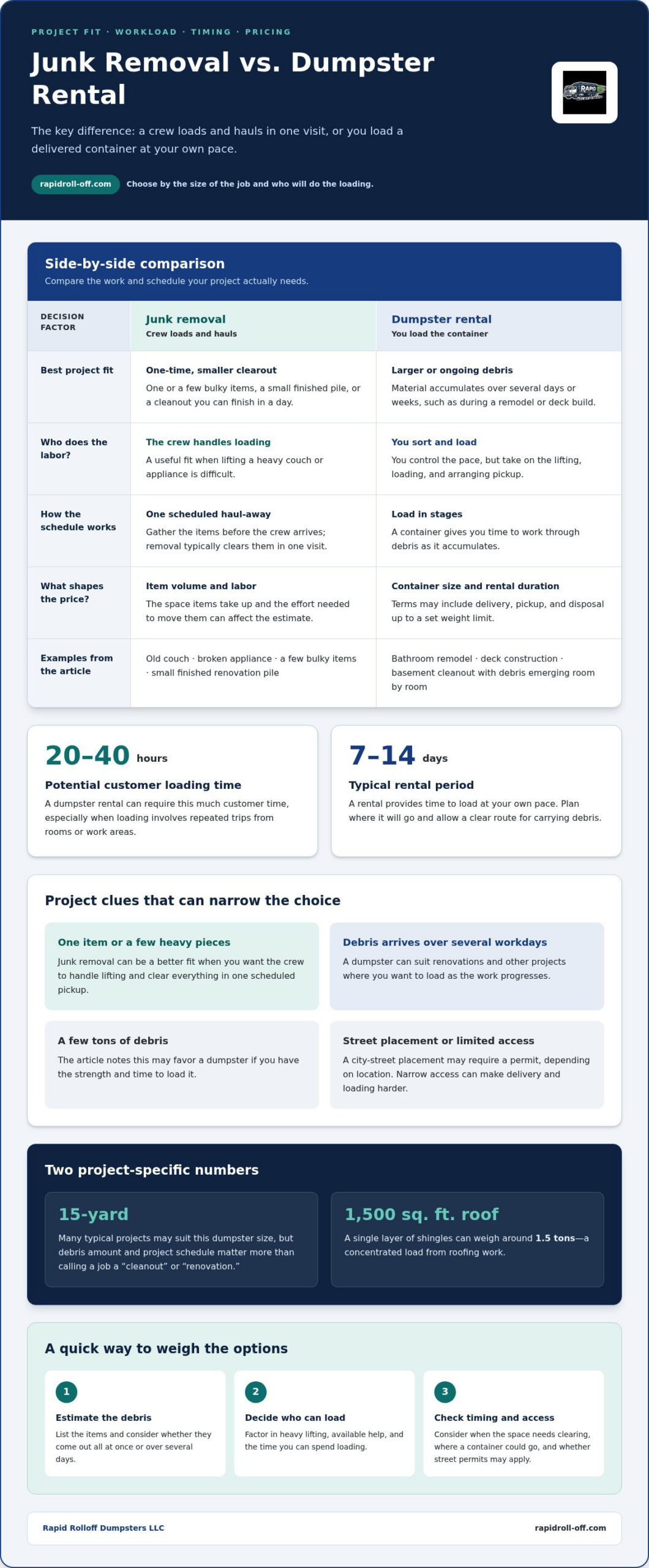
A bathroom remodel or deck construction can generate debris across multiple workdays, making a dumpster practical for ongoing disposal. Roofing work also produces a concentrated load: a single layer of shingles from a 1,500-square-foot roof can weigh around 1.5 tons. Junk removal may suit a small, finished renovation pile, but repeated pickups can be less convenient as debris accumulates.
Project size helps narrow the choice. A few tons of debris may favor a dumpster if you have the strength and time to load it. A single appliance or couch points toward removal, particularly when heavy lifting is difficult. Many typical projects suit a 15-yard dumpster, but the debris amount and project schedule matter more than the label “cleanout” or “renovation.”
| Option | Project size | Workload | Good fit |
|---|---|---|---|
| Junk removal | One or a few bulky items | Crew handles loading | Old couch or broken appliance |
| Dumpster rental | Accumulating or larger debris | You load the container | Bathroom remodel or deck build |
When deciding between junk removal and dumpster rental, first list the items and estimate whether they’ll come out all at once or over several days. Then consider whether you can manage the lifting and loading. A few broken appliances require a different plan from debris that accumulates throughout a renovation.
Choose junk removal when clearing everything in one visit matters more than working at your own pace. Choose a dumpster when a project runs for several days and you can manage the loading. For a small basement cleanout, either may work. Consider the pile’s size, whether you have help with heavy lifting, and whether debris will keep accumulating.
Junk removal labor and turnaround time
A dumpster rental requires you to handle loading; junk removal typically includes a crew that gathers items and hauls them away. A dumpster placed on a city street may require a permit, depending on the location. Junk removal usually means a crew loads your items into a truck and removes them in one visit.
Clearing a garage with boxes, a broken appliance, and an old couch takes different effort depending on the service. With junk removal, the crew handles the lifting and hauling. With a rental, you sort and load each item yourself, then arrange pickup when the container is ready. That control can help when the cleanout happens in stages.
Plan for the time involved in do-it-yourself loading. A dumpster rental can require 20-40 hours of customer time, especially for projects involving repeated trips from rooms or work areas. A renovation with debris accumulating across several days may fit that schedule. For a single scheduled pickup, full-service removal reduces the hands-on work and clears the pile in one visit.
Scheduling affects convenience, too. Junk removal typically uses one scheduled pickup, so gather the items before the crew arrives. Some services may offer pickup on the same day a customer calls. A dumpster rental gives you time to load at your own pace, with rental periods typically lasting 7-14 days.
Placement is another part of the plan. A driveway or other private space can keep a container off the street, while a narrow entrance or limited access can make delivery and loading harder. If street placement is needed, local permit requirements may apply. Plan where the container will go before delivery, and leave enough room to carry debris safely from the work area.
Choose based on who will do the physical work and how the project unfolds. If lifting a heavy sofa or appliance is the main obstacle, junk removal handles that labor. If you can load debris and want flexible timing, a rental works better for a project that continues over several days. For a staged cleanup, identify what you’ll discard and plan a clear route to the container before starting.
If a rental suits your workload, explore roll-off dumpster rental as an option for managing debris on your schedule.
Dumpster rental and junk removal pricing
Compare the pricing model with the work your project requires. Dumpster rental pricing typically depends on container size and rental duration, while junk removal pricing often reflects item volume and labor. Renting suits projects where debris builds over time; hiring a crew ties the estimate more closely to the items they’ll load and haul.
Junk removal companies may price loads by how much truck space they take up. A couch, broken appliance, and several boxes use less space than an entire garage cleanout. The amount of furniture and other material, along with the effort needed to move it, can affect the estimate. Describe each item and where it’s located when requesting pricing.
A dumpster quote typically considers container size and how long you’ll need it. Rental terms may include delivery, pickup, and disposal up to a set weight limit. For a renovation, estimate how debris will accumulate before choosing a container and rental period. A larger container may suit a bigger project, but choosing the right size helps avoid paying for unused capacity or exceeding the weight allowance.
Before requesting an estimate, make a simple inventory. List bulky items, estimate the debris volume, and note whether the material will be ready all at once or produced gradually. A few pieces of furniture from one room differ from steady construction debris during a renovation. These details help match the pricing model to the job rather than comparing two services as if they include the same work.
The price depends on the project and is provided after a quote request. Factors can include project size, debris volume, container size, rental duration, loading labor, and weight allowance. For a project that’s difficult to estimate remotely, an on-site assessment can help clarify the volume and access involved. Keep the work area and item list ready so the estimate reflects what needs disposal.
- Choose junk removal for a smaller, defined load, such as a couch and an appliance, when you want loading included.
- Choose a dumpster when renovation debris will build up over multiple days and you can load it yourself.
- Compare the same scope by listing what must be removed, who handles loading, and when the project will finish.
A useful comparison weighs the total workload alongside the estimate. If the project creates a steady stream of debris, a rental can keep disposal organized as work progresses. If you have a finished pile of furniture or household items, a crew-based pickup may better match the task. Use your item list, estimated volume, and project schedule to compare the options.
Dumpster rental versus full-service junk removal
Both options remove debris, but divide the work differently. A dumpster gives you control over loading and timing; junk removal puts the lifting and hauling on a crew.
For disposal, facilities can sort materials such as metal, wood, cardboard, and certain plastics for recycling. Recycling outcomes can vary depending on the materials and disposal facility.
Dumpster rental
A dumpster rental places a roll-off container on your property, where you load debris before pickup. Rental periods typically last 7-14 days, giving you time to handle a cleanup in stages rather than prepare one finished pile. This option suits renovation debris that accumulates gradually, but you do the loading and should keep the container within its weight limit.
Before delivery, decide where the container will sit and how you’ll move debris into it. Rental periods can vary depending on the arrangement. If materials include metal, wood, cardboard, or certain plastics, disposal facilities may sort them for recycling. Keep recyclable materials separate when practical.
Full-service junk removal
Full-service junk removal sends a crew to gather items at your property and haul them away, typically in one visit. It can suit a finished cleanup with one or two bulky items, especially when lifting a couch or appliance is difficult. The tradeoff is less control over the pace: items need to be ready for the scheduled pickup.
For either option, compare licensing and insurance credentials as part of your service decision. A crew handling items on your property and a truck collecting a loaded container involve different tasks, so consider what work the service performs. Junk removal companies typically load, haul, and dispose of items; the rental customer handles loading.
Choose based on how debris accumulates and who should handle it. A bathroom renovation that produces waste over time can benefit from a container and a planned cleanup routine. A completed estate cleanout with heavy items may be easier to clear through one crew visit. For recycling, separate metal, wood, cardboard, and suitable plastics when possible, and follow the disposal process for the service you choose.
Full-service removal can reduce your physical workload, while a dumpster rental lets you decide when to load. Compare the project timeline, your ability to move items, and the amount of debris before choosing. If you want one pickup, gather the items together; if work continues over several days, plan where debris will go between work sessions.
Comparing dumpster rental and junk removal
The clearest comparison starts with the work itself: who handles loading, how debris accumulates, and where materials go. A single pile of household items and several days of renovation debris create different disposal needs, even if both jobs involve unwanted material.
With junk removal, a crew typically loads items into a truck and hauls them away in one visit. That can simplify a completed cleanup, such as removing furniture and boxes after a move. The tradeoff is that items need to be ready for pickup, and you have less control over when each part of the pile leaves.
A dumpster rental gives you a container to fill yourself. That can make sense when debris appears gradually, since you can add material as work progresses instead of storing it for one removal visit. You handle loading, but can organize disposal around the project’s pace. A clear access route between the work area and container makes each trip easier.
Volume is another useful comparison point. Estimate how much material the project will produce, then distinguish bulky items from dense debris. A few large pieces may take up substantial space without weighing as much as a compact load of construction material. For a rental, both container capacity and weight allowance matter; for junk removal, truck space and loading labor affect the service.
Disposal and recycling also depend on the material. Facilities may sort metal, wood, cardboard, and certain plastics for recycling. Separating those items from mixed debris can make the waste stream clearer. Don’t assume every item will be recycled; disposal depends on the material and how the receiving facility handles it.
- Choose a crew pickup when items are gathered, the load is defined, and you want someone else to handle lifting and hauling.
- Choose a container when debris will accumulate as a project proceeds and you can load it yourself.
- Sort materials by type where practical, especially metal, wood, cardboard, and certain plastics.
A completed room cleanout may be ready for one removal visit. A renovation that creates debris in stages may be easier to manage with a container on-site. If the project includes both a small finished pile and ongoing debris, separate the two and compare the work involved for each. That prevents choosing by service label alone.
Use this decision sequence: estimate volume, identify who will load, then map the disposal timeline. If the material is ready now and heavy lifting is the main concern, crew-based removal fits the task. If debris builds over time and you can handle loading, a rental offers more control. For project debris that suits a container, choose a roll-off dumpster rental to keep disposal organized as work continues.
Rapid Rolloff Dumpsters: 20 Yard Hook Lift Dumpster Rental
Rapid Rolloff Dumpsters LLC offers dumpster rentals for projects that produce debris over time and need a container on-site. Options include a 20 Yard Hook Lift Dumpster Rental, 30 Yard Dumpster Rental, and 40 Yard Hook Lift Dumpster Rental. Choose based on the project’s debris volume and available space.
A rental can suit a renovation, construction job, or larger cleanout when you want to load debris as work progresses. Estimate the project’s volume and consider where the container will fit before choosing. You handle loading, then arrange pickup when the container is ready.
For a project that fits a dumpster rental, contact Rapid Rolloff Dumpsters LLC to discuss your needs.
Set Up Your Next Cleanup with Confidence
Before work begins, decide where debris will go and how you’ll keep the project area usable. A clear staging spot can prevent unwanted items from piling up in hallways, driveways, or active work zones. Share your project details when arranging a rental so the container fits the cleanup ahead.
The decision between junk removal and dumpster rental comes down to the disposal setup that supports your next step. If a dumpster fits your project, Rapid Rolloff Dumpsters LLC offers 20 Yard Hook Lift Dumpster Rental, 30 Yard Dumpster Rental, and 40 Yard Hook Lift Dumpster Rental.
Contact Rapid Rolloff Dumpsters LLC today to discuss a dumpster rental for your project. A thoughtful plan makes it easier to start work, manage debris, and keep your cleanup moving forward.
Frequently Asked Questions
What Is Dumpster Rental?
A dumpster rental delivers a roll-off container to a property for temporary debris collection. You load it, then arrange pickup when your cleanup or project is finished. For example, a homeowner renovating a kitchen can put discarded materials in the container as work progresses instead of stacking them in the yard. A rental is useful when disposal needs to happen over several work sessions.
When Does It Make Sense?
A dumpster rental makes sense when debris builds gradually or a project needs several days of cleanup. A roof replacement, commercial worksite cleanup, or home renovation can produce waste in stages. In Port Arthur, Beaumont, Nederland, Port Neches, Groves, Orange, and Bridge City, consider the project timeline, available loading help, and a practical spot for the container before choosing this option.
What is the difference between junk removal and dumpster rental?
Junk removal sends a crew to load and haul items, while dumpster rental gives you a container to fill yourself. In the junk removal vs dumpster rental comparison, the key difference is who handles the loading and how much control you want over timing. Items gathered after a move may suit a pickup. A gradual garage renovation may work better with a container available as cleanup proceeds.
How much does junk removal cost compared with dumpster rental in the U.S.?
Junk removal pricing usually reflects item volume and labor, while dumpster rental pricing typically depends on container size and rental duration. The price depends on the project and is provided after a quote request; the estimate reflects the load, project timeline, container size, and work involved. For junk removal vs dumpster rental, compare the same debris and cleanup needs for each estimate rather than comparing different project scopes.
What factors affect junk removal and dumpster rental prices?
Junk removal estimates are shaped by how much truck space items use and the labor needed to move them. Dumpster estimates depend on container size, rental duration, and whether debris stays within the included weight limit. Bulky furniture may take up more space than expected, while dense renovation debris can add weight quickly. Share a clear item list and project timeline when seeking an estimate.
What items can junk removal companies take, and what can go in a rental dumpster?
Both services handle household and project debris, but accepted materials depend on the service and disposal facility. Facilities may sort common recyclable materials such as metal, wood, cardboard, and certain plastics. Before loading, separate materials when practical and keep a list of unusual items, such as leftover renovation supplies. This helps clarify how the disposal process applies to your cleanup.
Are there extra fees for heavy items, overfilled dumpsters, or extended rentals?
Extra charges can apply when a dumpster exceeds its weight limit or stays beyond the included rental period. Junk removal estimates may also reflect difficult access, such as carrying items up stairs. A heavy appliance can affect the labor and load estimate, while dense construction debris can push a dumpster over its weight allowance before it looks full. Estimate both volume and weight when planning disposal.
How do junk removal and dumpster rental compare for convenience, labor, and cleanup?
Junk removal reduces hands-on work because a crew loads and hauls items, while a dumpster lets you handle cleanup on your own schedule. For a one-time move-out, having a crew remove a prepared pile may simplify the final sweep. For a renovation, a container can keep debris in one place between work sessions. Choose based on your time, ability to load, and preferred cleanup routine.