A major renovation or construction project is often won or lost before the first hammer swings, based entirely on how you handle the debris. With over 600 million tons of construction and demolition waste generated annually in the U.S., managing your site’s output is a massive logistical task. You’ve likely spent weeks planning your project, but a single delay in your large waste container rental can stall your entire crew. It’s common to feel anxious about heavy steel wheels cracking your driveway or hidden overage fees eating your margins. We believe that high-volume disposal should be the most straightforward part of your timeline, not a source of stress.
This guide teaches you how to select the perfect container size, prepare your site for a safe delivery, and navigate weight limits to keep your project on schedule. We’ll explore why specialized hook-lift systems are the superior choice for protecting your property and how to choose between 20, 30, and 40-yard bins. You’ll gain the confidence to manage your disposal needs without the fear of surprise costs or logistical headaches. Follow these steps to ensure your next big project stays clean, safe, and well within your budget.
Key Takeaways
- Identify when your project requires a large waste container rental of 20 yards or more to keep your workspace organized and safe.
- Understand why hydraulic hook-lift delivery systems are the premium choice for residential projects where driveway protection is a top priority.
- Learn to match 20, 30, and 40-yard bin capacities to your specific debris types to avoid unexpected overage fees and weight limit issues.
- Follow a step-by-step preparation plan to ensure your property is ready for a heavy container delivery without the risk of property damage.
- Discover why local expertise in the Groves area helps you navigate city-specific permit requirements and ensures more reliable delivery times.
What is a Large Waste Container Rental and When Do You Need One?
A large waste container rental generally refers to any heavy-duty bin with a capacity of 20 cubic yards or greater. These units are the backbone of major construction and cleanup projects across Southeast Texas. While smaller bins might suffice for a minor bathroom refresh, high-volume containers are essential for maintaining a safe and productive job site. By centralizing all debris in one secure location, you eliminate dangerous piles of scrap and keep your workspace clear for your crew.
For local Groves homeowners, these rentals are often a lifeline during storm recovery or when clearing out an entire estate. Beyond the logistical ease, there is a clear environmental benefit to using larger bins. Consolidating your waste into a single container reduces the number of truck trips required for transport. This efficiency lowers fuel consumption and minimizes the carbon footprint of your disposal process, making it a responsible choice for the community.
Understanding Large-Scale Waste Capacity
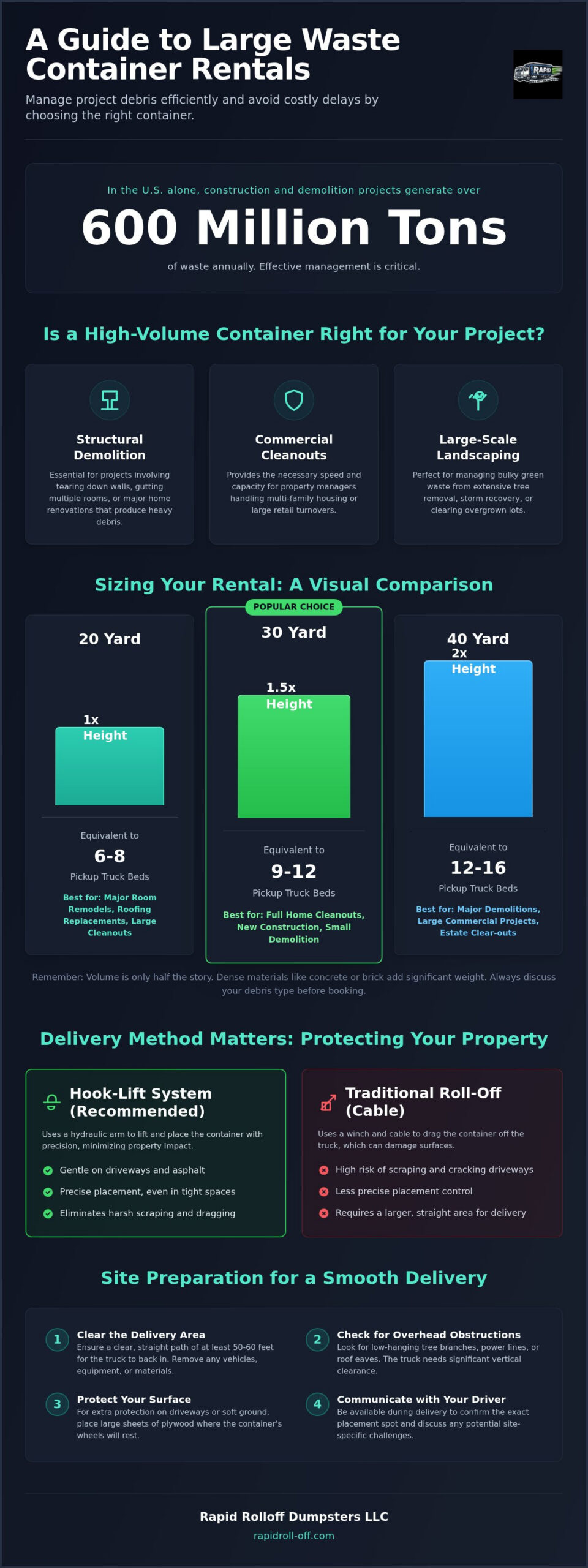
Visualizing volume is often the hardest part of the planning process. A cubic yard is a block of space measuring three feet on all sides. To make this easier to picture, a standard Roll-off (dumpster) with a 20-yard capacity holds roughly the same amount of debris as six to eight full pickup truck beds. Moving up to a 40-yard unit essentially doubles that space, providing room for massive amounts of bulky material.
However, volume is only half the story. You must also account for weight capacity limits. Dense materials like concrete, brick, or bundles of roofing shingles are much heavier than standard household furniture. It’s vital to match the bin size to the specific density of your waste. Overfilling a bin or exceeding its weight rating can lead to logistical delays and extra fees, so we always recommend discussing your specific materials before booking.
Signs Your Project Requires a High-Volume Container
If you’re unsure whether your project justifies a large bin, look for these common indicators:
- Structural Demolition: Major home renovations that involve tearing down walls or gutting multiple rooms produce massive amounts of heavy debris.
- Commercial Turnovers: Property managers handling multi-family housing or retail cleanouts need the speed and capacity that only a 30 or 40-yard bin provides.
- Large-Scale Landscaping: Extensive tree removal or clearing overgrown lots in Southeast Texas generates bulky green waste that quickly overwhelms smaller containers.
If your project falls into these categories, a high-capacity rental isn’t just a convenience; it’s a necessity for staying on schedule.
The Mechanics of Large Rentals: Hook Lift vs. Roll-Off Systems
When you book a large waste container rental, the bin itself is only part of the equation. How that bin reaches your property is just as important. Most national waste chains rely exclusively on traditional roll-off systems, which utilize a winch and cable to slide the container off the truck bed. In contrast, specialized providers often use hydraulic hook-lift systems. These systems use a heavy-duty arm to physically lift and place the bin. This mechanical difference dictates where the container can go and how much stress it puts on your driveway.
Precision placement is essential for avoiding overhead utility lines and protecting expensive landscaping. A hook-lift truck can place a 40-yard container with incredible accuracy, often in spaces where a cable-driven truck would struggle. This level of control is critical for the Sustainable Management of Construction and Demolition Materials, as it ensures debris remains contained exactly where the crew needs it. Specialized trucks are also designed to distribute the weight of these massive units across multiple axles. This prevents the concentrated pressure that often leads to cracked residential streets or sunken culverts.
How Hook Lift Containers Protect Your Property
The primary advantage of a hook-lift system is the “drop and swap” precision. Because the truck doesn’t need to “roll” the bin off using momentum, it eliminates the harsh scraping factor common with cable systems. This makes hook-lifts significantly gentler on concrete driveways and asphalt. If you have a tight driveway in Groves or need a bin tucked into a narrow alleyway, the increased maneuverability of a hook-lift truck is a game changer. It allows for placement in spots that would be inaccessible to larger, less agile rigs.
The Roll-Off Advantage for Major Construction
Standard roll-off systems remain a staple for open-access construction sites where space isn’t a primary concern. A 30-yard roll-off bin has a large footprint, and the delivery truck typically needs about 60 feet of straight-line space to safely unload. These containers are built for stability on unpaved surfaces, making them ideal for new builds or commercial projects with dirt or gravel pads. If your site has plenty of room to maneuver, these bins offer a rugged and reliable solution for high-volume disposal.
Whether you need the precision of a hook-lift or the ruggedness of a standard roll-off, choosing the right delivery method saves time and prevents property damage. You can view our available container types to find the best fit for your specific site requirements.
Sizing Your Rental: 20, 30, and 40 Yard Container Comparison
Selecting the right dimensions for your large waste container rental is the most critical step in your planning process. You must balance the physical footprint of the bin with the specific type of debris you’re discarding. A standard 20-yard container typically measures about 22 feet long and 8 feet wide. While this fits comfortably on most residential driveways in Beaumont or Port Arthur, a 40-yard unit requires significantly more vertical and horizontal clearance. Always measure your drop-off zone before the truck arrives to ensure a smooth delivery.
Consider the density of your materials carefully. Bulky items like furniture or insulation take up space quickly but weigh very little. In contrast, heavy materials like concrete, brick, or bundles of roofing shingles can reach weight limits long before the bin is physically full. If you’re unsure about your total volume, we recommend “sizing up.” It’s almost always more cost-effective to pay for a larger bin upfront than to pay for a second delivery and haul-away fee for a smaller container.
The Versatile 20-Yard Hook Lift for Home Cleanouts
The 20-yard bin is the “goldilocks” size for many residential projects. It’s ideal for basement cleanouts, small deck removals, or kitchen remodels. This unit holds approximately 110 to 120 standard kitchen trash bags. We specifically recommend the hook-lift version for Beaumont residential projects. The hydraulic arm allows for a more controlled placement than a standard cable-pull truck. This precision protects your concrete or asphalt from the “scrape” factor often associated with larger, heavier rigs.
The 40-Yard Powerhouse for Demolition and Commercial Use
When you’re gutting a whole home or replacing a commercial roof, the 40-yard container is your best ally. These bins are designed for massive volume and high-capacity junk removal. Because of their height, loading can be a challenge. We suggest loading your heaviest items through the rear door first to keep the weight evenly distributed. Be mindful of weight considerations for these massive units. Wet debris or heavy construction materials can quickly trigger overweight penalties. Keep an eye on the fill line and consult with your local provider if you plan to dispose of exceptionally dense materials like dirt or gravel.
Logistics and Planning: Preparing for a Large Container Delivery
A successful large waste container rental depends on the work you do before the truck arrives. In Southeast Texas, our unique landscape presents specific challenges that generic national checklists often overlook. You need to account for narrow neighborhood streets in Nederland and the low-hanging live oak branches common in Groves. Proper planning ensures the driver can place the bin exactly where you need it without risking property damage or city ordinance violations.
Communication is the key to a seamless delivery. When you book your container, provide clear instructions regarding gate codes, preferred orientation of the loading doors, and any underground utilities like septic lines or sprinkler heads. If you won’t be on-site during the drop-off, mark the desired placement area with orange cones or chalk. This clarity allows the driver to work efficiently and ensures the container doesn’t block essential access points for your crew or subcontractors.
Site Selection and Clearance Requirements
Before delivery, measure the vertical clearance of your drop-off zone. Large trucks carrying 30 or 40-yard containers need significant overhead space to operate their hydraulic systems. Look out for power lines, internet cables, and thick tree branches that might obstruct the lift. If you’re placing the container on a residential driveway in Beaumont, ensure the surface is level. A slanted surface makes it difficult to open the rear loading doors and can cause the heavy container to shift during loading.
Protecting your property is a top priority. While hook-lift systems are gentler on surfaces, a fully loaded 40-yard bin carries immense weight. We recommend placing large sheets of plywood or specialized “street pads” on your driveway. This simple step distributes the weight more evenly and prevents the metal feet from sinking into soft asphalt during our humid Texas summers.
Weight Limits and Prohibited Materials
Understanding what goes into your container is just as important as where it sits. Many homeowners are surprised by how quickly certain materials add weight. For instance, wet carpet or saturated drywall from a storm cleanup can weigh twice as much as dry material. If you’re disposing of heavy debris like dirt or concrete, you must communicate this early. These materials often require specific weight-limited bins to ensure the truck can legally and safely transport the load on local highways.
Adhere strictly to local Groves and Port Arthur regulations regarding prohibited materials. You cannot dispose of hazardous waste, tires, batteries, or liquid chemicals in a standard rental. Finally, always respect the “fill line” marked on the side of the container. Overfilling a large container creates a safety hazard for the driver and other motorists during transport. If debris is poking out over the top, the driver may be unable to pick up the load until it’s leveled off.
To ensure your site is perfectly prepared for your next project, you can schedule your delivery today and speak with our local experts about your specific placement needs.
Partnering with a Local Professional Dumpster Service in Groves
Choosing a large waste container rental through a national broker often leads to communication gaps and frustrating delivery delays. These brokers act as middlemen who don’t own trucks or containers. They simply outsource your project to the lowest bidder. When you work with a local provider in Groves, you eliminate that middleman. You speak directly to the people dispatching the equipment. This direct connection is vital for high-volume projects where timing is everything and site conditions change quickly.
Local knowledge is a major logistical advantage in Southeast Texas. Our drivers understand the specific traffic patterns of Highway 69 and the narrow residential streets of Nederland and Port Neches. We know which neighborhoods have stricter permit enforcement and where low-hanging oak branches are a constant risk. This community-specific insight translates to more reliable delivery windows and fewer logistical headaches for your project manager. Supporting a local business also keeps your project dollars within the Golden Triangle economy, strengthening the community where you live and work.
The Rapid Rolloff Difference in Southeast Texas
Rapid Rolloff Dumpsters LLC is deeply committed to serving Groves, Port Arthur, and the surrounding areas. We’ve built our reputation on a specialized fleet that prioritizes property safety. Our 20 Yard Hook Lift Dumpster Rental and 40 Yard Hook Lift Dumpster Rental options are specifically tailored for local residential and commercial needs. These systems allow us to service tight spaces with precision that traditional roll-off trucks can’t match.
We also offer a 30 Yard Dumpster Rental for those mid-sized projects that require significant volume without the massive footprint of a 40-yard unit. Because we’re based right here in Groves, we maintain a level of flexibility that national chains lack. We can often accommodate same-day or next-day service requests in Beaumont, ensuring your crew never has to stop working because of a full bin. Reliable scheduling is our promise to every client.
How to Schedule Your Large Container Rental
Scheduling your rental is a straightforward process designed to save you time. Before you call, have your project type, estimated debris volume, and preferred delivery dates ready. Our team will help you determine the most cost-effective bin size for your material type, whether it’s heavy construction debris or bulky household junk. We’ll walk you through the simple booking process and ensure you have all the information needed for a successful delivery.
Whether you’re a homeowner tackling a major estate clearing or a commercial contractor managing a large-scale demolition, we provide the expert waste management advice you need. Don’t let debris slow down your timeline. Get a quote for your large waste container today!
Streamline Your High-Volume Disposal Today
Managing a major construction or demolition project is a complex task, but your waste disposal shouldn’t be. You now understand how to differentiate between delivery systems and how to select the perfect capacity for your specific debris. Choosing a large waste container rental is a strategic decision that impacts both site safety and your bottom line. By preparing your property for delivery and respecting weight limits, you eliminate the risk of damage and unexpected fees.
Rapid Rolloff Dumpsters LLC brings local Groves, TX expertise to every job site. We utilize specialized hook-lift equipment designed to protect your driveway and provide precision placement in tight spaces. With 20, 30, and 40-yard options available, we have the right volume for any residential or commercial project. Our team is ready to help you keep your site clean and your timeline on track. Rent your large waste container from Rapid Rolloff today and experience the ease of a professional disposal partner. We look forward to helping you make your next project a success.
Frequently Asked Questions
How much space do I need for a 40-yard waste container rental?
A 40-yard container requires a clear, level space approximately 22 feet long and 8 feet wide. You also need to account for the delivery truck’s footprint. Drivers usually need about 60 feet of straight-line clearance to safely drop or pick up the unit. In tight Southeast Texas neighborhoods, ensure there are no low branches or power lines within 20 feet of the ground to avoid obstructing the hydraulic lift system.
Can I put concrete or bricks in a large 30-yard dumpster?
You can put concrete or bricks in a 30-yard dumpster, but you must be careful not to exceed the weight limit. These materials are exceptionally dense compared to standard household junk. If you fill a large container to the top with masonry, the truck won’t be able to lift it safely. We recommend only filling the bin halfway for heavy materials or discussing a specialized heavy-load container to ensure a successful pickup.
Do I need a permit to place a large waste container on the street in Beaumont?
Yes, you typically need a “Right of Way” permit if you place a container on a public street or sidewalk in Beaumont. Regulations vary between Groves, Port Arthur, and Beaumont, so always check with your local municipal office first. If you place the unit entirely on your private driveway or job site, a permit isn’t usually required. Our local team can help you understand these requirements based on your specific project location.
What is the weight limit for a 20-yard hook lift dumpster?
The weight limit for a 20-yard hook lift dumpster depends on the specific debris type and local hauling regulations. Generally, these units are designed to handle several tons of material, making them perfect for roofing shingles or kitchen gut jobs. Exceeding these limits can result in overage fees or safety issues during transport. Always provide an accurate description of your waste during booking so we can help you stay within legal weight thresholds.
How long can I keep my large waste container rental?
Standard rental periods for a large waste container rental typically range from 7 to 14 days. This duration provides ample time for most residential cleanouts or construction phases. If your project runs longer than expected, you can usually extend your rental for a small daily fee. Contact us at least 24 hours before your scheduled pickup to arrange an extension and keep your Southeast Texas job site organized without interruption.
What happens if I overfill my 40-yard container?
Overfilling a 40-yard container creates a significant safety hazard for our drivers and other motorists on the road. If debris is piled above the “fill line” or top rail, the driver cannot legally transport the load. You’ll need to remove the excess material before we can attempt a second pickup. This delay can lead to additional trip fees, so keep all waste level with the top of the bin.
Is a hook-lift dumpster better for my driveway than a roll-off?
Yes, a hook-lift system is generally better for residential driveways because it offers superior control. Unlike traditional roll-offs that slide off a rail with significant friction, hook-lifts use a hydraulic arm to lift and place the bin precisely. This “drop and swap” method minimizes the scraping and pressure that often lead to cracked concrete. It’s the premium choice for homeowners in Groves who want to protect their property during a major project.
How do I avoid overage fees with a large container rental?
To avoid overage fees, match your container size to the weight and volume of your debris. Don’t use a 40-yard bin for exceptionally heavy materials like dirt or gravel, as you’ll hit weight limits long before the bin is full. Keep your container covered during heavy Southeast Texas rain, as wet materials like carpet and drywall gain significant weight. Finally, strictly follow the prohibited items list to avoid disposal penalties at the landfill.