A local dumpster rental can help keep project costs manageable by consolidating debris, limiting extra hauling trips, and making disposal easier to plan. Common roll-off sizes include 10, 20, 30, and 40 cubic yards, so matching container capacity to the work can help avoid unnecessary space or repeated loads. These are practical benefits of local dumpster rental in Southeast Texas, especially when transport distance and local disposal requirements matter.
When a project creates more debris than you can manage with regular trash service, a local dumpster rental can make cleanup easier to plan. This article explains the benefits of local dumpster rental in Southeast Texas, including keeping debris contained, reducing repeated hauling, and coordinating delivery and pickup. You’ll also learn how to choose a container size, plan its placement, and account for disposal requirements.
Key Takeaways
- Organize residential or commercial debris in one on-site container to make cleanup and removal easier to manage.
- Choose capacity based on the project’s debris volume and type to reduce the chance of needing extra hauling.
- Plan disposal around the project site to limit unnecessary trips and the transport emissions they create.
- Consider placement and material restrictions early, since public-street placement may require a permit and some materials are prohibited.
Why Should You Use a Dumpster Rental Company?
The benefits of local dumpster rental in Southeast Texas include organized debris removal and fewer separate hauling tasks. A container gives residential and commercial projects one place to put waste as work progresses.
Improving Project Efficiency
With a dumpster on site, workers can place construction debris directly into the container instead of moving it from a temporary pile later. That reduces double-handling and helps keep cleanup aligned with the work schedule. During a room renovation, for example, crews can discard flooring and packaging as each area is cleared. Local delivery and pickup also make it easier to coordinate debris removal with a nearby project site.
Choosing a Reliable Local Company
A reliable company explains its service area, delivery and pickup arrangements, and which materials it accepts. Ask about those details when describing a residential cleanout or commercial construction project. Local familiarity with traffic patterns and municipal guidelines can help coordinate placement and collection. Common roll-off sizes include 10, 20, 30, and 40 cubic yards, allowing the project’s debris volume and type to guide selection.
Service Areas and Delivery Timing
Service areas vary by company. Southeast Texas cities in the local service region include Groves, Port Arthur, Beaumont, Nederland, Port Neches, Orange, and Bridge City; coverage depends on the rental company. County coverage also varies, so city names alone don’t establish service in every nearby community.
Delivery and pickup timing depends on the company’s schedule, route, and project needs; local providers may offer flexible scheduling and quick delivery. Heavy rain, flooding, or hurricane cleanup can affect site access and debris volume. For example, saturated ground may change where a container can be placed, while storm cleanup can increase the amount of material awaiting removal.
Local providers can offer personalized service tailored to customers’ individual needs, which can be useful when project conditions or waste streams differ. Local dumpster rental companies serve more than 70% of small- to mid-sized construction and renovation projects nationwide. Providers can advise customers on selecting containers for waste such as concrete, agricultural waste, scrap metal, masonry, and roofing debris, helping match the container choice to the material being removed.
Keeping waste contained and arranging pickup can reduce loose debris and help limit slip, trip, and fall hazards on a jobsite. A more orderly work area lets crews focus on the project and makes it easier to keep walkways clear.
Choosing a dumpster size to manage costs
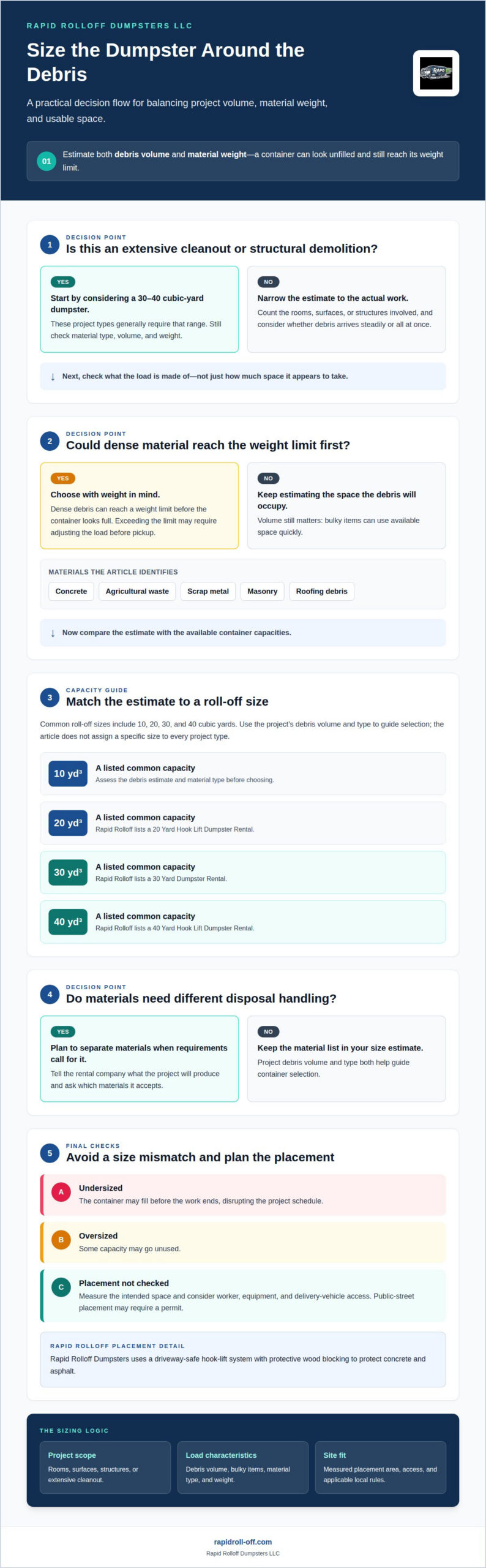
Choose a container by estimating the debris volume and identifying the materials your project will produce. A kitchen remodel with cabinets, flooring, and packaging creates a different load from a roofing job or a whole-building cleanout. Bulky items can fill available space quickly, while dense materials can reach a weight limit before the container looks full. Consider both volume and weight, then match the container to the work instead of judging by the project name alone.
Project scale offers a useful starting point. A homeowner clearing one room may produce less debris than a commercial renovation removing fixtures across several work areas. Extensive cleanouts and structural demolitions generally require a 30- to 40-cubic-yard dumpster. For a smaller scope, estimate how many rooms, surfaces, or structures are involved, and whether materials will be added steadily or all at once. A clear estimate helps avoid a container that fills too early or leaves substantial capacity unused.
Placement matters, too. Measure the intended space and consider access for workers, equipment, and the delivery vehicle. Putting the container near the debris source can reduce carrying distance, but it still needs a suitable location that follows applicable local rules. Rapid Rolloff Dumpsters uses a driveway-safe hook-lift system with protective wood blocking to protect concrete and asphalt. Separate materials when disposal requirements call for different handling, and consider how dense debris will affect the container’s weight limit.
The wrong size can disrupt a project schedule: an undersized container may fill before work ends, while an oversized container can leave capacity unused. Exceeding a weight limit can make removal more difficult and may require the load to be adjusted before pickup. Rapid Rolloff Dumpsters LLC offers 20 Yard Hook Lift Dumpster Rental, 30 Yard Dumpster Rental, and 40 Yard Hook Lift Dumpster Rental for different project scopes. Consider material type and volume as you explore dumpster rental options with Rapid Rolloff Dumpsters LLC.
Reducing transport distances and emissions
An on-site container can reduce repeated disposal trips during a Southeast Texas renovation or construction project. Instead of loading a pickup after each work period, crews place debris in one container for pickup. Fewer separate trips mean less repeated driving between the site and disposal facilities. The distance saved depends on the site and disposal route, so this benefit is greatest when cleanup would otherwise require several trips.
For a residential remodel, place the container near the main work area while keeping access clear for workers and equipment. On a construction site, a central collection point lets crews discard scraps as tasks finish instead of carrying them to a temporary pile. This can reduce double-handling and keep debris out of walkways. A clear route between the work area and container also makes cleanup easier to manage throughout the project.
Containing debris can also help reduce trip hazards. OSHA requires walking-working surfaces to be kept clean, orderly, and sanitary. OSHA construction fall-prevention guidance identifies falls as one of the leading causes of construction fatalities. Loose boards, packaging, or broken materials scattered across a work area can obstruct movement. Regularly moving debris into the container supports a more orderly site, though it doesn’t replace other safety practices.
Less hauling can ease the workload for homeowners and project crews. After a garage cleanout, for example, debris can go straight into the container instead of being loaded and unloaded from a vehicle repeatedly. That leaves more time for renovation, sorting reusable materials, or final cleanup. Keeping waste removal organized also makes it easier to see what remains and keep work areas accessible, with fewer separate trips to plan and less loose debris to manage.
Complying with local disposal rules
Before loading, identify which materials are allowed in the container and which need separate handling. Keep materials that may require special handling separate from ordinary renovation debris. If your project produces mixed waste, separating restricted materials before loading helps keep the container organized and prevents them from mixing with eligible construction debris.
Placement matters, too. A municipality may require a permit when a roll-off dumpster sits on a public street or sidewalk. A container on private property avoids that particular public-space issue, but its location still needs to allow for delivery, pickup, and safe access. For a driveway placement, leave room for the delivery vehicle and avoid blocking the route workers use to move materials. Rapid Rolloff Dumpsters LLC’s hook-lift system uses protective wood blocking to protect concrete and asphalt.
Local conditions can affect delivery and pickup. Traffic patterns, municipal placement rules, and site access may all shape where a container can go and how service is coordinated. Describe the project site and planned placement clearly when arranging your rental so delivery and pickup can be planned around relevant local requirements.
Disposal choices also connect to environmental responsibility. The U.S. Environmental Protection Agency’s waste management hierarchy prioritizes source reduction and reuse over recycling, energy recovery, treatment, and disposal. Set aside usable materials for reuse before putting remaining debris in the container. Eligible wood, metal, and concrete may be sorted for recycling or recovery through nearby processing centers. Keep restricted materials separate, and organize other debris by type where practical.
Paint, batteries, asbestos, and chemicals are prohibited; no specific extra-fee materials are identified here. Clear material separation supports responsible waste removal and helps prevent restricted items from entering the disposal stream. For help planning an organized container placement and pickup, arrange responsible dumpster disposal.
Local dumpster rental providers in Southeast Texas are well-versed in regional waste disposal regulations and can help customers choose a dumpster that fully complies with them while highlighting the key benefits of local dumpster rental Southeast Texas.
Rapid Rolloff Dumpsters LLC
Rapid Rolloff Dumpsters LLC helps residential and commercial projects manage debris with dumpster rental, delivery, and pickup. Turn to the company when a renovation, cleanout, or construction project needs a designated place for waste. Choose capacity based on the work scope and expected materials to keep removal organized. Options include 20 Yard Hook Lift Dumpster Rental, 30 Yard Dumpster Rental, and 40 Yard Hook Lift Dumpster Rental. Consider project size, container placement, and disposal needs as you plan. Contact Rapid Rolloff Dumpsters LLC to discuss your dumpster rental needs.
Plan Your Next Project With Confidence
Plan waste removal before work begins, rather than leaving it until the final cleanup. Decide where debris will go, how workers will keep the site accessible, and which materials need separate handling. These steps make the benefits of local dumpster rental in Southeast Texas practical, whether you’re planning a home cleanout or managing construction work.
Rapid Rolloff Dumpsters offers a 20 Yard Hook Lift Dumpster Rental, a 40 Yard Hook Lift Dumpster Rental, and a 30 Yard Dumpster Rental. Consider the scope of your work and the debris it will generate when choosing a rental. A clear plan gives your project a more organized starting point.
Contact Rapid Rolloff Dumpsters to discuss your dumpster rental needs and take the next step toward a cleaner, more manageable project.
Frequently Asked Questions
What are the benefits of renting a dumpster from a local Southeast Texas company?
A local rental can connect your project with delivery and pickup in communities such as Groves, Port Arthur, Beaumont, Nederland, Port Neches, Orange, and Bridge City. That regional focus is useful when a homeowner is clearing a property or a business is managing construction debris. Rapid Rolloff Dumpsters serves residential and commercial waste needs, helping keep container service aligned with projects in its Southeast Texas communities.
What dumpster sizes are available for home renovation, roofing, and cleanouts in Southeast Texas?
Available options include 20 Yard Hook Lift Dumpster Rental, 30 Yard Dumpster Rental, and 40 Yard Hook Lift Dumpster Rental. Home renovation, roofing, and cleanout projects can produce very different amounts and types of debris, so consider the work scope before choosing. The 30-yard rental is suited to larger-scale debris removal and construction projects. Available sizes give homeowners and commercial customers options for different project needs.
What permits are required to place a dumpster on a street or public property in Southeast Texas?
A municipality may require a permit when a roll-off dumpster is placed on a public street or sidewalk. Requirements depend on the local jurisdiction and the proposed placement, so there is no single permit rule for every Southeast Texas community. A container on private property differs from one occupying public space. Include the exact placement in your project plan before arranging delivery.