A rental deadline doesn’t have to stall a property cleanup. A property management dumpster service in Orange, TX can extend a temporary roll-off rental, with additional time billed by the day or week. Match the extension to the cleanup schedule so the container stays on-site for the remaining work.
That flexibility matters when turnovers, repairs, or property cleanouts take longer than expected. The right setup also depends on whether the delivery area has enough clearance, which dumpster size fits the debris, and what materials the rental accepts. This guide explains how rental extensions work, what to consider before delivery, and how size and waste type shape a roll-off rental for an Orange property. You’ll have a clearer way to plan the service window and container for your project.
Key Takeaways
- Plan extra rental time around the work that remains, and understand how an extension can affect the service period.
- Prepare the delivery area by checking access, overhead clearance, and room for the truck to place and retrieve the container.
- Match dumpster size to the project’s debris type and volume to help avoid a poor fit or unnecessary space.
- Sort materials before loading so restricted items stay out and accepted debris is easier to manage.
- Compare the 20-yard and 40-yard hook lift rentals with the 30-yard dumpster rental to choose a container suited to your Orange property project.
Temporary roll-off dumpster rentals in Orange, TX
A property management dumpster service in Orange, TX can support a planned cleanup, renovation, or unit turnover. Before scheduling delivery, consider the rental period, container access, and expected debris volume together.
Rental Options and Service Frequency
Temporary roll-off rentals suit projects with a clear start and finish, such as clearing a vacant unit or removing renovation debris. Recurring apartment waste collection is a different need, involving scheduled container swaps or pickups. First identify whether the property needs a one-time cleanup or repeated service across multiple buildings.
For a multi-unit project, map which buildings will generate debris and when crews need a container. A property management dumpster service in Orange, TX should match the work schedule, not simply the property’s total size. One rental may suit a unit turnover, while phased renovations may need container service coordinated with each work area.
Rental Periods and Extensions
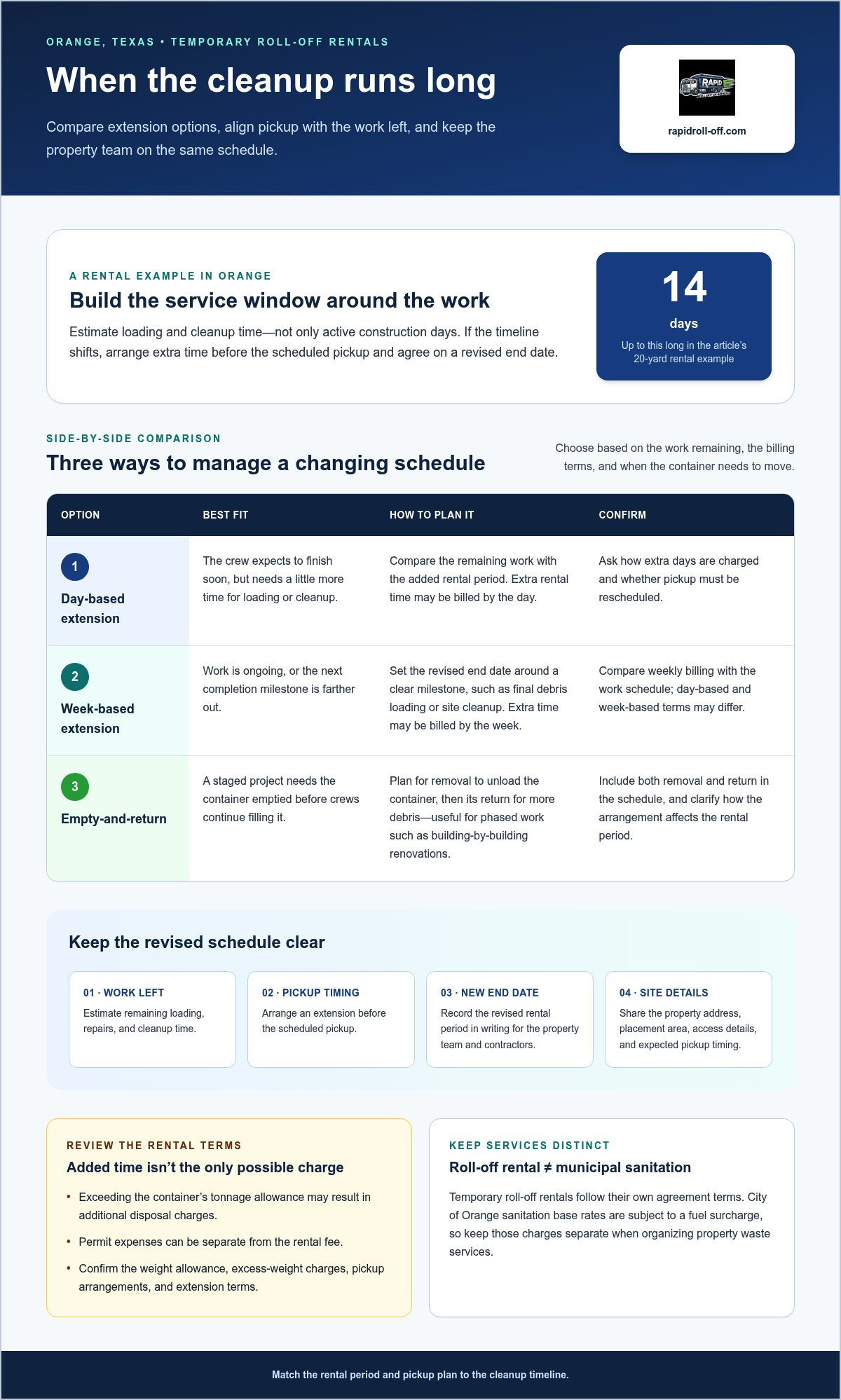
A 20-yard rental example in Orange includes up to 14 days. If work continues beyond the planned period, extra rental time may be charged by the day or week. Estimate loading and cleanup time as well as active construction days when choosing the rental window.
If the project timeline changes, arrange an extension before the scheduled pickup. Record the revised end date and billing period so the property team and contractors share the same schedule. Empty-and-return service can support staged work: the container is removed for unloading, then returned for more debris. Include both the removal and return in the project timeline.
Rental Charges and Contract Terms
Rental charges may cover the agreed period, with additional charges for extra time. Check how extra days or weeks are billed against the expected work schedule. Exceeding the container’s tonnage allowance may also result in additional disposal charges. Permit expenses can be separate from the rental fee.
Before booking, review the rental period, extension terms, pickup arrangements, weight allowance, and excess-weight charges. Clarify how an empty-and-return arrangement affects the rental period. For a property management dumpster service in Orange, TX, these details help match the agreement to the cleanup plan and reduce surprises if the project runs late.
Keep temporary rental costs separate from municipal sanitation charges. City of Orange sanitation base rates are subject to a fuel surcharge, while roll-off rentals follow their own agreement terms. Treating them as separate arrangements helps property managers organize waste services for the property.
Include this charge when reviewing the rental total and confirming the payment method, alongside the other contract terms and any applicable service charges.
Can I extend my dumpster rental period?
Yes. Arrange extra rental time before the scheduled pickup and agree on a revised end date. In Orange, an extension can keep a property cleanup moving when repairs, turnovers, or debris loading take longer than planned. The extension terms determine the added charges and whether pickup needs to be rescheduled.
For example, a property manager coordinating a roof repair may need the container beyond the crew’s original completion date. Share the updated work schedule, container location, and expected pickup timing. Put the revised rental period in writing so the maintenance team and property office follow the same plan.
Extra-day and weekly billing may be structured differently. Before extending, compare the added rental period with the work remaining. If crews expect to finish soon, a short extension may fit better than a longer one. If work is ongoing, align the end date with the next milestone, such as final debris loading or site cleanup.
Empty-and-return service can also work well for staged projects. The container is removed for unloading, then returned so crews can continue filling it. This can suit apartment renovations completed building by building. Account for removal and return when coordinating contractors, resident access, and the next phase of work.
Delivery in Orange County and Southeast Texas depends on the property address and service route. “Near Orange” can mean different distances and access conditions, so provide the street address, property entrance, and preferred placement area when arranging service. A property near Orange’s city center may have different access needs from a site outside town.
For properties near the edge of a service area, plan around the exact address rather than a general city name. Provide a site contact, delivery instructions, and gate or driveway details. This helps coordinate truck access to the placement point and pickup with the property’s schedule. Don’t assume nearby communities have identical delivery arrangements.
Before planning repeated service for an apartment complex, map out the work pattern. Note which buildings will generate debris, when crews need an empty container, and whether one location can serve each phase. A one-time rental may suit a single unit turnover; repeated renovations may need a planned sequence of removals and returns.
To compare the extension and placement details for your project, review these temporary roll-off rental options alongside the property’s timeline and delivery address.
Delivery space and clearance requirements
Choose the placement area before scheduling a roll-off delivery in Orange. A clear, level surface helps position the container where residents and workers can reach it. For an apartment renovation, a designated service area may work better than a busy entrance or parking lane.
Walk the delivery route from the street to the placement point. Check for low branches, overhead wires, gates, parked vehicles, tight turns, and soft ground. A driveway that looks clear from the office may still be blocked by a maintenance truck or residents’ cars on delivery day.
Use this site walk to identify practical access details:
- Clear vehicles and loose equipment from the intended route.
- Check overhead obstructions along the approach and container placement area.
- Choose a firm, level surface that crews can access for drop-off and pickup.
- Keep pedestrian paths and building entrances in mind at multi-unit properties.
When booking, share the Orange property address and placement instructions. Describe the entrance, gate access, and any turn that could affect the delivery truck. If the preferred location is behind an apartment building, explain how the driver can reach it from the street.
Assign a site contact who can explain placement instructions before delivery. That person can help resolve a blocked driveway or identify the planned location. If crews are working at several buildings, clearly mark the right area so the container supports debris removal without obstructing active work.
While loading, keep debris inside the container and leave the pickup route clear. Don’t place materials where they block truck access. For example, move pallets and contractor equipment away from the route before requesting removal. A clear approach helps the pickup crew reach the container.
When scheduling pickup, give the property contact time to check the container area. Confirm that the truck’s path is clear and nearby vehicles have moved. For an empty-and-return rental, coordinate removal and return with the work sequence, such as finishing one building before crews move to another.
For a smooth booking, provide the address, intended placement, debris type, and project schedule together. Mention access issues, such as a locked gate or a loading area used by residents. These details help coordinate delivery, loading, and pickup with the property’s daily activity.
Dumpster sizes for construction, demolition, renovations, and cleanouts
Orange property managers can choose among 20-yard, 30-yard, and 40-yard roll-off options. Match the container to the debris volume, project phase, and placement area.
Available Sizes and Capacities
The available choices include 20-yard and 40-yard hook lift containers, plus a standard 30-yard dumpster. The yard size describes container capacity by volume, not the weight of the loaded debris. A practical size estimate should account for both how much material the project creates and how heavy that material is.
For a unit cleanout, list bulky items and bagged debris before choosing a container. A renovation may produce heavier materials, such as flooring or cabinetry, alongside lighter packaging. Compare the expected debris volume with container capacity, then consider whether dense materials could reach the weight allowance before the container looks full.
Use the project scope, not the property’s total size, to guide your choice. A single apartment turnover differs from a multi-building renovation. If work is staged, estimate debris for each phase and decide whether one larger container or multiple planned loads better fit the site and schedule.
Container Types and Project Uses
Hook lift options come in 20-yard and 40-yard sizes; the standard dumpster option is 30 yards. These choices give property managers different capacities for commercial cleanouts, renovations, construction, and demolition debris. Choose based on the amount and type of material, rather than selecting solely by the building’s square footage.
A 20-yard container can be considered for a contained project, such as clearing debris from several rooms. A 30-yard option may suit a broader renovation, while a 40-yard container provides more volume for larger cleanouts or construction phases. These are planning examples, not fixed rules. Debris weight, loading pace, and placement space still matter.
Before deciding, divide the project into areas or phases and record what each will remove. Then estimate the combined volume. For example, a property-wide renovation may produce debris from flooring removal, fixture replacement, and packaging. Separating the stages helps show whether debris will accumulate steadily or arrive all at once.
Consider how crews will load the container, too. Long materials and bulky items take up space differently from smaller debris. Factor the loading method and site access into your capacity estimate. The container must fit both the debris and the delivery area, with enough room for workers to use it safely.
Accepted and prohibited dumpster materials
Accepted materials depend on the rental terms and disposal route. For an Orange property, sort debris before loading and use the rental’s accepted-material list to separate items that need a different disposal method.
To prevent overflow, contamination, and unauthorized dumping, post clear loading instructions, assign a site contact, and inspect the container during each work shift. Keep a record of unusual items and address them before crews mix them with general renovation debris.
For a residential unit turnover, stage materials in separate areas before loading. Keep ordinary cleanup debris apart from items with different disposal requirements. This makes it easier to identify what belongs in the roll-off and what needs another disposal route.
Use a short material plan for each project:
- List the debris expected from the work, such as flooring, fixtures, packaging, or yard waste.
- Separate materials that have distinct handling or disposal requirements.
- Post the accepted-material list beside the loading area.
- Assign a staff member to review questionable items before they enter the container.
This review matters during demolition and renovations. A crew may remove several types of material in one shift, while a cleanout can combine household contents with repair debris. Sorting items as they come out is easier than searching a full container for something that should have been separated.
Prevent overflow by respecting the container’s fill limit and keeping materials within its sides. Don’t let residents or contractors leave debris beside the dumpster. At an apartment complex, designate one loading point and make the instructions visible to maintenance staff, vendors, and residents.
Reduce illegal dumping by controlling access to the loading area. Schedule delivery and removal around active work, post instructions for approved use, and document the container’s condition during routine site checks. If unknown material appears, keep it separate rather than covering it with more debris.
Keep material acceptance terms with the project paperwork. Before loading begins, compare expected materials with the rental agreement and give every contractor the same instructions. For example, a flooring crew and a unit-cleanout team should follow one shared list, rather than make separate assumptions about what the container accepts.
Rapid Rolloff Dumpsters LLC offers 20-yard and 40-yard hook lift rentals and 30-yard dumpster rentals for property projects. Review the dumpster rental options as you plan container size, debris separation, and loading instructions for an Orange property.
Rapid Rolloff Dumpsters LLC: 20 Yard Hook Lift Dumpster Rental
Rapid Rolloff Dumpsters LLC offers a 20 Yard Hook Lift Dumpster Rental for property projects that need temporary debris capacity. Choose a container by considering the material, estimated volume, loading space, and project schedule. For larger cleanouts or construction work, compare the 40 Yard Hook Lift Dumpster Rental and 30 Yard Dumpster Rental with the expected debris and available placement area.
Before scheduling, organize the property address, preferred placement, debris types, and expected rental period. These details help you choose a container and coordinate delivery with the work plan.
For a roll-off rental for your Orange property, contact Rapid Rolloff Dumpsters LLC.
Set Up Your Next Property Project
Use the next maintenance planning meeting to turn a waste-removal need into a clear project plan. Identify the work area, the materials crews expect to remove, and the person coordinating access. This connects the rental decision to the property’s schedule instead of leaving disposal to the last minute.
For a property management dumpster service Orange TX, Rapid Rolloff Dumpsters LLC offers a 20 Yard Hook Lift Dumpster Rental, a 40 Yard Hook Lift Dumpster Rental, and a 30 Yard Dumpster Rental. Consider which option fits the upcoming project, then share the property address and work details when you reach out.
Contact Rapid Rolloff Dumpsters LLC to discuss the rental for your property project. A practical plan can help your team start organized and keep the cleanup moving.
Frequently Asked Questions
Why rent a dumpster?
Rent a dumpster to collect project debris in one designated place instead of leaving it scattered around the property. For example, a manager overseeing a unit turnover can coordinate contractor waste and removed furnishings in one container. This can make work areas easier to organize and help keep debris out of shared spaces. In Orange, rental containers serve residential cleanouts and commercial projects.
How much does dumpster service cost in Orange, TX, including delivery, pickup, and disposal fees?
The total depends on container size, rental duration, delivery and pickup arrangements, and disposal factors such as excess weight. These are market figures, not Rapid Rolloff Dumpsters’ prices. Request a rental quote for project-specific pricing and cost details.
What are the rental periods and service schedules for commercial dumpsters in Orange, TX?
Commercial schedules depend on whether the property needs a temporary container or repeated collection for ongoing work. For a renovation at an Orange apartment complex, coordinate service with contractor phases and expected debris accumulation. For a multi-unit cleanout, schedule around the buildings being cleared so the container remains accessible. A 20-yard rental example provides up to 14 days; extensions and pickup timing follow the rental terms.
What rules apply to placing dumpsters on private property or public streets in Orange, TX?
For placement on private property, choose a location with a clear truck route and enough space for delivery and pickup. Street placement may involve permit requirements and costs separate from the rental fee. Before placing a container near a curb, distinguish the property boundary from the public street and consider access to nearby entrances. In Orange, account for resident traffic and service-vehicle routes when planning placement.
What materials are prohibited or require special disposal in Orange County, TX dumpsters?
Accepted materials depend on the rental terms and disposal route, so don’t assume every item from a cleanout belongs in the same container. Separate materials with different handling needs from ordinary renovation or household debris. For example, keep unidentified items apart while sorting a unit. Give contractors and residents the same accepted-material instructions, and keep questionable materials out of the roll-off until their disposal route is clear.
How can a property manager arrange dumpster delivery, pickup, or an additional collection in Orange, TX?
When arranging service, provide the property address, project type, preferred placement area, debris description, and schedule. For a property in Bridge City or Orange, these details help coordinate delivery and pickup with site access. Rapid Rolloff Dumpsters provides container delivery and pickup with its dumpster rentals. To request an additional collection, share the request and the container’s current status through the company’s contact process.
Which dumpster rental and waste management companies serve Orange, TX?
Rapid Rolloff Dumpsters LLC.