A dumpster can go on grass when the ground is firm, level, dry, and accessible to the delivery truck, but the lawn may still be damaged by the weight. Protecting your lawn from a dumpster starts with choosing a stable spot and keeping the truck off soft ground where possible.
It’s understandable to worry about torn grass, deep ruts, or damage hidden beneath the lawn. A passenger vehicle crossing the yard doesn’t mean the soil can support a roll-off truck and dumpster.
Learn when grass may work, how dumpster size and debris weight affect the ground, and what to consider before choosing a loading spot. We’ll also cover practical ways to reduce surface damage and prepare the area for delivery and pickup.
Key Takeaways
- Grass can be a placement option only when the ground is firm, level, dry, and accessible, but it may still be damaged by the dumpster and truck.
- Dense debris can put more stress on the lawn than lighter waste, so consider the contents as well as the dumpster’s size.
- Plywood or boards can help distribute pressure, but they won’t make soft or unstable ground safe for a heavy container.
- Choose a spot that balances lawn protection with convenient loading, and clear the delivery route of obstacles and hazards.
Can a Dumpster Rental Be Placed on Grass?
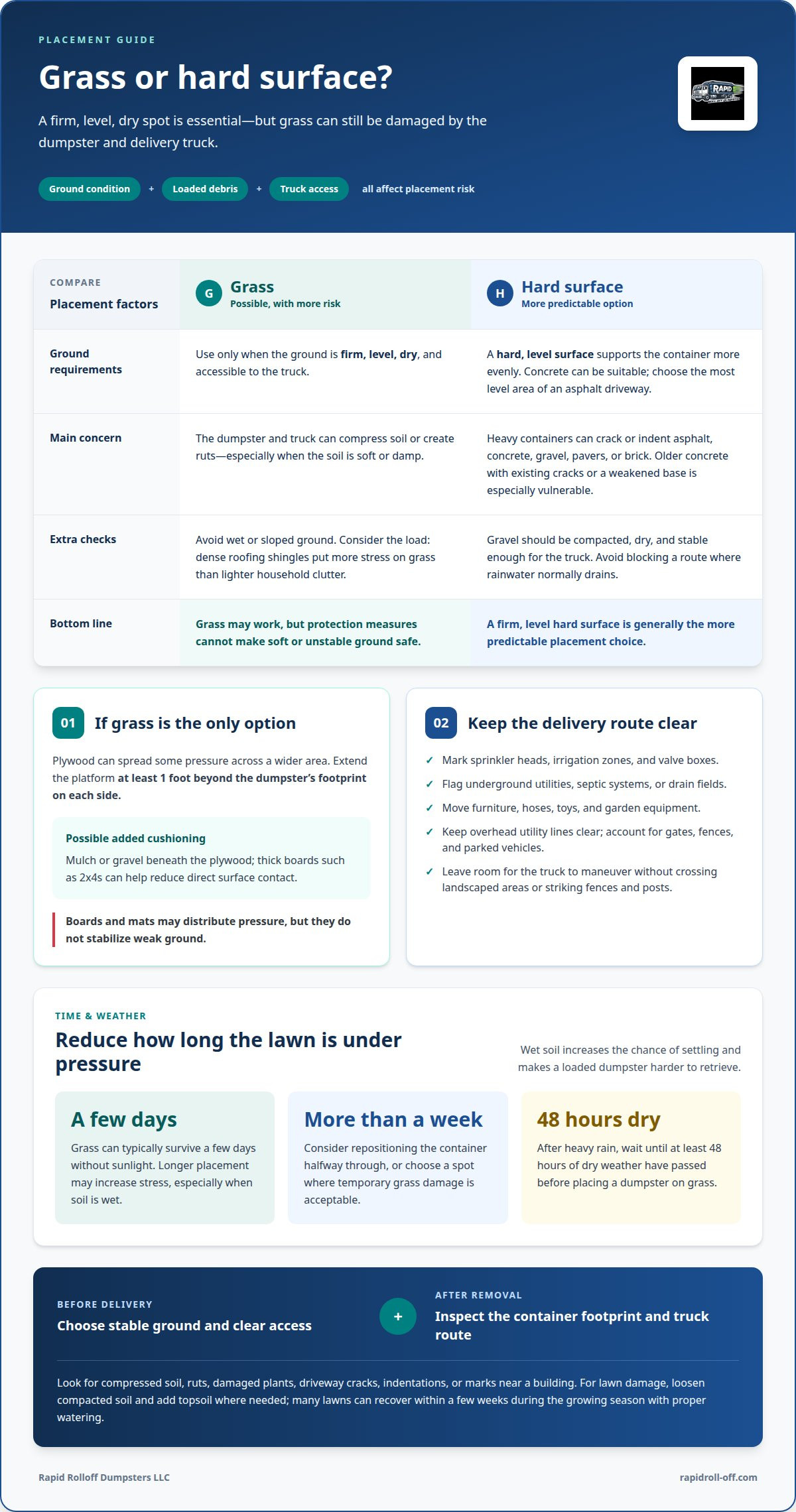
Grass can work if the ground is firm, level, dry, and accessible to the delivery truck, but it can still be damaged. A driveway or another hard, level surface is generally a more predictable placement choice.
Selecting a Firm, Level Surface
A hard, level surface supports a container more evenly than soft lawn soil. Concrete can be a suitable option; on asphalt, choose the driveway’s most level area. A gravel spot should be compacted, dry, and stable enough for the truck. Avoid placing the dumpster where rainwater normally drains, since blocking that path can lead to pooling or erosion.
Before delivery, consider the surface condition and the route the truck must take. A lawn that feels firm underfoot may still rut beneath a heavy vehicle, and a sloped surface can make placement less stable.
Limiting Time on Grass
Keeping a dumpster on grass for less time limits how long the lawn is covered and compressed. Grass can typically survive a few days without sunlight, but longer placement may increase stress, especially when the soil is wet.
For a rental lasting more than a week, consider repositioning the container halfway through or choosing a spot where temporary grass damage is acceptable. Rain can soften the ground after delivery, increasing the chance that a loaded dumpster settles and becomes difficult to retrieve. Avoid placing it on grass until at least 48 hours of dry weather have passed after heavy rain.
Safe Placement and Street Permissions
A safe placement area gives the truck clear access while avoiding property hazards. Mark sprinkler heads, identify irrigation zones and valve boxes, and flag underground utilities, septic systems, or drain fields. Remove furniture, hoses, toys, and garden equipment from the delivery area, and keep overhead utility lines clear.
Street placement may require a permit or municipal approval, depending on the town and location. Check local requirements before scheduling delivery. Also account for gates, fences, parked vehicles, and the truck’s pickup route so access stays clear.
Protection Mat and Board Costs
The cost to rent or buy ground-protection mats or driveway boards depends on the material, the area they cover, and how long they’re needed. Delivery and rental terms can also affect the total.
Compare those factors with the surface at the proposed placement spot. For example, boards intended to protect a driveway may need different coverage than mats used across a lawn. Protection can help distribute pressure, but it doesn’t make soft or unstable ground suitable for a dumpster.
Lawn damage from dumpster and truck weight
Dumpster weight and delivery-truck traffic can compress soil, create ruts, or damage hard surfaces. The type of debris, ground condition, and placement all affect the risk.
Weight Effects on Lawns and Driveways
That load, combined with delivery-truck tires, can compress lawn soil and leave ruts, especially when the ground is soft. Dense roofing shingles also put more stress on a lawn than lighter household clutter.
Driveways face different pressures. Heavy containers can crack or indent asphalt, concrete, gravel, pavers, or brick, particularly when overloaded or poorly supported. Older concrete with existing cracks or a weakened base is especially vulnerable. Leave clearance for the truck to maneuver without crossing landscaped areas or striking fences and posts.
Careless placement near a building can also stress walls or foundations. A container placed too close or supported unevenly can contribute to cracks or other structural problems.
Checking Damage After Removal
Once the dumpster is removed, inspect its footprint and the delivery truck’s route. Look for compressed soil, ruts, damaged plants, driveway cracks, indentations, or marks near a building. Note whether damage follows the container’s resting points or the truck’s path; this helps identify which surface needs attention.
For a lawn, loosen compacted soil and add topsoil where needed. Many lawns can recover from damage within a few weeks during the growing season with proper watering. Address driveway cracks or indentations based on the surface and severity. Promptly removing the container when the project ends reduces ongoing stress.
Before a future delivery, use the inspection to choose a firmer route and more stable placement area. A dumpster placement plan can help account for surface conditions, building clearance, and truck access.
Does Dumpster Size Matter on Grass?
Yes. Both container size and debris density affect pressure on soil. Protecting your lawn from a dumpster starts with considering the loaded weight, ground condition, and support beneath the container.
Plywood Weight Distribution
Plywood can spread some pressure across a wider area instead of concentrating it beneath the container’s contact points. If grass is the only placement option, lay plywood on the ground and extend the platform at least one foot beyond the dumpster’s footprint on each side.
Mulch or gravel beneath the plywood can add cushioning, while thick boards such as 2x4s can help reduce direct surface contact. These materials may help distribute weight, but they don’t make soft or unstable ground suitable.
Ruts and Soil Compression
Weight can compact soil and leave ruts, especially when the ground is damp or the delivery truck crosses the lawn. A smaller container filled with dense roofing shingles may put more stress on grass than a larger one holding light household clutter.
Rain also adds weight to materials such as wood, cardboard, and drywall. Consider both the debris and the delivery and pickup route when choosing the container’s position.
Support Limits for Mats and Plywood
There isn’t one universal weight limit for lawn mats or plywood beneath a loaded dumpster. Support depends on the material, its arrangement, the soil underneath, and how the load is distributed. Protecting your lawn from a dumpster with boards can reduce direct pressure, but it can’t stabilize weak ground.
Capacity guidelines are 3-4 tons for a 20-yard roll-off, 4-5 tons for a 30-yard, and 5-6 tons for a 40-yard. These figures describe dumpster capacity, not a mat or plywood rating. Keep the debris within the container’s weight limits to reduce property damage and transportation risks.
Preparing the lawn and choosing a loading location
Choose a spot that protects landscaping while keeping debris access practical for a residential project. A driveway, another firm surface, or permitted street placement may work better than a lawn.
Choosing a Loading Location
Choose a loading location by balancing surface support, truck access, and the route you’ll use to carry debris. A spot beside the work area may reduce carrying, but narrow gates or nearby fences can complicate delivery and pickup.
Before delivery, clear trash, snow, ice, standing water, and loose gravel from the route. Keep branches, vehicles, and materials out of the truck’s path, and maintain about 23 feet of vertical clearance. Avoid blocking natural drainage, which can cause pooling or erosion.
Hard-Surface Placement Options
A driveway or another hard, level surface usually provides firmer support and easier truck access than grass. Concrete is a strong option, while asphalt needs extra care because heat can soften it and make impressions more likely.
During hot summer weather, choose shade on asphalt when possible; temperatures above 90°F can soften the surface. Place wood boards beneath the dumpster’s corners to help distribute weight. Three-quarter-inch plywood can protect a driveway, but clear loose gravel first because compression can push it through protective barriers.
Driveway and Street Alternatives
A driveway is often a practical alternative to placing a dumpster on a lawn, provided its surface and access route can support delivery. Match the dumpster size and expected debris weight to the property, and keep the loading area clear of landscaping obstacles.
Street placement is another option, but local permission may be required depending on the town and exact location. A shaded driveway can help protect asphalt, while a street location may avoid lawn traffic. For a residential project, plan your dumpster rental around the available surface, truck access, and debris route.
Rapid Rolloff Dumpsters
Rapid Rolloff Dumpsters LLC offers dumpster rentals to support residential and commercial cleanup projects. Available options include the 20 Yard Hook Lift Dumpster Rental, 30 Yard Dumpster Rental, and 40 Yard Hook Lift Dumpster Rental. Choosing a suitable container helps you plan the loading area and account for the debris your project will generate.
Consider the placement surface, truck access, and route from your work area when planning a rental. Contact Rapid Rolloff Dumpsters LLC to discuss a dumpster rental for your project.
Plan Your Cleanup With Confidence
Before work begins, plan how people, tools, and debris will move through your property. A clear route can keep access to doors, paths, and work areas practical while cleanup is underway. Treat the container location as one part of the overall project plan.
Consider where debris will collect and how you’ll keep the route usable as work progresses. A practical layout can help prevent last-minute changes around your home or job site.
For help arranging a rental around your cleanup, contact Rapid Rolloff Dumpsters LLC. A clear starting plan can make the work ahead feel more manageable.
Frequently Asked Questions
How long can a dumpster stay on grass before it causes damage?
There’s no fixed time before lawn damage begins; ground firmness, moisture, load, and truck access all matter. Grass can typically survive a few days without sunlight, but soil compression or rutting can occur while the container is in place. For a rental lasting more than a week, consider moving it halfway through. After heavy rain, allow at least 48 hours of dry weather before placing it on the ground.
Is a Driveway Better Than Grass?
A driveway is often a more predictable choice because it usually provides firmer support and easier delivery access. It can still be damaged, especially if asphalt is hot or concrete already has cracks. Choose a level area and keep the route clear. For a residential cleanup in Groves, plan how the delivery truck will reach the driveway without crossing lawn or landscaping.
Will a dumpster kill the grass underneath?
Grass can survive a few days without sunlight, so the covered area won’t necessarily die immediately. However, weight can compress soil and create ruts, while wet ground increases the risk of settling. After removal, inspect for flattened grass, bare patches, or compacted soil. Loosen compacted areas and add topsoil where needed; with proper watering, many lawns can recover during the growing season.
How can I protect grass and landscaping when placing a dumpster on a lawn?
Start by choosing firm, level ground and keeping the truck’s route away from fragile landscaping. Mark sprinkler heads, irrigation zones, and valve boxes so delivery avoids them. Move hoses, garden tools, furniture, toys, and decorations out of the area. Avoid septic tanks, drain fields, and other underground systems. These steps reduce avoidable damage, though they can’t make soft ground stable under a heavy load.
What materials are best for protecting a lawn under a dumpster, such as plywood, boards, or ground protection mats?
Plywood or thick boards can help distribute pressure and reduce direct contact between the container and the surface. A platform extending beyond the dumpster’s footprint spreads support over a wider area. Mulch or gravel beneath plywood can add cushioning. Mats are another ground-protection option, but no material makes soft or unstable ground suitable for a loaded dumpster.
How thick should plywood be to protect grass from a dumpster?
Three-quarter-inch plywood is recommended for driveway protection, but that doesn’t establish a universal thickness for a lawn beneath every loaded dumpster. Support depends on the plywood’s condition, how it’s arranged, the container’s weight, and the soil underneath. Use a broad, stable platform rather than relying on a single sheet, and don’t treat plywood as a substitute for firm ground.