The right dumpster size can shape both your cleanup and your project budget. For residential construction waste disposal in Nederland, the rental cost depends on the project and is provided after a quote request; container size, debris type, and rental duration help determine the quote. Eligible construction and demolition projects that require a building permit must also submit a debris recycling deposit, with the amount based on project type and square footage.
Capacity is only one part of choosing a dumpster. Concrete and other dense debris can reach a weight limit before filling the container, while bulky renovation waste can use up space quickly. Estimate the materials you expect and match the container to both the volume and weight of the load.
This guide explains how construction debris is handled in Nederland, what can affect rental costs, and how to choose a dumpster size for your project and materials. You’ll also learn which disposal rules may apply and when a rental container can make cleanup more straightforward.
Key Takeaways
- Find out whether your permitted construction or demolition project falls under Nederland’s debris recycling deposit program before planning disposal.
- Choose dumpster capacity based on the project’s scope and the type, weight, and volume of debris, not just the room being cleared.
- Sort construction materials carefully, since some debris may need separate recycling or special handling instead of going into a mixed load.
- Plan loading to stay within the dumpster’s capacity and keep bulky or heavy materials from creating an overloaded load.
Construction and demolition waste disposal
Plan residential construction waste disposal in Nederland around the project’s permit status, debris types, and recovery options. Eligible permitted projects follow a local debris recycling process.
Professional Waste Disposal
Professional construction and demolition waste disposal separates debris for collection, recycling, or disposal. Before hauling begins, applicants are instructed to submit a completed Sustainable Deconstruction Plan to the Planning and Building Department. Applicants with questions are advised to schedule a Public Works meeting for an on-site visit before materials are hauled.
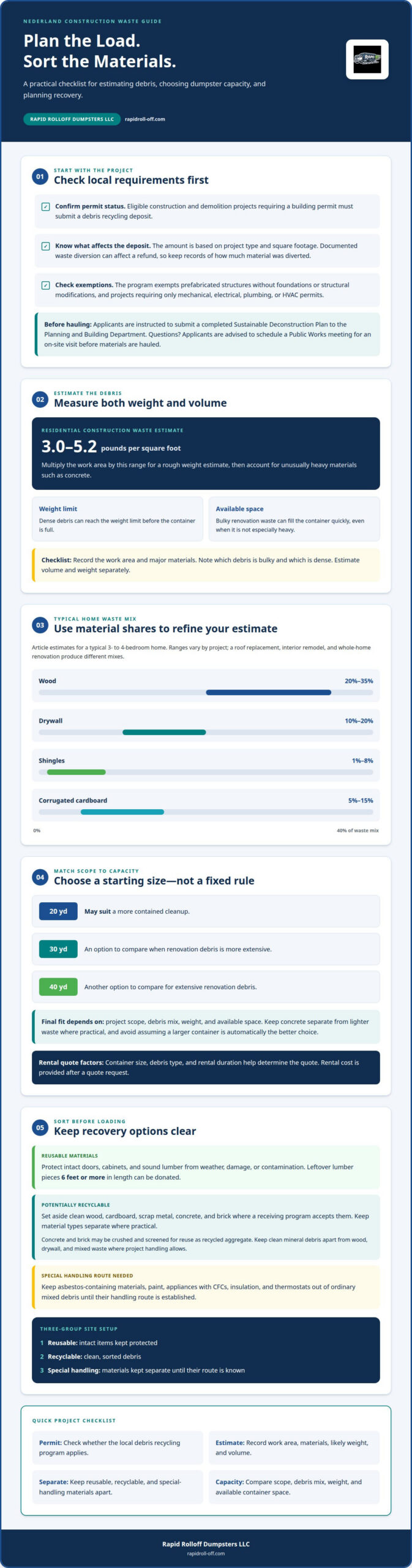
For roofing, concrete, appliances, paint, or other materials, local requirements depend on whether the work is an eligible construction and demolition project requiring a building permit. Those projects must submit a debris recycling deposit. The program exempts prefabricated structures without foundations or structural modifications, as well as projects requiring only mechanical, electrical, plumbing, or HVAC permits.
Some construction and demolition projects may fall within local debris-management programs. Deposit requirements and any refund may depend on project details and documented waste diversion. Keep records showing how much material was diverted, since that rate affects the refund. These steps apply to residential construction waste disposal in Nederland when a project falls under the local program.
Concrete and brick need a distinct sorting approach. Where project handling allows, keep clean mineral debris separate from wood, drywall, and mixed waste. Processing may involve crushing and screening the material for reuse as recycled aggregate. Sorting these materials at the site helps keep recoverable debris apart from material headed for disposal.
Reuse, Recycling, and Donation Options
Begin with a deconstruction assessment: identify materials that can be removed intact before demolition, then separate reusable items from damaged debris. Deconstruction preserves materials for reuse and recycling. Its stated benefits include job creation, waste diversion, energy conservation, and historical preservation.
Donation is another option for usable building materials. Leftover lumber pieces 6′ or more in length can be donated. Sort and protect reusable lumber before collection, and keep it separate from broken or contaminated material so it remains suitable for reuse.
Dumpster sizing by project and debris type
Estimate debris by material and project area before choosing a dumpster. Residential construction waste estimates range from 3.0 to 5.2 pounds per square foot. Multiply the work area by that range to create a rough weight estimate, then account for unusually heavy materials such as concrete. Weight and volume are different constraints: a load can use available space before reaching its weight limit, or become heavy while still leaving room.
Material proportions can help refine the estimate. In a typical 3- to 4-bedroom home, wood represents an estimated 20% to 35% of waste, while drywall accounts for 10% to 20%. Shingles contribute an estimated 1% to 8%, and corrugated cardboard 5% to 15%. These ranges help identify likely debris, but a roof replacement, interior remodel, and whole-home renovation produce different mixes.
- Room remodel: List drywall, framing scraps, flooring, and packaging separately, then estimate the volume each will occupy.
- Roofing work: Estimate shingle debris by roof area and consider its weight before settling on capacity.
- Demolition: Separate bulky wood and drywall from dense concrete or masonry to understand the load more accurately.
Match project scope to container size without assuming that a larger dumpster is automatically the better choice. A 20-yard container may suit a more contained cleanup, while extensive renovation debris may call for a 30-yard or 40-yard option. These are starting points, not fixed project rules; debris mix, weight, and available space all affect the fit.
Before selecting, make a short inventory: record the work area, major materials, and whether debris is bulky or dense. Keep concrete separate from lighter waste where practical. Then compare that inventory with the 20 Yard Hook Lift Dumpster Rental, 30-yard, and 40-yard options to choose capacity suited to the cleanup and its environmental goals.
What construction materials are accepted, and which materials are prohibited?
Sort construction debris by material before loading. Clean wood, cardboard, scrap metal, concrete, and brick can be set aside for recycling when a receiving program accepts them. Keep material types separate where practical, since mixed scraps are harder to recover. Acceptance depends on the destination and its handling requirements, not simply on whether material came from a renovation.
Set up three sorting groups at the work site: reusable materials, recyclable debris, and items needing special handling. Keep clean lumber apart from broken drywall, for example, and separate metal fixtures from mixed demolition waste. Set aside reusable doors, cabinets, or intact lumber where they will not be crushed or contaminated. This makes collection and sorting more straightforward.
- Potentially recyclable: Sort clean cardboard, scrap metal, and mineral debris such as concrete or brick separately.
- Reusable: Protect intact fixtures and sound lumber from weather and damage while removing other materials.
- Special handling: Keep asbestos-containing materials, paint, appliances with CFCs, insulation, and thermostats out of ordinary mixed debris until their handling route is established.
Some materials need extra care. Appliances with CFCs, harmful household products, insulation, and thermostats may require special handling. Old or unusable oil-based paints, stains, and sealants also need a separate disposal plan. Keep these items out of clean recyclable material to avoid contaminating a load or complicating its processing.
For roofing debris, identify whether the load includes shingles, wood, or other materials, then separate unlike materials where practical. Treat treated wood, vinyl flooring, laminate, and tile as distinct streams rather than assuming they belong with recyclable wood or concrete. Regional disposal instructions differ, so follow the requirements that apply to the project when determining each stream’s destination.
A simple sorting area with labeled sections for cardboard, metal, mineral debris, reusable items, and materials needing special handling helps crews keep materials separate during demolition. This supports recycling and reduces confusion during collection.
Are there limits on load size, vehicle type, or proof of residency for disposal?
Plan for both the container’s space and the weight of the materials. Dense debris, such as concrete, can reach a weight limit before the container looks full. Light, bulky items may take up space quickly without adding comparable weight. Estimate each material stream separately, then use those estimates to plan loading and collection.
Keep heavy materials low and distribute them across the container instead of piling them in one spot. Do not load above the sides, and follow the rental’s loading instructions. Separate dense debris from lighter waste where practical to make the contents easier to estimate and handle.
Before delivery, identify where the dumpster should sit and consider the truck’s approach, overhead clearance, driveway condition, and nearby obstacles. A narrow entrance or low branches may affect placement. Clear the route and work area so the delivery vehicle can reach the chosen location safely. Rapid Rolloff Dumpsters uses a driveway-safe hook-lift system with protective wood blocking to help protect concrete and asphalt.
For Nederland projects, distinguish residency from permit-based project eligibility. Local construction and demolition requirements may apply to some projects, so check the applicable requirements before hauling debris. The deposit is based on project type and square footage, with a partial refund tied to documented diversion. Keep project paperwork organized alongside records of diverted materials.
- Estimate: Separate heavy debris from bulky, lighter materials.
- Load: Distribute materials and keep the container within its loading limits.
- Prepare: Clear the planned delivery path and placement area.
- Document: Retain project and diversion records for eligible permitted work.
For a residential construction cleanup, arrange a dumpster rental that fits the debris and site access. A clear load estimate and placement plan help organize collection.
Rapid Rolloff Dumpsters LLC
Rapid Rolloff Dumpsters LLC helps homeowners manage construction debris with rental containers suited to different project scopes. Options include 20 Yard Hook Lift Dumpster Rental, 30 Yard Dumpster Rental, and 40 Yard Hook Lift Dumpster Rental. Use your debris estimate, material mix, and available placement space to choose a capacity that fits the cleanup. Separating dense materials from lighter renovation waste can also make planning the load easier. Contact Rapid Rolloff Dumpsters LLC to discuss a dumpster rental for your project.
Set Up Your Cleanup Plan
Start with a practical debris plan. Estimate what the renovation will remove, note which materials need separate handling, and identify a container location that will not block access. These decisions help organize residential construction waste disposal in Nederland before demolition or remodeling begins.
Keep the plan flexible as work progresses. A room renovation may uncover extra material, while careful sorting can reduce the mixed debris headed for disposal. Consider the expected load, how crews will add debris, and when the container should be picked up. A focused plan keeps cleanup aligned with the project’s pace.
When you’re ready to arrange the next step, contact Rapid Rolloff Dumpsters to discuss your project’s dumpster rental needs. With a clear outline of the work and debris, you can move into cleanup with a practical plan and greater confidence.
Frequently Asked Questions
How much is a construction dumpster rental?
The rental amount is provided after a quote request and depends on the project. Factors include the container size, debris type, expected load, and rental needs. A renovation with bulky mixed debris may call for a different setup than a focused cleanup with one material stream. Share the project scope and debris details when requesting a quote so the rental can be matched to the job.
What is the Process?
Outline the project and the debris you expect, such as roofing material, renovation waste, or demolition debris. Choose a container size based on the load and placement space, then arrange delivery and pickup. For Nederland projects subject to the construction and demolition program, handle the required project documentation separately from the container rental.
What size roll-off dumpster do I need for my project?
Choose capacity by considering both the debris volume and its weight. A smaller room cleanup may fit a 20 Yard Hook Lift Dumpster Rental, while larger jobs can use a 30 Yard Dumpster Rental or 40 Yard Hook Lift Dumpster Rental. For example, a roofing project with dense shingles differs from a remodel producing bulky packaging. Estimating materials first helps narrow the suitable size.
Where can I drop off construction debris?
A rental container keeps debris at the project site for collection, avoiding repeated trips in a personal vehicle. Load materials according to applicable acceptance and sorting requirements, and keep items needing separate handling out of mixed construction waste. This can help homeowners manage remodel debris without repeatedly moving it from the work area to a disposal location.
Where can residents dispose of construction and demolition waste in Nederland, Texas?
Residents can arrange construction debris collection through a dumpster rental serving Nederland. Rapid Rolloff Dumpsters provides container delivery and pickup in Nederland, as well as Port Arthur, Beaumont, Port Neches, Groves, Orange, and Bridge City. For an eligible project requiring a building permit, also follow Nederland’s C&D program requirements, including its deposit and diversion documentation.
Does the City of Nederland accept residential construction debris at its landfill or transfer station?
For eligible residential construction and demolition projects requiring a building permit, Nederland’s process centers on a debris recycling deposit and documented diversion. Plan disposal around those program requirements rather than assuming a city landfill or transfer station is the drop-off route. Keep project records that document material diversion, since the program bases part of the deposit refund on the documented diversion rate.