
The right debris plan keeps a renovation moving instead of letting waste pile up. A retail store renovation dumpster in Beaumont can take common project debris such as flooring, packaging, wood, concrete, drywall, paneling, fixtures, and non-electronic furniture. A roll-off rental is suited to renovation debris that builds up as work progresses.
It’s reasonable to compare a dumpster rental with junk pickup: the right fit depends on whether waste will build up throughout the renovation or is already gathered for removal. This guide covers common renovation debris, how to choose a container size, and how to plan placement around customers, staff, and deliveries. You’ll also learn how Beaumont’s placement rules affect planning and how to match the rental to your work area and debris.
Key Takeaways
- Learn which renovation materials belong in a roll-off and which items need a different disposal plan.
- Match a rental approach to the project’s debris flow, from ongoing construction waste to a concentrated cleanout.
- Compare available container capacities and dimensions to plan for both waste volume and the space on-site.
- Plan placement around Beaumont restrictions to help keep customer access, deliveries, and drainage areas clear.
What kinds of retail construction debris can I toss in a roll off dumpster?
A roll-off dumpster can hold many materials from a retail renovation, but sorting matters because disposal requirements vary by material.
Accepted Retail Construction Debris
Retail renovation debris often includes flooring, packaging, wood, concrete, drywall, paneling, fixtures, and non-electronic furniture. Removed display shelving and carpet, for example, can go with renovation debris, while electronic equipment should be kept separate. Sort materials before loading so you can identify items that need a different disposal route and keep records for sustainability reporting.
Demolition, Roofing, and Construction Waste
A demolition or roofing phase can produce bulky material such as lumber, shingles, siding, and insulation. Beaumont Code Section 22.05.056(d) excludes building debris, including those materials, from regular collection. A commercial renovation therefore needs a construction-waste disposal plan rather than relying on routine pickup. Separate heavy debris, such as concrete, from lighter materials so the load is easier to manage.
How long can a dumpster stay at a retail renovation site in Beaumont? The rental period depends on the rental arrangement and your project schedule. Plan delivery and pickup around demolition, installation, and final cleanup so debris doesn’t obstruct work areas.
Which Beaumont dumpster rental companies handle retail renovation debris? Beaumont Code Section 22.05.005 requires commercial establishments using a bulk container to hire a private contractor for service. Section 22.05.007 requires contractors to keep refuse receptacles on construction jobs for construction debris.
Weight limits and overage fees depend on the rental terms and the materials in the load. Concrete and other dense debris can add weight quickly, even when they occupy little space. Keep heavy material separate from bulky, lightweight items, and follow the rental’s load guidance to manage disposal and avoid unexpected overages.
Do you offer commercial or construction debris dumpster rental or junk removal pick ups?
For retail and office renovations, a dumpster rental provides a place for debris as work progresses. Junk pickup is better suited to a one-time removal when items are already gathered.
Dumpsters for Retail and Office Projects
Retail cleanouts may involve shelving, packaging, fixtures, and display materials; office renovations can produce desks, chairs, carpet, and construction debris. Keep electronic equipment separate from furniture and renovation waste. For phased work, a dumpster keeps disposal close to the job, while a single pickup may suit a completed cleanout with debris consolidated in one place.
Project Dumpster Sizes
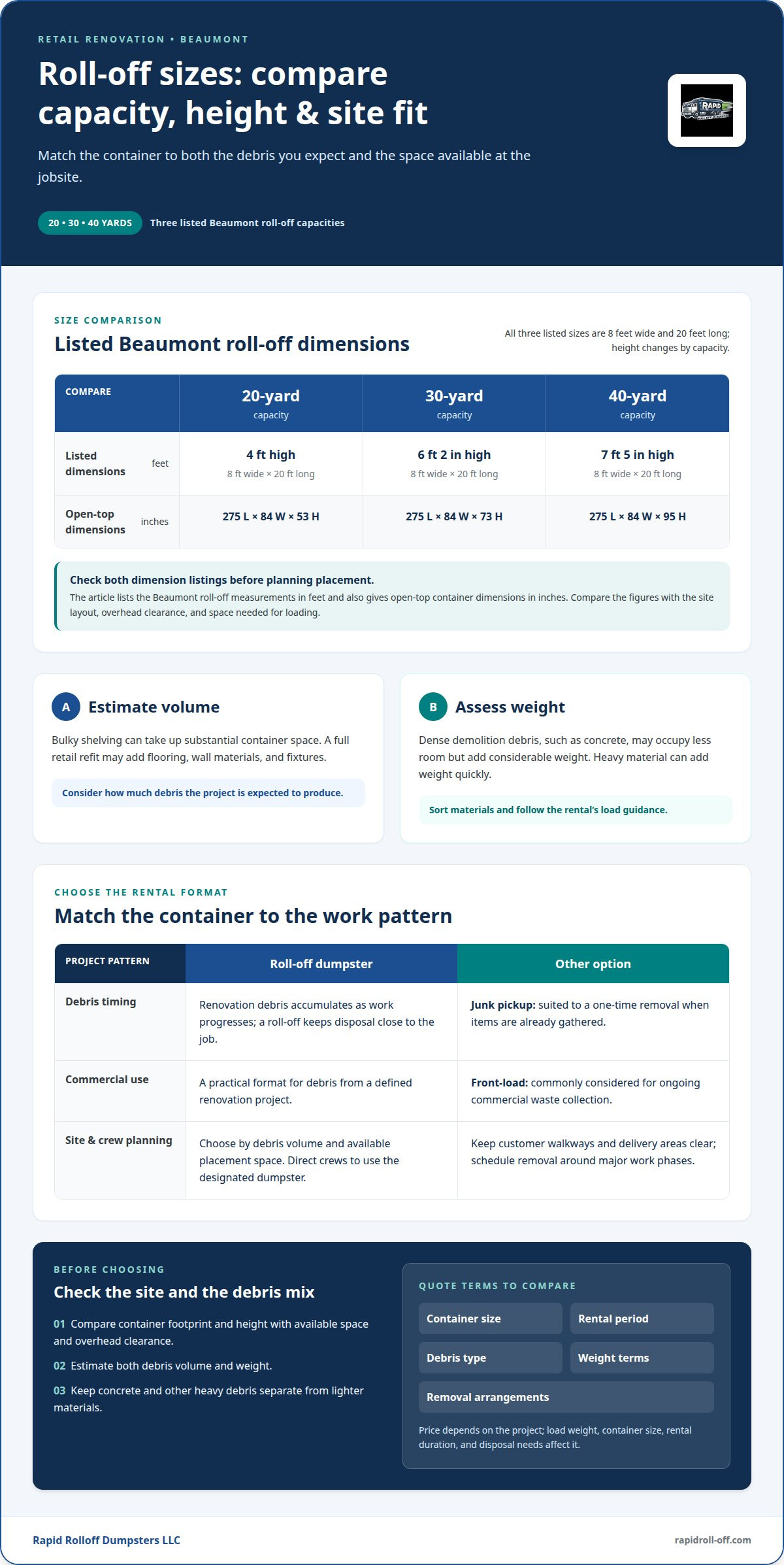
Choose a container by considering both debris volume and available placement space. A small office refresh may produce mostly packaging and a few furnishings, while a full retail refit can add flooring, wall materials, and fixtures. The container should fit the site and the project’s expected waste flow. Beaumont rental options include 20-yard, 30-yard, and 40-yard capacities.
Keep the jobsite organized by directing crews to put debris in the designated dumpster, not on customer walkways or in delivery areas. Schedule removal around demolition, flooring installation, or roofing work to prevent loose materials from gathering near store entrances. Clear access helps staff, customers, and contractors move through the site.
Storm and flood cleanup can create a different mix of debris. Beaumont’s storm collection instructions call for limbs and branches to be cut to 8 feet or less. Trunks wider than 12 inches must be cut into pieces no more than 2 feet long for storm debris collection. Keep this municipal setout guidance distinct from a renovation container plan.
Compare quotes by reviewing container size, rental period, debris type, weight terms, and removal arrangements together. The price depends on the project and is given after a quote request; load weight, container size, rental duration, and disposal needs affect it. Clear terms help prevent surprise charges. For ongoing commercial work, explore commercial dumpster rental options.
Roll-off dumpster sizes for renovation debris
Estimate debris volume, then compare the container’s dimensions with the available space. For Beaumont renovation planning, checking the footprint and height helps contractors assess site access before booking. A retail store renovation dumpster Beaumont contractors choose should fit both the debris and the site layout.
Listed Beaumont roll-off sizes use a 20-foot length and 8-foot width, with height varying by capacity:
- A 20-yard roll-off measures 4 feet high, 8 feet wide, and 20 feet long.
- A 30-yard roll-off measures 6 feet 2 inches high, 8 feet wide, and 20 feet long.
- A 40-yard roll-off measures 7 feet 5 inches high, 8 feet wide, and 20 feet long.
Those measurements describe the listed Beaumont roll-off sizes. Open-top container dimensions are also listed in inches: 20-yard, 275 inches long by 53 inches high by 84 inches wide; 30-yard, 275 by 73 by 84 inches; and 40-yard, 275 by 95 by 84 inches. Compare these figures with the site layout, including overhead clearance and the space needed for loading. A retail store renovation dumpster Beaumont project teams choose must also fit its placement area.
Capacity isn’t the only consideration. Bulky shelving can take up substantial container space, while dense demolition debris may occupy less room but add considerable weight. Estimate both volume and weight, and sort debris by material before choosing a size.
Roll-off and front-load containers serve different project patterns. A roll-off is a practical format for renovation debris that accumulates during a defined project; front-load containers are commonly considered for ongoing commercial waste collection. Beaumont’s listed 8-yard commercial dumpster measures 72 inches wide, 66 inches deep, and 80 inches high. Match the format to the project’s debris flow and available placement area.
For a renovation with several work phases, repeat the same sizing steps at each stage: estimate debris, account for bulky items, and compare container dimensions with the planned placement area. This keeps capacity and site access in view together.
Dumpster placement to minimize store disruptions
Plan placement around customer access, contractor access, and waste loading. A dumpster near receiving may simplify debris removal but interfere with deliveries. Before delivery, map entrances, loading doors, parking circulation, and the renovation area at your Beaumont store. Keep the route between the work area and dumpster clear for crews carrying materials.
Beaumont Code Section 22.05.105 prohibits private-hauler containers from being placed on streets or rights-of-way. That means a business cannot use a street or public right-of-way as its dumpster location. Beaumont Code Section 22.05.010 also prohibits placing a refuse container on, in, or over the drainage system. Include both restrictions when choosing a spot on the property.
Choose a stable, accessible spot that doesn’t block storefront visibility, customer paths, fire access, or scheduled pickup movements. Keep the dumpster away from drains and prevent debris from spilling into walkways. If customers need the parking area, set aside a separate space for temporary material storage. Clear delivery instructions help the driver locate the planned spot.
For a multi-phase renovation, match dumpster placement to the work sequence. Demolition may call for easy access to bulky debris, while fixture installation may need more room near the entrance. Coordinate pickup with project milestones so a full dumpster doesn’t occupy a busy loading zone. Update the plan if work areas, customer access, or delivery routes change.
Before arranging placement, provide the rental team with the site layout, preferred container location, and any access constraints. Clear details help coordinate delivery and pickup around store operations. For a retail renovation, arrange dumpster rental with placement and access needs in mind.
Rapid Rolloff Dumpsters
Rapid Rolloff Dumpsters helps Beaumont retailers manage renovation debris with a container suited to the project’s waste and site space. Its options include 20 Yard Hook Lift Dumpster Rental, 30 Yard Dumpster Rental, and 40 Yard Hook Lift Dumpster Rental.
A dedicated dumpster is useful when renovation or store-cleanout debris will accumulate over time. Choose based on the expected volume, materials, and a placement spot that won’t interrupt store access. Sharing these details helps match the rental to your plan, whether you’re removing fixtures or clearing debris between work phases.
For your next retail renovation or cleanout, contact Rapid Rolloff Dumpsters to discuss dumpster rental.
Set Up Your Renovation Waste Plan
Build waste planning into the renovation schedule before crews begin. A clear plan helps the team coordinate container needs as the scope develops, rather than treating debris removal as an afterthought. For a retail store renovation dumpster in Beaumont, connect the rental decision to the work plan and the store’s operating priorities.
Start by outlining the project’s debris, timing, and placement needs. That gives the renovation team a straightforward way to organize disposal and focus on the store update. Rapid Rolloff Dumpsters offers flat-rate rentals that include delivery, pickup, the weight allowance, and disposal.
Contact Rapid Rolloff Dumpsters to discuss your renovation plans and take the next step with confidence.
Frequently Asked Questions
How does a dumpster rental provider determine the best size for a retail store renovation?
The provider weighs expected debris volume, material density, and available placement space. A display refresh with bulky but light packaging differs from a flooring demolition with dense material. Beaumont rentals include 20-, 30-, and 40-yard capacities. Sharing the renovation scope and major debris types helps match capacity to the work, rather than choosing by store size alone.
What materials can and cannot go in a renovation dumpster in Beaumont?
Common renovation debris includes flooring, packaging, wood, concrete, drywall, paneling, fixtures, and non-electronic furniture. Keep electronic equipment separate. Removed counters and carpet, for example, are different from discarded computers or screens. Beaumont’s regular collection excludes building debris such as lumber, shingles, siding, and insulation, so plan separately for those materials.
What dumpster delivery and pickup access requirements apply at a retail store?
Delivery and pickup need a clear route to the intended on-property placement area, without blocking store entrances or receiving access. Beaumont Code Section 22.05.105 prohibits private-hauler containers on streets or rights-of-way, and Section 22.05.010 prohibits containers on, in, or over the drainage system. Keep the planned location clear of drains and coordinate access around deliveries and active work.
How can a dumpster rental provider plan placement to keep customers and workers safe?
Place the dumpster away from customer paths, worker routes, and active loading areas. A store with a busy receiving door, for example, can choose another on-site location that crews can reach without crossing customer routes. Share the site layout and project schedule so delivery and pickup can be coordinated with store operations and changing work zones.
Which Beaumont dumpster rental companies handle retail renovation debris?
Beaumont commercial establishments using a bulk container must hire a private contractor for service. Contractors must keep refuse receptacles on construction jobs for construction debris.
How do dumpster weight limits and overage fees work?
Weight limits and overage fees depend on the rental terms and materials in the load. Concrete and other dense debris can add weight quickly, so separate heavy materials and follow the rental’s load guidance.